
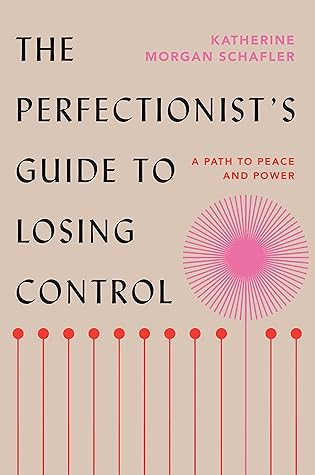
More on this book
Community


Kindle Notes & Highlights

Read between
December 29, 2023 - January 20, 2024

Different types of rest help us restore our creativity, integrity, empathy, clarity, humility, spirituality, motivation, confidence, sense of humor, and more.
It’s okay that you need validation; what’s not okay is for you to employ external validation as a primary source of self-worth.
People-pleasing doesn’t work as a bridge to connection because it disconnects you from yourself. You might get across to the other person, but you’ve left your true self on the other side of the bridge.
You become more accepting of conflict. You focus on enjoying the people, projects, and communities that are welcoming and easy for you to connect with.
Healthy connections don’t require you to sublimate yourself—you remember that when you’re restored. Connections that require performance become unappealing to you.
You own your sense of belonging before anyone reinforces it for you. When you walk through the door and don’t know you’re worthy, external validation says, “You’re performing well for now, so you can stay here for a while.” When you walk through the door and do know you’re worthy, external validation says, “Welcome home.” As long as you don’t need it to walk through the door and know you belong, there’s nothing wrong with enjoying a warm welcome.
You stop wasting your energy on those who are unable or unwilling to connect with you. You stop trying to be popular. You focus on pleasing yourself.
Restored messy perfectionists
Once you stop burning through your internal resources trying to resist loss, you’re able to redirect all that neon energy of yours towards one clear path. You reap all the benefits of being committed to that which you hold passion for, mainly the joy of watching what you love take shape, expand, and change you for the better.
come to understand that it’s not that you want the start to be perfect; it’s that you want faith that you’re going to be okay even if you fail.
being ready and being in control are two different things. Understanding that you have little to no control over the world around you is liberating; it opens you to step into your life now instead of waiting until you have more control.
present to the good in their life. Procrastinator perfectionists still encounter the exact same fear, but with the energy to face their fears, they’re simply not as intimidated.
You still love planning, you still love organizing, you still love making it beautiful—but you do it because you want to, not because everything will fall apart if you don’t. You operate from a well of desire, not a pit of desperation.
You focus on being a human being as opposed to being a “value add.”
the more you achieve, the more pressure you feel to top your achievements, lest your “value add” expire. Because you can’t achieve fast enough to keep up with the insatiable need for external validation, you get fixated on efficiency in a way that not only engenders inefficiency but also isolates you.
The counterfeit need to achieve becomes urgent, so much so that you abandon your real need for connection.
Reframe
What does [your name here] need? What is [your name here] feeling? (Research supports the notion that speaking to yourself in the third person, while it may feel silly, can create a perspective shift that allows you to better regulate your emotions and focus on what you need. Clinically referred to as self-distancing,
“What’s another way to look at this?” If you can’t think of another way yourself, ask around.
If you overexplain and underexpress, you don’t connect to the entirety of your experience. You intellectualize a lot, you talk around the issue, but you don’t actually “go there.”
The other side of the communication coin is that if you overexpress and underexplain, you don’t give your emotions a way to evolve into insight. You’re going around in circles talking about how you feel, but without anchoring the feelings in the explanation of “who, what, when, where, and why,” no story can be formed.
When there are no logistical landmarks within your emotional experience, it’s disorienting. You might know how you feel, but you don’t know why you feel that way. Without explaining, you can’t find patterns or triggers; nor can you develop sustainable solutions. You just keep swimming laps in a pool of feelings.
The difference between an opinion and a judgment is that an opinion reflects your thoughts and perspective,
whereas a judgment reflects your thoughts and perspective alongside an analysis of your worth as compared to that of others.
Whenever we judge others, we create separation between us and “them.” Whenever we judge ourselves, we create separation between the parts of ourselves that we think deserve goodness and the parts that we think don’t.
The Gift of Therapy: An Open Letter to a New Generation of Therapists and Their Patients; I share in that wish.
don’t try to resolve the negative issue at the height of the negative issue.
is cold is about consciously choosing the moment when the intervention, feedback, or appeal for connection is most likely to be received.
When you’re doing well, show up for the future you that’s having a hard time. Forge and reinforce protective factors around yourself. Create routines that restore your energy—find an exercise buddy, read books that teach and inspire you, go to therapy, nurture healthy habits, “broaden and build” your life.
In the absence of a crisis, accessing support is often postponed or altogether ignored.
Set Boundaries, Find Peace: A Guide to Reclaiming Yourself.
“People have come to value time so much that sleep is often regarded as an annoying interference, a wasteful state that you enter into when you do not have enough willpower to work harder and longer.”[8]
Why We Sleep: Unlocking the Power of Sleep and Dreams, Dr.
Connection
Health
F...
This highlight has been truncated due to consecutive passage length restrictions.
Integrity
Joy
Solitude
Curiosity
Gratitude
When you accept responsibility for the decisions you make, you position yourself to be less resentful.
Resentment is a barrier to joy. The energy of resentment is dense and heavy; it’s stones in your pocket and bricks in your bag. You cannot run fast and free while you’re carrying resentment.
We use resentment as a bid for validation, and we also use resentment to avoid the awesome task of taking responsibility for our lives:
that simple isn’t easy, and that there’s power in your presence.
Examining the areas of your life in which you are sacrificing pleasure will lead you to a direct understanding of the conditions you place upon feeling joyful and free.
Perfectionists mired in maladaptive patterns heal by committing to self-compassion as a default response to pain and then letting joy into their lives.
Self-compassion primes joy because it invites pleasure; you’re no longer punishing yourself by restricting pleasure until you’ve “earned” the right to feel good. Without self-compassion or pleasure, joy is elusive. It’s very hard to feel joy when you hate yourself,
To feel joy, you need to give yourself access to pleasure.
immediate gratification and pleasure. Both feel good in the moment, but pleasure also feels good in the anticipation of the pleasurable event and in the recall of the pleasurable event. In contrast, immediate gratification can produce excess anxiety before the event (I hope I don’t “give in”) and induce guilt after the event (I wish I hadn’t done that).
