
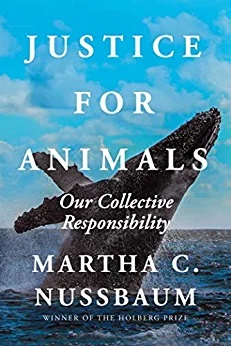
More on this book

Kindle Notes & Highlights

Read between
March 30 - April 9, 2024

A contrast between flourishing lives and impeded lives is a core idea of this book. It is at the very heart of the concept of justice, or so I will argue in chapter 1. And thinking well about this contrast is a key to developing a good theory of justice for animals. What is wrong with the three leading theories on this topic, I’ll argue, is that they do not pay attention to this contrast and the diverse ways it turns up in the diverse lives animals lead.
This book is different: it looks forward, attempting to further the causes she loved, with a theory she knew about and supported. This theory, a version of my Capabilities Approach, measures justice by asking whether people (or, in this case, sentient animals) have been enabled by laws and institutions to live a decently flourishing life, as defined by a list of opportunities for choice and activity that the creature has (or lacks), in its political and legal context.
What is the Capabilities Approach (CA), and why would lawyers passionate about animal justice care about it?21 It is easy to say what it is not. The CA does not rank animals by likeness to humans or seek special privileges for those deemed most “like us,” as do some other popular theoretical approaches. The CA has concern for the finch and the pig as much as the whale and the elephant. And it argues that the human form of life is simply irrelevant when we think about what each type of animal needs and deserves. What is relevant is their own forms of life. Just as humans seek to be able to
...more
That idea already puts us on the track of my Capabilities Approach, because that approach focuses on meaningful activities and on the conditions that make it possible for a creature to pursue those without damage or blockage. In other words, to lead a flourishing life. Unlike other approaches that focus narrowly on pain as the primary bad thing, this approach will focus on many different types of meaningful activity (including movement, communication, social bonding, and play), any of which can be blocked by the interference of others, and on many types of wrongful blocking activity, whether
...more
I believe that any reason supporting our own claim to use the planet to survive and flourish is a reason for animals to have the same right.1 First, however, we need to have a working conception of justice and injustice. That is the project of this chapter. Before we can begin, we need some examples: cases that inspire wonder at the complexity and impressive activities of an animal, and painful compassion, combined with action-directed outrage, at what has become of that animal in a world of human brutality and neglect.
