
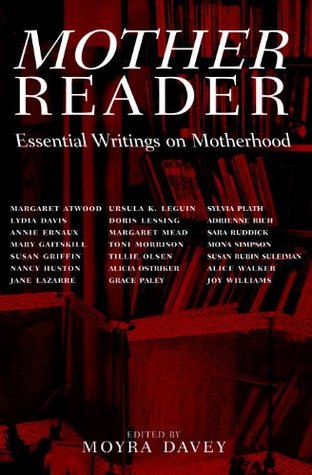
More on this book

Kindle Notes & Highlights


Birthing, raising my daughter through infancy to childhood was a hard process of knowledge, a kind of physical endurance for us both, bearing knowledge of survival; of the simplest facts of eating, sleeping, and the struggle to exist.
Gabriela Raya liked this
We are part of a resistance. For necessity does not stop long enough for us to analyze. We have only brief illuminations which we must record between interruptions, set down side by side, hoping to make sense of it all some day later.
Because even the life of the mother who is not poor is not easy. Children in any circumstances demand a great deal of time and care, a large part of the life of the mother. The definition of motherhood in our culture is one in which the mother sacrifices herself to the child. She sacrifices her self. Her self is lost. The child becomes the center of her life; the child’s needs placed before her needs, until often, she lives in her child, through her child, placing her spirit in the child’s body, until the merging of her self with the child’s is complete.
When the children grow up and leave home, if the mother has sacrificed her self to them, she now loses it entirely. The person she gave her self to has now abandoned her. Her loss is absolute.
Another insight to fit in a feminist analysis of motherhood: the sacrifice of the mother which is supposed to be for the child’s benefit can destroy the child. If the mother sacrifices her self, so does the child sacrifice a self. Her love devours the child. Her value becomes repression, her protection, dominance.
We have only pieces of an analysis and the barest fragments for any vision of the way things could be. That the experience of mothering changes one; that it is learned; that men, in our culture, do not learn this; that women are not in power; that some children are called bastards; that the children of fathers who will feed them and who can are well fed; that those without fathers are more often not well fed; that a mother is asked to give up her life for her children; that mothers are idealized; that mothers are hated; that children are unhappy… that women go mad; that the order of life as we
...more
The means necessary for liberation are not here. My life is still not that different from the lives of centuries of women who have raised children before. But the small differences are significant. I have some time to write and think, even if it is not enough. And I can be honest. If we who are raising children now speak the truth, finally we will be able to see.
Guilt, desperation, splitting of the self, alienated role playing (“My writing is not serious, don’t be offended by it, just look at my three children”), resignation to lesser accomplishment, renunciation of the writing self—these are some of the realities, some of the possible choices that writing mothers live with.
