
More on this book
Community


Kindle Notes & Highlights
Read between
June 19 - July 25, 2018

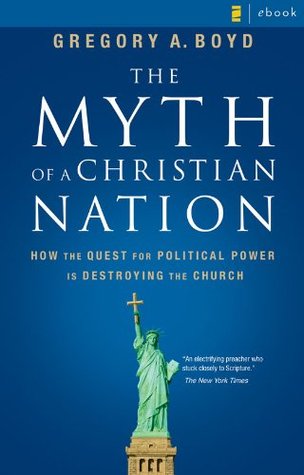
I believe a significant segment of American evangelicalism is guilty of nationalistic and political idolatry. To a frightful degree, I think, evangelicals fuse the kingdom of God with a preferred version of the kingdom of the world (whether it’s our national interests, a particular form of government, a particular political program, or so on).
Brian Eshleman liked this
Though all versions of the kingdom of the world try to influence how their subjects think and feel, their power resides in their ability to control behavior. As effective as a raised sword is in producing conformity, it cannot bring about an internal change.
Brian Eshleman liked this
The lesson of history, a lesson the Devil has known all along, is this: The best way to defeat the kingdom of God is to empower the church to rule the kingdom of the world — for then it becomes the kingdom of the world! The best way to get people to lay down the cross is to hand them the sword!
When the public stance of Christians is associated with preserving and tweaking the civil religion, we reinforce the impression that Christianity is primarily about the civil religion, about engaging in social functions, answering a pollster a certain way, and perhaps performing “religious obligations” a couple times of year by going to church and giving a couple of dollars. Would it not be better if kingdom people spent their time and energy doing authentic kingdom things—that is, looking like Jesus? Would it not be beneficial if we individually and corporately dedicated ourselves to serving
...more
Both the Old and the New Testaments emphasize the power and urgency of prayer. In fact, dozens of times the Bible depicts the fate of a nation as hanging in the balance not on what society did or on what politicians did, but on whether or not the people of God prayed.
Why do we not place more trust in the power of prayer to affect the world? One primary reason, I think, is our national myth. Because we think our nation is “basically Christian,” we tend to trust Caesar’s “basically Christian” power more than Christ’s. We therefore allow ourselves to be sucked into the “power over” game of politics, thinking that if only we can pass certain laws and enact certain policies, the Christian status of our nation will be improved. While we, of course, tip our hat to the need for prayer, our actions belie the fact that we generally (there are marvelous exceptions!)
...more
Our trust, time, energy, and resources must not be centered on improving government but on living out the revolutionary kingdom of Jesus Christ in every way, shape, and form.
When the theocratic-sounding slogan “one nation under God” is taken too seriously, it makes people think of America along the lines of Israel and the Old Testament rather than Jesus and the New Testament.
The second fundamental problem with viewing America as a theocracy is that God’s theocratic program in the Old Testament was temporary, conditional—and ultimately abandoned. God formed Israel to be a distinct, set-apart, holy people in order to use them to reach the whole world. Through the descendants of Abraham, all the families of the world were to be blessed (Gen. 12:2–3). The Israelites were to be God’s ministers, his priests to the world. God took great pains (and inflicted great pains) to get this people into “the Promised Land” because it was strategic in accomplishing this global
...more

1000 times - YES!
Instead of fearing the possibility of persecution someday, kingdom people should trust that if this happened, God would use it for the furthering of his kingdom, just as he used Jesus’ death. In fact, as terrible as they often are, persecutions have usually had a positive kingdom effect. While gaining political power has always harmed the church, as we saw in chapter 4, persecutions have almost always served to strengthen it. Tertullian was on the mark when he said that the blood of the martyrs is the seed of the church.13
First, while the kingdom of the world focuses on controlling behavior, the kingdom of God focuses on transforming hearts. When hearts are transformed, behavior follows. Laws simply reflect the hearts of those empowered to make them. So, the focus of citizens of the kingdom of God should be on changing the hearts of oppressors rather than on trying to conquer them with a greater coercive power.
