
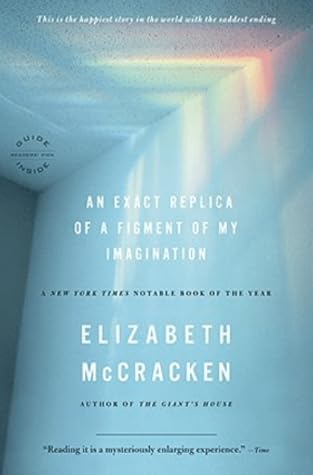
More on this book
Community


Kindle Notes & Highlights

Read between
March 1 - March 9, 2025

As for me, I believe that if there’s a God — and I am as neutral on the subject as is possible — then the most basic proof of His existence is black humor. What else explains it, that odd, reliable comfort that billows up at the worst moments, like a beautiful sunset woven out of the smoke over a bombed city.
The French word for “midwife” is sage-femme, wise woman, I remember that.
I want a book that acknowledges that life goes on but that death goes on, too, that a person who is dead is a long, long story.
I don’t feel the need to tell my story to everyone, but when people ask, Is this your first child? I can’t bear any of the possible answers.
For the rest of my life, I think, plurals will confuse me. How many children do I have? How many are there of me?
If I remember everything, I’m done for. If I remember, I will walk to the nearest hospital and ask for a nice bed in the psychiatric wing,
The problem was, according to her, with all of those women working together in the same room, their periods synchronized, which made for a hellish work environment. Now she dealt in psychics. People watched
At another time in our lives we might have been horrified. Now we just slapped the dust off the seat of our pants and moved on.
I have thought of that card ever since, during difficult times, mine or someone else’s: surely when tragedy has struck you dumb, you should be given a stack of cards that explain it for you. When Pudding died, I wanted my stack. I still want it. My first child was stillborn, it would say on the front. It remains the hardest thing for me to explain, even now, or maybe I mean especially now — now that his death feels like a non sequitur.
I want people to know but I don’t want to say it aloud. People don’t like to hear it but I think they might not mind reading it on a card.
“Was he a beautiful baby?” she wanted to know, and I wondered how she knew to ask: she was the only one who did.
“There is no way for such an event to leave you who you are.”
Somehow every one of these things happened at exactly the right time for me. This is why you need everyone you know after a disaster, because there is not one right response. It’s what paralyzes people around the grief-stricken, of course, the idea that there are right things to say and wrong things and it’s better to say nothing than something clumsy.
couldn’t have borne listening myself, to him or Arno, but to know that they did — it felt as though they had taken part of the weeping weight from my shoulders.
“They shouldn’t be old women,” I told Edward in Bordeaux. “They should be big men, a whole line of them, crying.”
Now they felt like oxygen, and only now do I fully understand why: to know that other people were sad made Pudding more real.
As I was going mad from grief, the worst of it was that sometimes I believed I was making it all up. Here was some proof that I wasn’t.
grief lasts longer than sympathy, which is one of the tragedies of the grieving,
She still writes to me about Pudding. She misses him like a person too, I think. I want to explain to her daughters what their mother did for me. I think in some ways she saved my life.
“It’s hard to be with grief. We all so want to help and there is really nothing to do. My crazy adored aunt Pauline’s catchphrase was ‘offer it up.’ Those words were a curse, a joke, a prayer and a balm to us cousins over the years.
We knew that something very, very terrible had happened, but it seemed to have happened to someone else, perhaps to someone very dear to people dear to us, a friend of a friend we’d always heard stories about. There was sadness in the house, but it didn’t have us by the throat. Even as it happened, I wondered what it meant. Was it possible that already we were returning to ourselves?
I’ve never gotten over my discomfort at other people’s discomfort. When people say, What have you been up to, I hesitate. I will tell myself, Now, if this were a husband or father or sister who died, you wouldn’t simply omit the fact. If I say anything, people mostly change the subject anyway, and I can’t say that I blame them. I’ve done it myself, when meeting the grief-struck. It’s as though the sad news is Rumpelstiltskin in reverse. To mention it by name is to conjure it up, not the grief but the experience itself: the mother’s suicide, the brother’s overdose, the multiple miscarriages.
...more
Why isn’t there a dawnish equivalent for the word dusky?
They seemed frozen. Something had happened. It had been a year and a half, and if you weren’t in the middle of it you might lose patience: New Orleans, why can’t you get over it?
“I was so sorry when I heard about your first child. My first child was stillborn, too.” My heart kicked on like a furnace. Suddenly tears were pouring down my face.
All I can say is, it’s a sort of kinship, as though there is a family tree of grief. On this branch the lost children, on this the suicided parents, here the beloved mentally ill siblings. When something terrible happens, you discover all of a sudden that you have a new set of relatives, people with whom you can speak in the shorthand of cousins.
It happened to me, too, meant: It’s not your fault. And You are not a freak of nature. And This does not have to be a secret.
Blame is a compulsive behavior, the emotional version of obsessive hand washing, until all you can do is hold your palms out till your hands are full of it, and rub, and rub, and accomplish nothing at all. And so we grieved but looked straight ahead.
because, and this made me weep harder, because I knew, I knew, that this was all my fault. My essential reaction was grief, but somehow the words that floated to the surface of my brain were: people are going to be mad at me.
saw on my records a note from the morning, handwritten by Claudelle. It said that I was très inquiète, very worried, as though this were a medical diagnosis.
A midwife passed by, a woman in her early fifties with short hair and a slightly daffy demeanor. She said, in French, Why do you look so sad? You’re going to have a baby!
(This is still true. There are friends, not close ones of course, who knew I was pregnant but did not hear what happened, and when they’ve written and said, “How’s motherhood? Your son must be a year old by now!” I have simply never answered.)
He died, and then two days later he was born.
Where was he in the meantime?
My great regret is that I didn’t pick him up.
she wanted was permission to remember her child with pleasure instead of grief. To remember that he was dead, but to remember him without pain: he’s dead but of course she still loves him, and that love isn’t morbid or bloodstained or unsightly, it doesn’t need to be shoved away. It isn’t so much to ask.
