
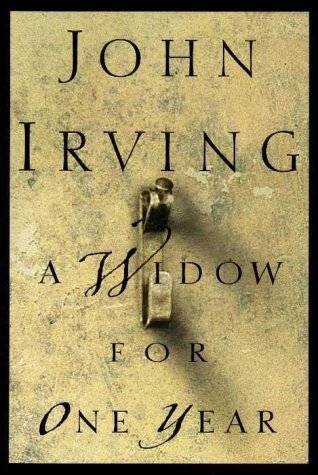
More on this book
Community


Kindle Notes & Highlights


Eddie feared that he had inherited his father’s penchant for saying the obvious—and that he would soon be spontaneously dubbed with a name like Minty, which would stick to him for the rest of his life.
The gardener had a dread of small women; he’d always imagined them to have an anger disproportionate to their size.
When Eleanor pressed her case—that she was appealing to Jane “as a woman first and a writer second”—Jane had surprised both Eleanor and herself by her response. “I’m a writer first,” Mrs. Dash had said.
In her diary, Ruth once wrote of Hannah: “She projected an aura of worldliness long before she’d been in the world.”
“Horace Walpole once wrote: ‘The world is a comedy to those who think, a tragedy to those who feel.’ But the real world is tragic to those who think and feel; it is only comic to those who’ve been lucky.”
One day Ruth would realize that being afraid you’ll look like a coward is the worst reason for doing anything.
With Minty’s help, Eddie had identified that George Eliot passage about marriage—Ruth wanted Hannah to read it at her wedding.
“What greater thing is there for two human souls, than to feel that they are joined for life—to strengthen each other in all labor, to rest on each other in all sorrow, to minister to each other in all pain, to be one with each other in silent unspeakable memories at the moment of the last parting?”
It was for children that one wanted heaven, Ruth thought. It was only for the sake of being able to say: “Daddy’s in heaven, Graham,” which was what she’d said then.
“Good-bye, Mrs. Cole,” Mel replied. So that’s who I am! Ruth Cole decided. She’d never changed her name, of course—she was too famous to change her name. She’d never actually become Mrs. Albright. But she was a widow who still felt married; she was Mrs. Cole. I’ll be Mrs. Cole forever, Ruth thought.
There is no intolerance in America that compares to the peculiarly American intolerance for lack of success, Harry thought.
