
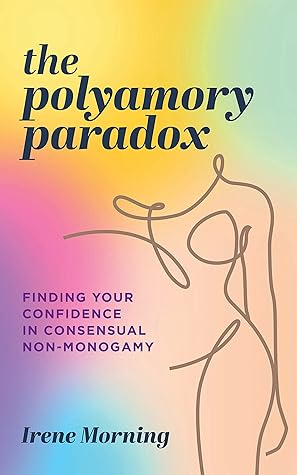
More on this book

Kindle Notes & Highlights


it will hit upon the places where you are still wounded and find a way to rub salt in them.
So when we decide, “Hey, I want to explore non-monogamy,” we’re not just opening ourselves to more sex and different sexual situations. We’re actually confronting some of the deepest patterns, assumed values, and carefully crafted identities that we’ve shaped from within our social contexts.
I needed to know what I truly desired beyond being desirable.
I was repeatedly confronted with awareness that I couldn’t advocate for what I wanted in the moment because I was hardly ever connected to what I wanted in the moment.
Our wounds develop from the moments in life when we’ve been disconnected from choice. Healing is about recovering our sense of agency.
emotions are signals that come from the body. Our feelings of love, connection, joy, curiosity, trust, intimacy are all different expressions of the electrical signals that come through us when our body assesses that it is safe (or not reacting to a perceived threat). When we feel rage, overwhelm, anxiety, numbness, upset – those are emotions born of the body assessing that it is unsafe somehow – either a violation of some kind has occurred, or it needs to be on alert for something that will threaten its safety.
There is a very, very deep knowing in our bodies that our survival depends upon those with whom we form attachments. So further down the road, when you have formed an attachment to a partner and then your body perceives that attachment as threatened somehow, the logical interpretation in your body’s language might be that your very survival is being threatened.
Your system recognizes that the threat of your partner disappearing is no longer real, but it has not re-established the perception of safety, so it continues to search for things that could still be a problem for you.
Fight and flight are the hyper-responses and freeze is the hypo-response. When our body gets “stuck” in one of these responses outside of the window of tolerance, we refer to this as the impact of trauma.
Fawning is when we set aside our own wants, desires, and individuated needs to appease and prioritize someone else’s preferences, desires, and needs, because some part(s) of us interpret(s) that our connection to this person (and therefore our social safety, therefore our survival) will be threatened if we assert our difference.
reminding ourselves that the narrative mind is often an expression of the body’s state – what happens to my panic about our relationship if I can calm the panic in my body?
Needing to know the ways in which we are important or spark joy for our partner is not needy or insecure, but an important way of building intimacy and focusing on pleasure to connect us, as opposed to fear, conflict, and fawning.
recognizing even a few of the small-but-mighty moments that help you feel seen and supported gives you the power to ask for those gestures. And these requests of your partner do not have to change the fact that they are in NRE or have the impact of dragging them into something more painful. It’s actually a wonderful way to request what you need and give your partner an opportunity to recognize where they can express their care for you in the most effective ways.
relationship expert Esther Perel asks us to look at the paradoxes of our relationships as opportunities to practice surrender, as opposed to viewing them as endless problems to be solved.
What if we can re-frame that feeling of not being seen as an opportunity to show them? Communication is the key to teaching each other how we want to be loved.
Making requests of our partners is fucking hard, but very necessary. “I’d rather you didn’t” is not an agreement. It’s not a request. It’s simply a preference, a feeling. Communicating our feelings is 1000% necessary, but it is a different step than making agreements.
Having clear agreements is a vital part of non-monogamous intimacy. Without clear agreements, each partner will default to their unique assumptions and ways of operating. If we want to take good care of each other, and be cared for in return, we need clarity about what that means to each person.
I often tell clients that early non-monogamy is a lot like building new muscle in the body; the same way muscle fibers build up through cycles of tearing and repairing, we undergo more ruptures than usual through the process of opening up, and the strength of the relationship is developed from the processes of repairing those ruptures.
When conflict happens, it shows us our differences. When we communicate our differences to each other, we are gifting each other the opportunity to clarify how we’d like to operate in a relationship. Learning more about our differences gets to be a chance to care for each other better, more deeply, more effectively.
The joy I’d finally found wasn’t a product of simply allowing things to unfold, but of mustering the agency to claim my pleasure no matter how painful circumstances became.
The magic key is actually knowing what you want, learning to listen for where and how and when your conditioned mind distorts the messages from your body before the body’s true desires are lost.
