
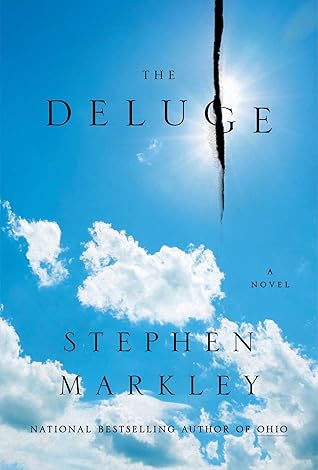
More on this book
Community


Kindle Notes & Highlights

When I first started on this—our crisis of the biosphere and inequality and democracy—I thought, Great! Look at this huge problem someone’s left for me! I’ll just—” She whipped her free hand like she was spinning a globe. “I’ll knock this out in a couple years, no problem. I’ll give a few speeches, rile folks up, elect the right people, get the right laws passed, and we’ll all be knocking back beers at the bar in no time. I had so much energy and eagerness and just—hope! I had so much hope.”
The solutions to this crisis, it turns out, will also require an even greater ambition, a more just global order. We need to build a new energy infrastructure. We need to reinvent agriculture. We need to put everyone in this country to work in high-paying, meaningful jobs. We need to make housing, health care, and education universal rights, so we’re not all hungry, addicted, angry, and alone. We need to destroy the power of the surveillance capitalist economy, the people who profit from fomenting hate. We need an immediate release of the political prisoners, people like Dr. Anthony Pietrus,
...more
“So what are we going to do?” Morris demanded. She held three fingers on her right hand high. “We are going to save our biosphere, we are going to remake our unjust and unequal economic system, and we are going to re-democratize our country and our world. History shows us that people can be monsters. That they can kill and maim and enslave and exploit, and they can do it while telling themselves how enlightened they are. But history also tells us that when people band together, they can do mighty things. Whole systems can fall overnight. We don’t need armies, guns, or bombs.
Great change is made by a tired, pissed-off woman who doesn’t want to give up her seat on a bus, or by a scrawny Indian lawyer who decides to stop eating. What is extraordinary about the people we revere in history is just how unbearably ordinary they were. All that separates us from them—literally the only difference—is that they had the courage to act. When the wealthy and powerful told them what they were doing was meaningless, they didn’t listen.”
immediately, these emergencies of democracy, inequality, and climate.”
“Find the people wearing the blue armbands, and they will set you up with the supplies you need: tents, sleeping bags, water, food. For those watching, anywhere in the world: Get here. As quickly as you can. We are not here to spark violence or damage even a single brick. This is not a MAGA rally. The buildings that surround us, this is our heritage. It’s our home, and we will treat it as such. We must be uncompromising in our nonviolence, but the business of the heartless and violent corporate plutocracy that now passes for governance in this city? That’s finished. Not one deal will happen,
...more
This situation had to be resolved peacefully. These were not alt-right lunatics in Viking gear storming the Capitol Rotunda. There were kids in reading circles by day and folk singers crooning onstage at night. “It would be better if they were rioting,” the mayor grumbled to an aide.
Like Gandhi’s satyagrahas, the Blue Bands formed the point of the spear for an army of warriors whose strength was not to fight. They brought a militarized discipline to the operation. Though she often talked the talk, Kate Morris had no patience for horizontal structures or autonomous self-organization. Leaderlessness was for the birds. She only intended to offer people the fiction that they were in the arms of an organic movement. But she needed more enforcers, so her people found a kid named Dougall from North Carolina, a sea otter scientist all the way from Alaska, and a Marine from
...more
and demanding an immediate halt to the incineration of the planet, a blooming fascism, and the gangster capitalism that had led them all to this point.
A deadly mixture of plutocratic panic and xenophobic populism has fomented a narrative that every sack of grain belongs to “our children.” Many Republicans made this a point of pride in the midterm elections, exemplified by the odious and ever-present “Ham Sammy Brigade” VR meme.
The synergistic effects of soil degradation, desertification, and salinization have been precursors in the collapse of every civilization from ancient Greece to Mesoamerican empires.
The fascist Hindu government is executing a grueling endgame as it attempts to corner and starve its Muslim population. I was lost in thought on this harrowing subject when a rough and gnarled index finger intruded, tapping the paper twice:
I thought of the arrogance the living carry. We ensconce ourselves in an epistemological certainty born from the mere fact that we’ve known history marginally longer than the dead. We elbow each other knowingly at their failures and ignorance. We almost never ask what it is that we don’t yet know.
The idea that the world’s governments should “let nature take its course” has become the catchphrase of the Right. Maximum cruelty is often how people attempt to exorcise their fear. We are currently experiencing hunger, heat, and refugee flows that are simply outside humanity’s experience—all in a globalized media environment where terror and panic boost advertising dollars and algorithms turn disinformation into currency. Yes, climate disruption has ransacked agricultural production, but actual starvation is being driven by zero-sum Malthusian politics. A great hoarding has erupted, driving
...more
the Senate committee empowered to investigate the actions of August 1, 2034, I still find myself at a loss for words. The committee’s work can be summed up by one cold sentence in its report: “Though the president acted rashly, he did so within the bounds of the law given the circumstances.” And that is that.
The Pastor asked, “How many more of my prophecies must come to pass before you see that I already hold the sword of Christ? Psalm one thirty-seven tells us ‘Those who smash the heads of Babylonian infants on the rocks are blessed.’ Wars of extermination, the Bible tells us, are not only allowed—my friends, they are our duty.” That his poll numbers saw no visible drift from these shocking statements proves the thesis: in a society of spectacle, this man is king.
After decades of delay, policymakers and the economic elite who support them have allowed this civilizational crisis to metastasize. Reagan, Bush, Clinton, W. Bush, Obama, Trump, Biden, Hogan, Randall, and now Love—leaders with nothing in common except their failure to address the only issue that ever really mattered. In the sixty years since Wallace Broecker coined the term “global warming” in the title of a scientific paper and we began to understand the threat posed by greenhouse gas emissions, never have the implications been at our doorstep like this.
Now pundits debated if he was serious about executing members of their profession. “Why are we speculating about voices of moderation in his cabinet? He’s telling us what he will do.”
Civilization isn’t careening into an ecocide because a few people are getting rich—it’s because we are acquiescing to it. We are allowing it. And you can’t change anyone’s consciousness with a bomb. It’s something that has to come from within.”
Housing prices had plummeted 7.8 percent year over year, according to the S&P/Case-Shiller National Home Price Index, the largest drop since the 2008 crisis, and this was after a 3.6 percent drop in the fourth quarter of 2035 alone. Most of the metro areas where this was occurring were on the Eastern Seaboard and Gulf Coast, particularly in and around Miami, where homes sat unsold, foreclosures had spiked, lending had tightened, and a full-scale abandonment of all homeowners policies by the hard-hit insurance industry was creeping outward like a cancer. Sound familiar? wrote Krugman. While
...more
Allie and Burt had rebuilt their home in St. Louis right back on the floodplain, but Allie assured us that the flooding had been once in a thousand years. I didn’t bother to explain to her the meaninglessness of that phrase.
“Which is why I’m saying, now that the vote got thrown to the House, it’s best to certify The Pastor,” said Fred. “Force him to take cool-headed insiders into his cabinet, surround him on all sides with the forces of reason, the way the Beltway managed with Trump.”
Gabriel García Márquez: “If I knew that this would be the last time I would hear your voice, I’d take hold of each word to be able to hear it over and over again. If I knew this was the last time I’d see you, I’d tell you I love you, and would not just assume foolishly you know it already.”
Homeowners in flood plains, Wall Street firms, and major insurers alike all rely on the predictability of risk. With developments like ARkSTORM, Cyclone Giri, and the sudden increase in the rate of sea level rise (among others), risk models were categorizing the confluence of these exogenous calamities as a 37-sigma event, or 37 standard deviations away from the norm. How likely is a 37-sigma event? A modest 8-sigma is supposed to happen less than once in the history of the universe.
Dramatic events like the human and economic catastrophe of California gather headlines, but the more dire issue is sea level rise. If we look to where the crisis began in the low-lying areas of Florida, especially Miami, we see a simple chain of events. Home values collapsed as buyers began to realize that nuisance flooding (forget catastrophic hurricanes) would soon render their property worthless as groundwater regularly brings sewage into the streets.
Facing enormous borrowing costs or having lost access to credit entirely, the communities have no money for infrastructure repairs—sewer pipes, water lines, and electrical lines being destroyed by intruding seawater—which further lowers property values in a vicious cycle. As homeowners saw the futility of making payments on doomed homes, they began to default in large numbers.
Financial crises are typically proceeded by credit bubbles, and the explosion of new housing added to the coasts between 1990 and 2030, both in the US and globally, perhaps represents one of the most ignominiously stupid bubbles in the history of capitalism.
bubble was also inflated by taxpayer subsidy, as federal flood insurance, dreadful zoning policy, and an absence of laws requiring risk disclosure allowed an unprecedented buildup across vulnerable coastline.
Beginning in the 1980s with liberalization and wage stagnation, credit essentially came to replace socioeconomic policy. Average workers and students have had to borrow more and more just to stay afloat and for the economy to sustain rising consumption. Now that mass layoffs have begun, those student loans, credit cards, and auto payments are going unserviced, and because those loans are also sliced and diced in securitization methods, it’s rendering toxic large portions of the assets moving between major financial institutions.
All the activity described, from catastrophe bonds to the securitization and off-loading of coastal mortgage debt, was legal. CAT bonds, for example, driven by investors seeking higher yields following decades of low interest rates, were triggered by a few very expensive disasters, which has led to a panicked sell-off. It is not a Ponzi scheme described by leftist pundits, but a standard insurance bet gone wrong in an era of climatological extremes. Wall Street’s creation of financial products to insure against climate risk had the effect of spreading it to every part of the system.
The difference between 2037 and 2020 is that there is no vaccine on the way for the greenhouse effect. The difference between 2037 and 2008 is that this panic is largely justified due to sea level rise.
As with the food crisis, climate panic is exacerbating the underlying trends. Florida’s tax base is collapsing as people panic-sell, but they are panic-selling even on high ground where water is unlikely to reach for decades, if not centuries. The collapse of prices is reaching deep inland as confusion and hysteria spread.
If the reinsurance giants begin to topple, the panic will turn to economic apocalypse. During the Great Depression, worldwide GDP fell 15 percent. This crisis, by my estimation, could shock global GDP by up to 35 to 40 percent. Standard countercyclical monetary policy is not of much use here, as most major central banks, including the Fed, the European Central Bank, and the Bank of England, have cut interest rates to zero since the economy began lagging.
Aggregate demand continues to vanish. Stimulus will be key, but the Keynesian toolbox will not work until the roots of the crisis are addressed. At this point, I asked Secretary Rathbone what was at the root of all financial panics, to which he correctly replied: “Confidence.”
Confidence cannot be restored because sea level rise really may wipe out more wealth in one generation than both world wars and all the great economic crises combined. The question is, How do we stop such a rational panic?
You all worship the IPCC like a holy text. It’s been wrong consistently, and it’s wrong now. Like Haniya said, the rate of rise is accelerating. Doubling roughly every seven years, in fact. There’s no reason to think that’ll abate. And given what’s happening in West Antarctica, we have to assume that East Antarctica is not nearly as stable as we thought, nor Greenland. Trust me, fifty feet is not even the worst-case scenario. If all the ice on the planet melts, there’s two hundred and thirty feet of sea level rise in there.” Said Admiral Dahms: “You’re proposing a decades-long refugee
...more
We are going to simultaneously deal with the financial crisis and the climate crisis.
“The crisis. It’s everywhere now, in the air, in our banks, crawling through our blood if you’re living near the wrong ticks or mosquitoes. I knew all this was coming, but I always had that thought in the back of my mind, you know? That there would be someplace to escape, someplace safe. But there’s not. There’s just not.”
I said: “I find myself looking back fondly to when we first met. Donald Trump was out of the White House, people were taking the science seriously, and action seemed to be right around the corner.”
Tony huffed: “Shit, Ash, I look back fondly at the days when I was just getting death threats and fake anthrax. Before my own government was locking me up and then asking me to save its ass a few years later. Goddamn, I wish I had a cigarette.”
There is only one way to begin: with a rapid decarbonization of the economy. One might call this the low-hanging fruit since many of these policies and technologies have, frustratingly, been available since the turn of the century. This begins with the “shock collar,” popularized by the late Ms. Morris. By implementing a carbon price tied to emissions reductions and rebating the money to taxpayers with a so-called climate dividend we can begin to quickly reduce emissions and incentivize innovation. The price to burn a ton of carbon will begin at $100 and rise steadily at 2 percent unless
...more

Q
In the agricultural sector, an end to subsidies for ruminant animals, the shock collar, and a simple tax levied on any creature raised for meat or milk will curb consumption and emissions while a tradable permit system similar to fisheries will cap the number of cattle. Anaerobic digesters will be required for manure, dietary regulations for animal feed, and a border adjustment tariff will ensure that imported meat faces similar costs.
carbon-sequestering agricultural practices such as no-till farming and agroforestry. Subsidies for aquaponics and seaweed farming will produce a bountiful and nutritious food source while also sequestering carbon, reducing ocean acidification, and creating ecosystems in which fish, scallops, and other edible aquatic species will thrive.
Getting to a zero-emissions economy is no longer sufficient. We must begin to remove as much CO2 as is technologically feasible, and the NGIB can play an active role in financing this.
Though I loathe this buzzword, such a system would be the keystone of a truly “sustainable” economy. The technology for widespread carbon sequestration and utilization has existed for some time, but the market has remained anemic. Again, standards, investment, and incentives can begin to drive a widespread revolution in these processes.
The Coastal Resilience and Defense Authority will undoubtedly be controversial and induce howls from politicians and constituents alike. So be it. There will be accusations that we are abandoning storied cities such as New Orleans, Miami, and Charleston. This is accurate. These cities are no longer defensible given the current rate of sea level rise and attempting to buttress them will only incur greater losses of money, material, and lives. While decommissioning thermoelectric coastal power plants (particularly nuclear facilities), removing hazardous waste, and lining landfills will be a high
...more
There is danger of the Concorde fallacy, the conviction that it’s less wasteful to throw money at a lost cause simply because you’ve invested so much already, and I fear that may be the case for Boston, San Francisco, Los Angeles, Houston, and many other coastal cities, but an immense amount of financing will be spent in their defense with a variety of projects, ranging from fortified seawalls to organic buffering systems in the bays to multibillion-dollar sea gates. New York City’s destiny, for instance, will likely be as the most expensive fortress in human history. The US Army Corps of
...more
the newly created Advanced Research Projects Agency-Biosphere (ARPA-B) will conduct research into gigaton-scale carbon mitigation techniques and begin steps for deployment of solar radiation management (SRM) aerosols. Though this last point has proved highly controversial, the task force unanimously agreed some form of SRM lies in humanity’s near future. As polluting plants come off-line and their aerosols dissipate, global dimming will abate quickly with the consequences of up to one degree of warming imminent. This cannot be allowed to happen. In total, the stimulus portion of the
...more
the scale of the crisis necessitates more radical measures to address the culprit of inequality. There is an unquestionable economic and environmental advantage to eradicating the structural inequities of our current system. This begins by disciplining out-of-control transnational financial capital and making it work for the purposes of remedying the climate crisis. A financial transaction tax will curb speculation and raise approximately $300 billion per year while the regulation of tax havens will wring out the aimless hot money producing distortionary effects around the globe. A carefully
...more
Advertising is an insidious form of pollution that has distorted the economy in myriad ways, particularly in the digital age (data brokers in particular will be targeted).
Q
