
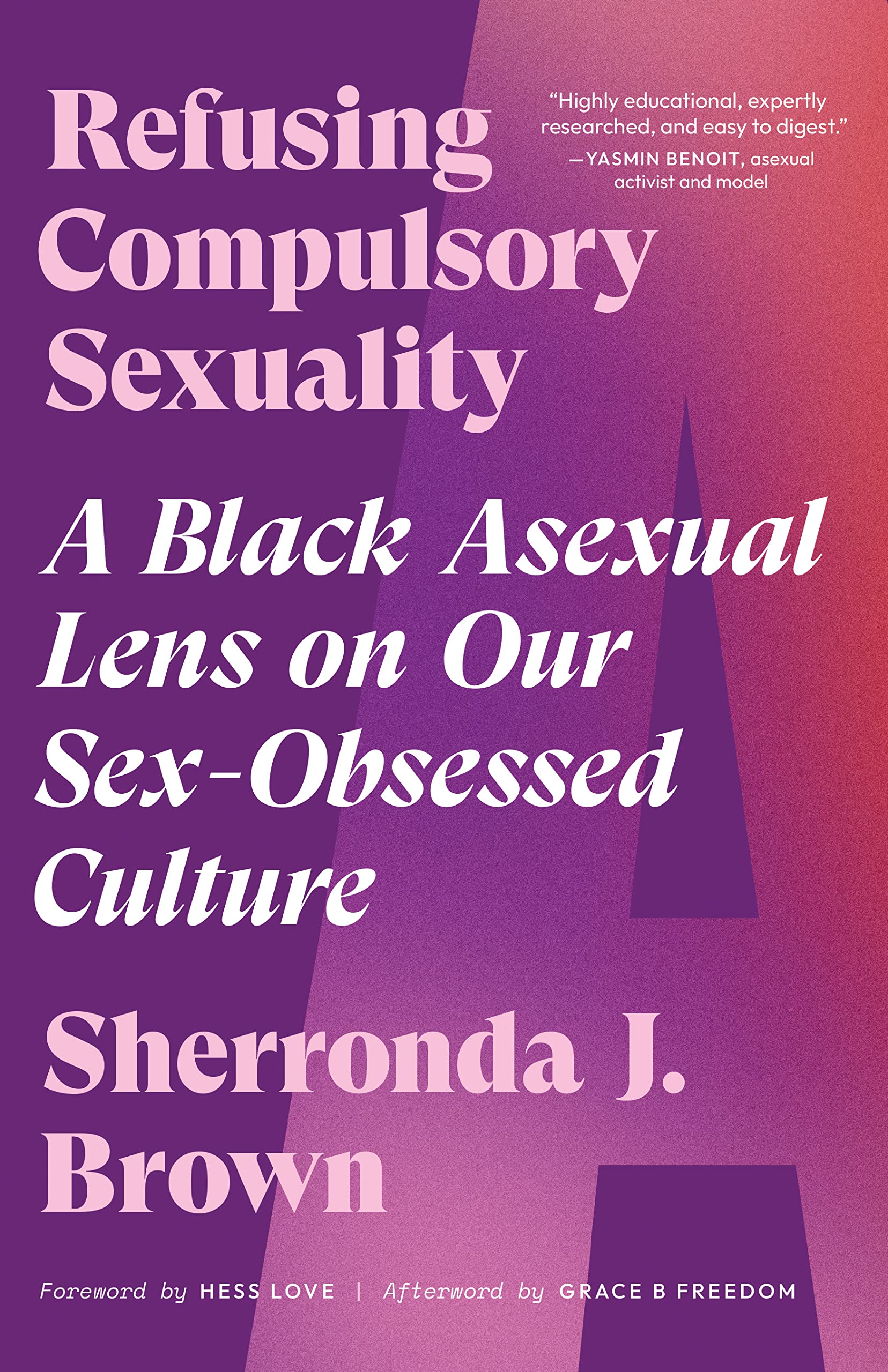
More on this book
Community


Kindle Notes & Highlights

Read between
April 19 - May 4, 2025

Coffee, ice cream, and alcohol. These are three things that always elicit a look of shock, horror, and disbelief or even an audible gasp whenever someone learns that I do not enjoy them.
Sometimes what they display feels a lot like moral outrage, and maybe it is. People tend to attach morality to peculiar things. They instantly take offense, and in turn become defensive, because they either assume that I am insulting something that brings them great pleasure, comfort, and joy or because they think I am judging them for their indulgence in it.
In this way, and many others, purity culture and diet culture are indeed siblings. They are the offspring of colonialism and capitalism, and shame is integral to them both. Diet culture attaches morality to food as a way to police the way people eat and to bring bodies under colonial and capitalist control. Purity culture attaches morality to sex to do the same. Beneath it is the assumption that sex will inevitably occur and that everyone desires it. In fact, that assumption is an essential part of purity culture—the idea that we are all “sinners” continually battling sexual urges, and
...more
I believe it is more true to say that asexuality is defined by a relationship to sex that is atypical to what has been decided on by society at large to be normative, and that atypical nature is marked by varying degrees of sexual attraction and desire. Asexual experiences stand outside what has been accepted and approved of as “normal” sexual experiences for both the queer and the heterosexual communities.
It understands that sex can be technically consensual, but still unwanted.
Discourse and educational resources about asexuality often work to reassure readers that some asexuals still engage in “normal” amounts of sex for an array of reasons, regardless of their actual relationship with sexual attraction and desire, and many of those reasons are not about the asexual’s needs but their sexual partner’s gratification and comfort.
Compulsory sexuality is the idea that sex is universally desired as a feature of human nature, that we are essentially obligated to participate in sex at some point in life, and that there is something fundamentally wrong with anyone who does not want to—whether it be perceived as a defect of morality, psychology, or physiology.
Compulsory sexuality allows for a tacit refusal or inability to accept the idea that we all have the inherent right to govern our own bodies and make our own decisions about whether or not to engage in sex, and that we can do this based on whatever criteria we deem fit. This right to total sexual autonomy is central to consent, and society’s inability to properly honor consent and interrogate rape culture—and the ways it is upheld by misogyny and racism—is central to the denial of asexuality.
Compulsory sexuality and rape culture result in people being pressured into sexual situations because of the assumption that they should want to have sex and that there is something wrong, unnatural, and inhuman about not wanting it to the extent that others expect or not wanting it at all. Sex is so often regarded as a property and a “right” owed, as a demand that we are obligated to fulfill, that many people feel entitled to sex—and
We have to acknowledge the damage that is done when we don’t admit that our society views sex as compulsory, as an inescapable obligation, largely because it is viewed as something owed to men.
Compulsory sexuality and rape culture both work to help keep alive anti-Black sexual stereotypes, which means they both are and always have been tools of white supremacy.
Contemporary society imagines all forms of queerness as being overwhelmingly associated and aligned with whiteness.
Black queer activists have always had to be invested in dismantling white supremacy as the source of both anti-Blackness and queer antagonism. Meanwhile, white queer activists have been invested in upholding white supremacy, because they continue to benefit from a system that affords power to whiteness and white people, even when they are also queer. What is true of whiteness in every space, even in “progressive” and “inclusive” spaces, is that it will always work to create some form of exclusivity as a means to reassert white superiority.
the other contributing factor is that many allosexuals impede their own education when given opportunities to learn, closing themselves off from their capacity for imagination and critical thought when asexuality is the topic of discussion, even to the point of refusing to acknowledge allosexual as a term that describes them. This response to allosexual mirrors the way others have responded to cis in conversations about trans and nonbinary identities. or even how some white people respond to being reminded of their whiteness in conversations about race and racism, and this is exactly why the
...more
If you’ve never had sex, then you can’t know that you are asexual. If you have had sex, then you just haven’t had enough sex to know what you like yet. But you also can’t possibly be asexual if you’ve had “too much” sex, especially if you enjoyed any part of it. If you come out as ace before a certain age, then it’s too early to know that about yourself. After a certain age, you’re a fraud because otherwise you would have come out sooner. In these interactions, asexuality is always painted as an impossibility according to whatever realm of logic the deniers decide to argue within at any given
...more
The fundamental belief at the root of this denial of asexuality is the lie that none of us truly have the freedom to set boundaries that honor our own bodies and sexual autonomy because we live in a society in which sex is expected of us.
Our nonnormative experiences with sexual attraction and desire have been medicalized and pathologized, subjecting us to ableist and even eugenic thought and rhetoric because something must be physiologically or psychologically “wrong” with us for not experiencing sexual attraction or desire the way allosexuals do.
We are often dehumanized—seen as “failures” of humanity, as inhuman, alien, robotic—because sex is accepted as an essential part of being human, and not wanting sex must mean that we are something else entirely.
The transgressive nature of asexuality disrupts dominant societal sexual norms, and those who are committed to these norms—to one extent or another—believe we should be punished for it, and many of them attempt to enact that punishment by their own hand.
I had always failed to perform heterosexuality correctly, but I was not evidencing my deviation from heterosexuality in a way that some could recognize as queer enough. And so, what I learned from queer exclusionists is that asexuality will never be loud enough or legitimate enough to be called queer, because queerness is apparently about sex and that fact disqualifies asexuals.
I had always understood queer to mean existing outside of traditional, rigid ideals of what normative sexuality and gender look like. But what I learned from trying to engage in queer spaces while ace was that, next to trauma and discrimination, many queer people center sex in their queerness and conceive of sex acts as the catalysts for queerness itself.
Recognizing the significance of queer sex should not mean that every queer person should be mandated to meet an arbitrary sexual prerequisite in order for their queerness to be affirmed. Centering queerness around sex leaves very little room for queer folks for whom sex is insignificant, or for whom sex is never or rarely possible, or for queer folks who have never had sex before, or for queer folks whose only sexual experiences have been violent. It also leaves a lot of queer people, especially young ones, feeling pressured to have a certain amount or a certain type of sex in order to
...more
Excluding asexuals from queerness under the belief that we do not experience discrimination and trauma “enough” only serves to reproduce the same harms as cisheteropatriarchy.
Acephobic exclusionists must hold two opposing ideas at once in order to maintain their dissonant belief system that if asexuals are not discriminated against in the same ways and to the same degree that they are, then that discrimination either cannot count or must not exist at all. They hold this belief even as they themselves actively participate in that discrimination, and even as they acknowledge that the discrimination faced by other queer folks can and does differ across gender, sexuality, race, class, disability, and more.
Being invisibilized, constantly wading through the expectations and projections of compulsory (hetero)sexuality, and having others consistently assert themselves as the authorities on our lives, experiences, and identities while refusing us the right to have this authority ourselves is not and never will be “passing for straight.”
If and when asexuals are mistakenly read as gay or lesbian, it is because our asexuality—our failure to perform a “normal” heterosexuality—has signaled that there is something nonheteronormative about us; it has signaled our queerness.
As betrayers and failures of our social scripts, asexuals have been pressured to contort, deprive, and sacrifice pieces of ourselves in order to make others more comfortable with our existence—so that they might find some relief from their own uncertainties about which unimaginative box to place us in.
Pronatalism—which I understand to be a sibling of compulsory sexuality—is the policy or practice, particularly on the government level, of encouraging the birth of children without concern for the quality of life or health of those children and the people who birth them.
It’s not difficult to ascertain why birth rates have declined following the emergence of COVID-19, or why they were already declining pre-pandemic. The living conditions created by capitalist exploitation make it impossible for many people to properly house, feed, and otherwise support themselves, let alone any children.
There also continue to be gendered disparities in household management, in which the majority of the burden in heterosexual relationships falls on women—a fact that has been starkly highlighted during the pandemic.25 The reality is that sex, marriage, domesticity, birth, and childrearing are often gendered forms of productivity and reproductive labor under cisheteropatriarchy and capitalism. The United States also has no paid parental leave for new parents, the only one of the world’s wealthiest nations to offer no national paid leave for its citizens.
Again and again we see the conflation of sex, marriage, and reproduction with true adulthood, and the criteria for that adulthood is tied to capitalism and the patriarchal nuclear family—which
Many refuse to acknowledge us as true adults if we don’t prioritize getting married, having kids, and buying houses. All the while, they ignore the reality of our financial precarity. Even though we make up the majority of the current workforce, with approximately 72 million millennials represented, our generation controls less than 5 percent of the country’s total wealth, making us collectively four times poorer than baby boomers were at our age.
Rather than indicting the capitalist system for its labor exploitation and its exacerbation of the racial wealth gap, the gender wage gap, extreme poverty, homelessness, housing instability, food insecurity, health care inequality, environmental racism, climate crisis, and more, many place the onus of sustaining the economy on the exploited workers—on the use of our bodies toward economic growth and population maintenance. It is profitable to ensure that workers are not paid a living wage and have limited socioeconomic mobility while pronatalist governance ensures both the production of a
...more
Those who deprioritize or divest from sex—and often marriage and reproduction along with it—regardless of the reasons why, become a threat to the established systems that rely and thrive on the exploitation of and extraction of labor from our bodies, including sexual and reproductive labor. In this system, those who exist outside of normative sexuality, particularly those socialized as women who do not perform adequate sexual and reproductive labor for male partners, are disordered problems to be fixed.
“Low” sexual desire is still often considered a physiological disorder, which means that asexuality can be and often is regarded as a physiological disorder as well. A 2021 paper, “The Heteronormativity Theory of Low Sexual Desire in Women Partnered with Men,” addresses the pervasive belief that “low” desire is both a problem and an individual responsibility.
Framing “low” desire as an inherent problem and individual responsibility not only demonizes those on the asexuality spectrum, but also ignores how systemic and environmental factors impact people’s relationship to sex and desire. The mental, physical, and economic strain of living under capitalism3—having our labor exploited, our energy drained, our time stolen—lowers sexual desire4 and impacts our lives in various other ways,
The Diagnostic and Statistical Manual of Mental Disorders, 5th Edition (DSM-5) split HSDD into two gendered categories, male hypoactive sexual desire disorder (MHSDD) and female sexual interest/arousal disorder (FSAD). Thanks to advocacy by asexual activists, there are asexual exceptions included in the definitions.
Unfortunately, these exceptions are still not enough, especially given the scare quotes around “asexual” in the diagnostic features for FSAD, a subtle invalidation. Furthermore, these exceptions mean that patients need to already know asexuality exists,
Many asexual people do feel distress about their relationship to sexual desire prior to learning about the asexuality spectrum, identifying with it, and finally feeling comfortable in their identity. And this distress comes from the experience of navigating compulsory sexuality and acephobia—societal, medical, and interpersonal pressure to have “normal” sexual desires, shame of not conforming to social or cultural norms, fear of losing important connections, and especially cisheterosexual expectations of dutiful sex for people socialized as women.
an estimated 1.7 percent of sexual minority adults identify as asexual, with about 27 percent of asexuals identifying as women and 72 percent being nonbinary or genderqueer. Overall, 86 percent of asexuals were assigned female at birth.
The medical and scientific communities continue to remain split on whether asexuality should be considered a sexual orientation or a physiological-psychological disorder. One barrier seems to be that the official medical definitions for several sexual desire disorders can also describe the experiences of many people who are on the asexuality spectrum.
In Come as You Are: The Surprising New Science That Will Transform Your Sex Life, Emily Nagoski identifies three types of desire: spontaneous, responsive, and context-dependent. She writes, “Where spontaneous desire appears in anticipation of pleasure, responsive desire emerges in response to pleasure,” and meanwhile, context dependent desire fluctuates between spontaneous and responsive, based on the situation.20 In our male-centric culture, spontaneous desire is what is regarded as “normal” and expected because this is how the majority of cis heterosexual men experience sexual desire, and
...more
“The Heteronormativity Theory of Low Sexual Desire in Women Partnered with Men” presents four hypotheses for the prevalence of “low” sexual desire perceived and diagnosed in cis heterosexual women. They are: “inequitable gendered divisions of household labor, having to be a partner’s mother, the objectification of women, and gender norms surrounding sexual initiation.”
women must strive to live up to the constant pressures of fitting into racist, ableist, anti-fat, capitalist beauty standards and follow established gender roles by never showing “too much” sexual enthusiasm, but always being congenial when their male partners initiate sex, as “turning him down” is perceived as selfish and insubordinate.
The fact that sexual disorders and dysfunctions are mostly diagnosed in people socialized as women, coupled with the fact that people assigned female are more likely to be asexual, is not insignificant.
Another offered an astute observation about how many people conceive of “sexual freedom” through a narrow, individualistic lens: “Individuals ‘discuss’ sexual freedom all too often in terms that will serve only to reinforce the choices they have made.”
Our society upholds “regular” sex and desire as facets of health, especially within marriage, but our understandings of health are so often determined by white supremacist cisheteropatriarchal factors, and “sexual fitness” is no different.
People’s feigned concern for our perceived sexual health, and insistence that we are immoral failures if we are not constantly working toward that sexual health, is a smokescreen for their anti-asexual attitudes, a manifestation of their inability to imagine sexual lives outside of normative allosexuality. Of course, their concern is a lie; in projecting and forcing their own ideas of sexual health onto asexuals, they demonstrate that they have no consideration for how emotionally distressing it is to be repeatedly told that you are a failure, you are sick, you should be “fixed,” you need
...more
“[She is] the living corpse who puts up with embraces but does not return them, who carries out the divine act with the indifference one brings to a chore. She remained the one who paralyses the flesh and chills the heart.”32 Cryle and Moore highlight that her male suitor identifies “the inhuman temperament that lies at the heart of feminism: frigidity is diagnosed as a stubborn refusal of normal, male-centered sexuality.”33 Stories like this would help to fuel the social attitudes that would allow terms like “frigid bitch” to become commonly used as insults against people socialized as women
...more
There is a strong connection between anti-feminist attitudes and anxieties about frigid or asexual women causing the decline of white supremacist civilization by eschewing traditional cisheteropatriarchal roles.
