
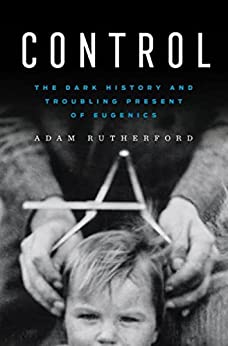
More on this book
Community


Kindle Notes & Highlights

Read between
May 24 - June 13, 2024

President Harry Truman is supposed to have said, “Give me a one-handed economist!” so that his adviser could not offer an opinion and follow it up with “on the other hand. . . .”
DNA is the name for the molecule that carries genetic information, and typically is depicted in the iconic double helix. Genes are pieces of DNA that code for proteins. Proteins are the workforce of living things: all life is built of or by proteins. Genes are part of chromosomes, which are long stretches of DNA harboring many, sometimes thousands, of genes.
All organisms have a set number of chromosomes, and in humans that number is typically forty-six—twenty-three of these come from each parent, and twenty-two of these are paired, containing different versions of the same genes. The remaining chromosomes are the X and Y: women typically have two X chromosomes, men have an X and a Y. The genome is the total amount of DNA in an individual, or species, which includes all the genes, all the control switches, and more, much of which we don’t really yet understand.
And while these basics are taught as high-school biology, there are infinite levels of qualification, exceptions, caveats and finicky details that are far from trivial. This is why human genetics is not finished, nor will it ever be, and why those who confidently assert truths in science are often buoyed by ignorance rather than knowledge.
But crudely, genetics and evolution are only the study of sex and families, which have been the primary fixations of humans since before the origin of our species.
However, all science is political. This is a statement that causes vexation among some who confuse the ideals of science with its reality.
But in all science—and especially the scientific study of humans—we inherit knowledge infected by the contingencies and political obsessions of our scientific forebears, whether we know it, deny it or acknowledge it. Sometimes the biological and the political are deeply intertwined.
the United States Declaration of Independence. The hallowed principles in its preamble are so fundamental that they are described as self-evident truths—people are created equal, as authorized by a God, and life, liberty and the pursuit of happiness are enshrined as natural law. They are therefore incontestable, and the inarguable basis of governance. They are of course fictions, noble lies. Set aside the fact that the men who wrote these words owned other humans as possessions, to be sold and to live their lives enslaved, much of which was justified by a newly invented science of biological
...more
Nevertheless, the ideas spelled out in the Declaration of Independence are beacons of light, fundamental entitlements afforded to humankind.
People are not born equal. They are conceived already cuffed to forces beyond their control that will shape their lives, limit their opportunities and keep their ability to fulfill those unalienable rights beyond their grasp. Class, race, wealth, nationhood, biology and randomness are all confounders to the principles of equality. You were not born free of these forces.
Your genome is a script, etched into the kernel at the center of your cells, but the film of your life is played out in the countless forces that determine how that script is performed. Nature was never versus nurture; it is and always was via.
Eugenics is a project with a short history, but a long past. The oldest readers will have direct memories of the Second World War, and how governments tried to exert the most pernicious forces of control on their populations. Eugenics is perhaps most closely associated with the deranged acts of the Nazis and their evil attempts to exterminate not only millions of Jews, but also hundreds of thousands of people with physical disabilities or mental illnesses, or other characteristics such as homosexuality. They were collectively categorized as Lebensunwertes Leben— “lives unworthy of life.”
state-sanctioned eugenics policies were also implemented in more than thirty countries, and some of these endure in the twenty-first century.
Eugenics is in many ways a defining idea of the twentieth century. It was enacted as policy by the most powerful and populous countries on Earth and fueled tyrannical regimes that tore the world apart with unprecedented vigor.
eugenics was a guiding light for the betterment of Western societies, viewed as normal and desirable by people across political divides, and forcefully championed by the most powerful men and women in society. Winston Churchill was a key driver of eugenics policy in the United Kingdom in the first two decades of the twentieth century, as was Theodore Roosevelt in the United States. Margaret Sanger, a pioneer of reproductive rights for women, advocated for eugenics policies, as did the scholar W. E. B. DuBois, as a potential mechanism for racial uplift for Black Americans.
The first part of this book is a history of an idea that hid in plain sight, from its roots in key philosophical texts of the classical world, in obscure and popular scientific books, and all the way into its genocidal realization in the twentieth century.
The Chinese one-child rule implemented in 1979 evolved into a two-child policy only in 2015, and three in 2021. But in 2010, it was modified with the Iron Fist Campaign—the compulsory sterilization over the course of three months of ten thousand women who had violated the law by having more than one baby.
Barbara Harris has used the charity she founded, Project Prevention, to pay three hundred dollars each to American drug addicts and alcoholics to have long-term contraception or sterilization to prevent their having children born into substance abuse. According to the group’s own statistics, she has paid 7,600 people for control over their reproductive biology.
And in the United States, an estimated twenty women underwent involuntary sterilization in Immigration and Customs Enforcement detention centers in 2020.
We routinely screen pregnancies for conditions such as Down syndrome, and offer women the choice of terminating that pregnancy.
Are these techniques eugenics? I don’t believe that they are, though both eugenics and these reproductive technologies share history and scientific ancestry. These are medical interventions designed to offer options to parents, enabling them to make choices about the medical health of lives they may want to bring into the world, whereas eugenics in its original form was designed to sculpt societies through selective breeding.
The word “eugenics” itself is a neologism, invented by the Victorian polymath Francis Galton, who went on to define it in various ways, all to do with the molding of populations according to the desirability of particular characteristics: it is a fusion of the Greek prefix eu-, meaning good, and genos, meaning offspring—well born.
Galton founded the Eugenics Records Office in London in 1904, which institutionalized this movement, and tied it to University College London (UCL) for many decades to come.
Some of them also held deeply racist views and believed fervently in the principles of eugenics. Their opinions are often grotesque in our age but were not atypical for theirs.
David Starr Jordan was the president of Indiana University in Bloomington and went on to be the founding president of Stanford. He was also a long-standing eugenicist who believed war would strip nations of the best and leave only the survival of the unfittest. Jordan served on the board of the Human Betterment Foundation, a think tank comprising academics from UC Berkeley, Harvard, Caltech and the University of Southern California that advocated for compulsory sterilization legislation in the United States. Jordan’s nominal legacy has recently been expunged from the campuses at both Stanford
...more
If the actions of our forebears only make you feel proud, and don’t sometimes baffle, upset or anger you, then you may not be doing history at all.
However, human sciences are not outside of politics, no matter how noble an aim that might be. A book about race, genetics or eugenics cannot be politically neutral.
But we should also consider a seemingly simple question: Would eugenics work? The stated aims of the eugenicists were to remove undesirable qualities from the populace and encourage desirable ones. With a modern understanding of genetics, and with the enacted legislation of various countries, we should be able to determine the outcome of eugenics policies, and therefore determine how effective the strategies of population control were, or could be.
Recall Charles Darwin’s phrase that cannot be repeated often enough: ignorance breeds confidence more often than does knowledge.
I have focused on the development of eugenics in three countries, Great Britain, the United States and Germany, though it happened—and continues to happen—all over the world. And I approach this subject as a scientist, one attempting to understand the role of science in a complex global history.
It begins with Plato. Republic is one of the founding texts of Western civilization. Plato’s dialogue with Socrates (and other Athenians) considers the structures of society, of justice, the nature of the soul, happiness and many other themes of the world of humans. In books V and VI of Republic, Plato outlines a detailed plan to control the breeding of the people in a utopian city-state, where a guardian class would forgo their wealth, and women and men would be matched by the state according to their qualities, like sporting dogs or horses bred for their strength or speed.
Eugenics was not fundamentally a racist ideology, except in the countries where it was by default—notably, the United States and Canada. What this means is tricky to unpick, but the basic ideology of enriching a population via selective breeding becomes racist only when it is fused with the assertion of White superiority.
In recent years, we have discovered that males of some species deploy all sorts of mechanisms to prevent females from mating with other males, in an attempt to guarantee that they become the fathers over their lesser brethren. Sometimes this is crudely physical—a dog’s penis will expand after ejaculating and lock him inside a female for as long as possible.
Females have their own tricks too—many ducks have labyrinthine vaginas, tortuous with blind alleys. Some female butterflies have an extra stomach in their vaginas—the bursa copulatrix—that has evolved to digest sperm from lesser males.
Galton would later emerge as a founding father of statistics, and a de facto father of genetics: it is from his biometric analysis of people that much of the modern study of heredity, families and sex derives, and the mathematical fusion of heredity with Darwin’s theory of evolution by natural selection would occur under his auspices.
Galton strives to use statistics to make his case for the rarity of eminence, and its hereditary qualities.
women contribute fractionally more genetic material to their children than fathers. Galton was not to know that, but it shows that his model was wrong. He assumed a sexed biological role of inheritance that was not there. Ultimately, nurture would explain the discrepancy far more than nature. In the end, his thesis is hamstrung by its lack of objectively rigorous data. Galton blithely acknowledges this—it is the nebulous concept of reputation on which his whole house of cards sits.
Over the following years, more than thirty states used Laughlin’s model, and in 1933 it was adopted by the Third Reich just four months after Hitler seized power.
A 2014 study analyzed the DNA of 29,141 living African Americans and showed no signs of selection for any trait in the time since their ancestors were taken from their African homelands. The average African American genome is different from the average White American genome only because their histories are different.
It’s a fallacy in three dimensions: complex traits rarely have single genetic causes, they always involve the nongenetic environment and genetics is probabilistic, not deterministic.
When scientists play historian, the risks are great.***** All too often, in their attempt to understand history they fail to apply the same scrutiny to the evidence of the past to how they approach their scientific data.
Josiah Wedgwood, the British politician who did more than perhaps anyone else to stand in the way of enforced sterilization in Britain, summed up the whole eugenics movement with a telling phrase: “legislation for the sake of a scientific creed which in ten years may be discredited.”
Eugenics began as an idea intended for the improvement of a people. But you cannot have desirable characteristics without an implicit hierarchy that some other characteristics are undesirable. Consider that, hypothetically, when you select those hundreds of slight genetic variants for intelligence, you may well be selecting for or against other traits as well.
At its inception, eugenics was the fetishization of a science for political ends. It is no different today. Instead of grasping for science at the edges of our understanding, would it not be better to improve a people with mechanisms that work? Via education, health care and equality of opportunities regardless of family history or the luck of the draw. Ultimately, we are considering risk. The predictions we can make about biology are sound but far from perfect.
Genetics is the most awesome force the planet has ever seen, but we wield it like a kid who’s found their dad’s gun.
