
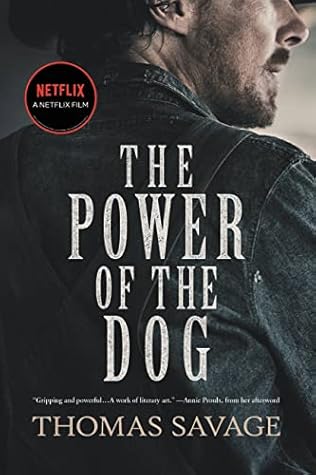
More on this book
Community


Kindle Notes & Highlights


And watching, Peter knew with a knowledge as tempered as a sly old man’s that he must oppose them on his own terms, not theirs. And he knew it was not only they for whom he harbored this novel, cold, impersonal hatred, but for all those normal, rich, envied and secure ones who might dare insult his private image of the Gordons.
“I would tell you, Peter, never to mind what people say. People can never know the heart of another.” “I’ll never mind what people say.” “And Peter, please don’t say it quite like that. Most who don’t mind—most of them grow hard, get hard. You must be kind, you must be kind. I think the man you will become could hurt people terribly, because you’re strong. Do you understand kindness, Peter?” “I’m not sure whether I do, father.” “Well, then. To be kind is to try to remove obstacles in the way of those who love or need you.” “I understand that.”
In Nature herself—in the supposedly random and innocent way she disposed and arranged herself—he saw the supernatural. In the outcropping of rocks on the hill that rose up before the ranchhouse, in the tangled growth of sagebrush that scarred the hill’s face like acne he saw the astonishing figure of a running dog. The lean hind legs thrust the powerful shoulders forward; the hot snout was lowered in pursuit of some frightened thing—some idea—that fled across the draws and ridges and shadows of the northern hills. But there was no doubt in Phil’s mind of the end of that pursuit. The dog would
...more
but you do wonder sometimes if people are what you think they are, or if you only think that they are and they are what they are and not what you think.
“Do you think…?” Shocked, he suddenly realized the same question had been on her mind. It was she, then, who expressed it. “Do I think there might be something—something wrong—something wrong with Phil?” The Old Gent felt hollow in his stomach, but it was a relief to get the thing out in the open. “If there is, it’s not your fault.” “Nor is it yours,” she said, and looked at her watch.
He felt no jealousy of George Burbank, or, if he did, it was as controlled and as impersonal as his hatred of those who might attempt to destroy his private images. Marriage would simply make possible for her what she deserved long before he himself could ever make it possible, and her getting what she deserved was all that mattered to him. Marriage would remove her forever from the Red Mill where she served those he loathed and scorned,
By God, he thought. The woman might be dangerous after all!
it was that men and women in that country had only in common what could not be mentioned at dinner parties.
The drylanders were foreigners, for the most part, Finns and Swedes and such, and he had not much use for foreigners, and none at all for farmers. The shacks of log or clapboard covered with tar paper, their futile attempts to grow shade trees in the cranky, alkali soil, the clothes they wore—the big overalls and broken shoes—the wives who planted and hoed beside them, all reminded Phil of the changing times.
It beat him how people could destroy themselves over a piece of tail, themselves and the lives of everybody else. The fact was, George was no wiser than this young squirt beside him. Got himself hitched, and now there would be a stepson on the ranch. “No,” Phil said to the young fellow. “Those were the great days.” He felt like smashing something.
His shock turned to anger, and his voice burst clear across the stream. “Get out of here,” he cried. “Get out of here, you little son of a bitch.”
Peter listened, expressionless. He had been exploring when he came upon Phil, naked. He still saw the white, hairless body. He said nothing of the incident to his mother—naturally—and he had a hunch Phil hadn’t mentioned it, either. In a way, he and Phil had a kind of bond—a bond of hatred, maybe, but Peter felt that one kind of bond could be just as useful as another.
Phil pondered how one man passes a gift on to another, how like the very chains and lengths of rawhide rope a man makes, human character is woven on a strand of this and a strand of that—sometimes beautifully and sometimes poorly. It was in simple homage to Joe and to Bronco Henry, those two braiders and plaiters, that Phil braided now. Each had taught him something.
Now, Phil always gave credit where credit was due. The kid had an uncommon kind of guts. Wouldn’t it be just interesting as hell if Phil could wean the boy away from his mama?
“Pete,” Phil said, “I’ve been thinking. We sort of got off on the wrong foot, you and me, at the beginning.” “Did we, sir?” “No, forget the sir stuff,” and Phil coughed a little. “That was my impression. That sort of thing can happen to people, you know. People who get to be good friends.”
His eyes still held her. “I’ll see that you don’t have to do it,” he said.
Almost anytime you might raise your eyes and see a few cows, big spring calves at their sides trailing single file through well-worn paths in the sagebrush on the hill out front. Occasionally a cow had twins, but the extra calves were never enough to replace those left dead behind in the hills or on the flats—hamstrung, torn and eaten by wolves or bloated and dead from anthrax—blackleg, as they called it in that country.
In that ravine, along whose side ran one of the ancient cow paths, Peter found exactly the dead animal he’d been searching for; he thought it fitting that it was Phil, in a way, who had led him to it. He looked around as calmly as coyotes looked at him, and he listened; then he reached into his pocket and drew out gloves and drew them on as a surgeon might, got down from his horse, felt God smile, and went to work.
Taught me to use my eyes, too. Look yonder, there. What do you see?” Phil shrugged. “You see the side of the hill. But Bronc, when he looked there, what do you suppose he saw?” “A dog,” Peter said. “A running dog.” Phil stared, and ran his tongue over his lips. “The hell,” he said, “you see it just now?” “When I first came here,” Peter said.
Take what I’ve got. You’ve been good. Phil, at that moment in that place that smelled of years felt in his throat what he’d felt once before and dear God knows never expected nor wanted to feel again, for the loss of it breaks your heart.
The boy wanted to become him, to merge with him as Phil had only once before wanted to become one with someone, and that one was gone, trampled to death while Phil, twenty years old, watched from the top rail of the bronc corral. Ah, God, but Phil had almost forgot what the touch of a hand will do, and his heart counted the seconds that Peter’s was on him and rejoiced at the quality of the pressure. It told him what his heart required to know.
Deliver my soul from the sword, My darling from the power of the dog. He wondered if that Prayer Book were often used, if he might not snip out that bit and paste it into place in the scrapbook, a far better final entry than the rose leaves that, still red, had lost their odor. For she was delivered now—thanks to his father’s sacrifice, and to the sacrifice he himself had found it possible to make from a knowledge got from his father’s big black books. The dog was dead.
While Phil is plotting a homosexual involvement with the boy, young Peter is plotting a diabolically clever revenge on him that is pretty chilling.
They were unsure whether or not Phil Burbank and Bronco Henry had ever consummated their love because there is no such scene in the book. In the 1960s serious novelists knew such material was taboo. That night I did a careful re-reading and saw how this highly skilled writer had craftily transmuted what might have been an explicit physical scene in the hideout willows into a nature description that could offend no one but was quite obvious to those in the know.
