
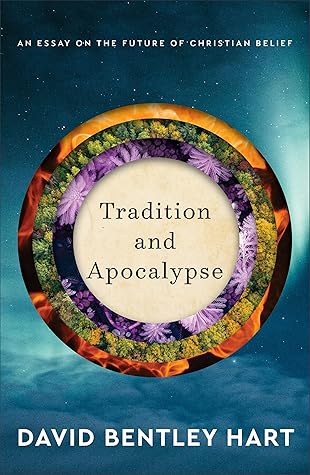
More on this book
Community


Kindle Notes & Highlights

Read between
February 9 - March 1, 2022

the entire way of life that was at one time the very essence of Christian existence, with its contempt for wealth and its civic dereliction and its hostility to the mechanisms of power by which societies and nations and empires thrive and survive and perpetuate themselves, is the very way of life to which most Christian culture throughout the centuries has proved implacably hostile. (Those damned hippies. Those irresponsible delinquents. Those unpatriotic bastards.
It would be no exaggeration to say that, viewed entirely in historical perspective, cultural and institutional “Christianity” has, for most of its history, consisted in the systematic negation of the Christianity of Christ, the apostles, and the earliest church.
Viewing, moreover, the history of dogma in long and skeptical retrospect, one can scarcely fail to notice how easily and with what rapidity small misunderstandings of scripture metastasized into enormous conceptual constructs of their own, ponderous enough to overwhelm and crowd out the actual original messages of the texts.
Faith, if it is a genuine state of deep conviction rather than a mere habit of thought or comportment, is almost always born in a moment of apocalypse—an instant of “unveiling” in which one is seized by the sense of seeing more than one can at first account for, of knowing more than one can formulate, of being called to an end one does not wholly understand—and only thereafter is it fortified and enriched and made ever subtler by the patient and persistent application of reasoned argument and the indefatigable compilation of corroborating evidences.
Anselm’s fides quaerens intellectum is not so much a rule of method as a precise phenomenological description of what true religious adherence naturally consists in.
