
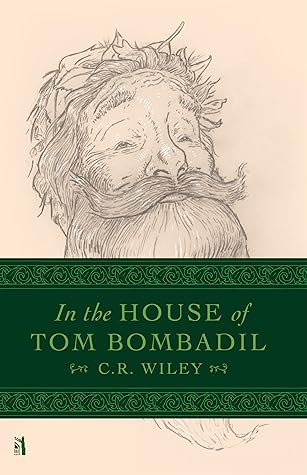
More on this book
Community


Kindle Notes & Highlights


The primary emotion in any bureaucracy, and the real thumbscrew of managerial control, is fear. And this is why Heaven is not a bureaucracy. Instead, it is a harmonious communion of natures, ruled by love. Hell, by contrast, is managed by fear.
the heavenly food chain we see in Christianity in which the highest of all gives himself as food for all, which results in a trickle-down of goodness and an expanding circumference of life.
Everyone dies. In the Christian faith death is a curse.
Frodo is tempted to flee. But his newly discovered courage won’t allow it,
Gandalf is like a prophet, Frodo is like a priest, and obviously, Aragorn really is a king.
There is a better ending to come—an ending that’s better than the ending of The Lord of the Rings. Some day the world will be mended.
That world is not consigned to fiery obliteration, or even a slow, entropic process ending in a cold, eternal night. Instead, the darkness itself will be cast out. This reminds me of the end of our world, as it is promised in the Bible. It is the damned who will “escape” to another world, when someone very like Tom here will cast them into the Outer Darkness.
It is because the world to come is more Real and Enduring than our world that our labors in this world matter. The next world infuses this one with meaning because, as the story suggests, in some sense our works in this world will follow us into the world to come.
While I think that may be a little closer to the truth, I still think it misses by a long shot. When we see Cherubim in the Bible, it doesn’t look like they’re studying God in the way that theologians study Him. They’re praising Him, and that’s quite different.
Perhaps eternal rest is unimaginable because it calls for an entirely different mode of life. I think that’s what we see with Gandalf here—he needs to have a long talk with Bombadil because he’s entering a mode of life for which Tom is truly the master.
Medieval thinkers noted that life can be lived in two modes—an active life and a contemplative one. Ideally, a man ought to make time for both. But people being people means that one or the other tends to come more naturally to most of us.
The Ring of Power is raw power, power supposedly beyond good and evil, as Nietzsche put it. But power untethered from the restraining and directing influence of goodness is necessarily evil. There’s no “beyond” when it comes to good and evil. It’s one or the other; either power serves goodness, or it serves evil.
In The Lord of the Rings there’s no Bombadil option. Evil must be defeated; if it isn’t, then even Tom will fall in the end, (the last, as he was the first).3 It’s a situation much like the one we face today. We may feel like Frodo, wondering why we can’t just sit things out. But Frodo was no Bombadil, and neither are we.
We also live in a world dominated by a Dark Lord, the Dragon in the book of Revelation. And even though Christians, including Tolkien, know that only the return of the King will put an end to the Dragon, there are ro...
This highlight has been truncated due to consecutive passage length restrictions.
when our stories are told someday, they will end the way Bilbo thought a good story should end: “And he lived happily e...
This highlight has been truncated due to consecutive passage length restrictions.
When the fight is over and the doing is done, our lives will necessarily look more like Mary’s—or Bombadil’s—than Martha’s, or Gandalf’s. Since that’s the case, perhaps we should get a little practice in resting before then.
we will find that Heaven isn’t boring after all. It’s something we can look forward to. It may even look like life at Tom’s house.
Tom is the ending, as in a happy ending. What does this have to do with dominion? Well, bless my beard, it’s the same thing! In the Bible God doesn’t lay down His dominion when He rests on the seventh day; He enjoys what He has made. And Tom’s dominion and his rest amount to the same thing.
He comes at the beginning because he gives us a glimpse of the ending—the happy ending.
A truly great storyteller knows how to suggest the ending at the very beginning without giving too much away. We see that in the Bible, in something known as the proto-evangelium (Gen. 3:15).
Technicolor Tom fearlessly skipping up the mountain path into the Dark Land, singing his nonsense songs, sending Shelob scurrying, and Orcs—or worse—running away with their hands over their ears, until finally, after stomping up the side of Mount Doom in his yellow boots, he casually flings the Ring of Power into its fiery cracks, after which he stands back, to watch the Dark Tower, and everything else made with the power of the Ring, just melt away. Could he have done it? Gandalf didn’t think so—but not because he lacked the power to do it, but because he’d forget to.
Our troubles, our daily struggles with evil, amount to a better story than one in which our troubles vanish with a casual wave of the Divine Hand.
People don’t have everything that they need before beginning a perilous quest. They must learn on the job. They begin with what they have and rise to the challenges they face along the way.
Callings come with boundaries, and Bombadil appears to be content with his. As Gandalf said, he lived within the boundaries of a little land.
