
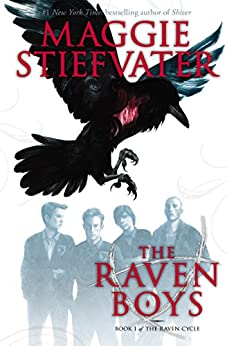
More on this book
Community


Kindle Notes & Highlights


A realization that even if you had discovered the future, it really didn’t change how you lived in the present.
If you had a special knack for finding things, it meant you owed the world to look.
Success meant nothing to Adam if he hadn’t done it for himself.
Gansey had always felt as if there were two of him: the Gansey who was in control, able to handle any situation, able to talk to anyone, and then, the other, more fragile Gansey, strung out and unsure, embarrassingly earnest, driven by naive longing.
It was easy to read him as shy or uncertain, she thought, but he really wasn’t either. Noah was. But Adam was just quiet. He wasn’t lost for words; he was observing.
In the end, he was nobody to Adam, he was nobody to Ronan. Adam spit his words back at him and Ronan squandered however many second chances he gave him. Gansey was just a guy with a lot of stuff and a hole inside him that chewed away more of his heart every year. They were always walking away from him. But he never seemed able to walk away from them.
“I’m only going to say this once, and then I’m going to be done with it,” she said. “But I think you’re awfully brave.”
He was full of so many wants, too many to prioritize, and so they all felt desperate.
Adam’s heart was a bird and a stone; his relief was palpable, but so was his shame.
When it came down to it, Adam had been making sacrifices for a very long time, and he knew what the hardest one was.
Being Adam Parrish was a complicated thing, a wonder of muscles and organs, synapses and nerves. He was a miracle of moving parts, a study in survival. The most important thing to Adam Parrish, though, had always been free will, the ability to be his own master. This was the important thing. It had always been the most important thing.
“Why?” Gansey asked Adam. “Was I so awful?” Adam said, “It was never about you.”
