
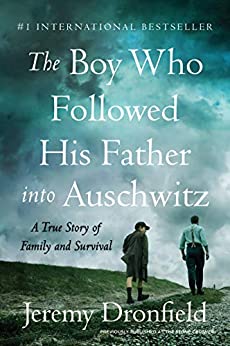
More on this book
Community


Kindle Notes & Highlights

Read between
September 7 - September 20, 2020

With the ring of enemies closing in ever more tightly, Himmler was determined to hold on to his surviving prisoners. They were intended to serve one final purpose—as hostages. Bergen-Belsen was one of the last concentration camps remaining on German-held soil. By the time Gustav arrived, the camp, designed for only a few thousand, had swollen beyond all sense or reason, and despite thousands of deaths every month from starvation and disease—7,000 in February, 18,000 in March, 9,000 in the first days of April—the living population had climbed to over 60,000 souls, existing among piles of
...more
Arriving back at the main gate, Sington said to Kramer, “You’ve made a fine hell here.”15 His brief tour had shown him only the throng of survivors, and it would be a day or two before he finally discovered the burial pits, the crematorium, and the grounds strewn and stacked with thousands of naked, emaciated corpses.
Hundreds of men, exalted in their fury and their strength in numbers, singled out the individuals who had tortured them. Gustav—the kindest, gentlest soul imaginable—watched dispassionately as SS guards and green-triangle block seniors were strung up or beaten to death. He saw at least two murderers from Auschwitz-Monowitz die, and felt no pity or remorse. The Hungarian troops made no move to intercede. That afternoon, when the killing was done, the surviving SS were made to remove the bodies, burying them the next day with their own hands.
The corpses were heaped in thousands, and the half dead, half living moved around them as if they were just lumber, stepping over them, sitting down to eat their scraps leaning against stacks of corpses.
The task proved overwhelming in the end; there were just too many bodies, and bulldozers had to push the decomposing corpses into the pits. It took nearly two weeks before the last were buried.
The death rate at Mauthausen had spiraled to over nine thousand a month. The walking cadavers who greeted the American liberators were found to be living among tens of thousands of their unburied, half-buried, or half-burned dead.
On the first page was the entry: “Arrived in Buchenwald on the 2nd October 1939 after a two-day train journey. From Weimar railway station we ran to the camp . . .” So began the record of his captivity. Now he started recording his liberty. “At last one is a free man, and can do as one pleases,” he wrote. “Only one thing nags at me, and that is the uncertainty about my family at home.”
And as for the nightmare—why, that would never end so long as life and memory lasted. The dead remained dead, the living were scarred, and their numbers and their histories would stand for all time as a memorial.
At last, on Monday, May 28, 1945, Fritz set foot in Vienna, five years, seven months, and twenty-eight days since leaving it on the transport bound for Buchenwald.
More than anything he was relishing his freedom. For the first time ever—not only since the camps but for the first time in his whole life—Gustav was completely at liberty, without responsibility or cares or fear, free to go as he pleased and take his time drinking in the sights and smelling the flowers.
Gustav Kleinmann died on May 1, 1976, the day before his eighty-fifth birthday.
Two years later, Fritz, who was only in his mid-fifties, had to take early retirement. The torture he had endured in the Gestapo dungeon at Auschwitz had left him with permanent back injuries that, despite spinal operations, eventually caused partial paralysis. Nonetheless, he had his father’s toughness, and he lived a long life, passing away on January 20, 2009, aged eighty-five.
By the end of the 1950s, a generation of Germans had been raised on a cushion of lies—that the Jews had mostly just emigrated, that there had been atrocities on all sides during the war, and that those committed by Germany had been no worse than those by the Allies. These young Germans knew almost nothing of the Holocaust, and the names of Auschwitz and Sobibor, Buchenwald and Belsen were obscure or unknown to them. Most of the SS murderers remained free, many still living in Germany.
More important than the individual sentences, the Frankfurt trials—along with Eichmann’s trial in Jerusalem in 1961—forced Germany’s eyes open, and ensured that the nation—and the world—would not forget the Holocaust.
In the end the Kleinmann family had not only survived but prospered; through courage, love, solidarity, and blind luck, they outlasted the people who had tried to destroy them. They and their descendants spread and multiplied, perpetuating through the generations the love and unity that had helped them through the darkest of times. They took their past with them, understanding that the living must gather the memories of the dead and carry them into the safety of the future.
