
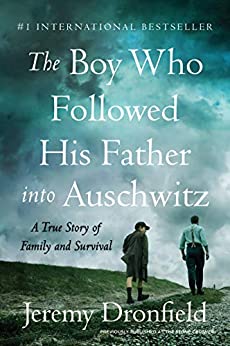
More on this book
Community


Kindle Notes & Highlights
Read between
January 11 - February 5, 2023

No matter what occurred in the world, no matter how near danger might be, life went on, and what could one do but live it?
The suddenness with which genteel Vienna had turned was breathtaking—like tearing the soft, comfortable fabric of a familiar couch to reveal sharp springs and nails beneath. Gustav was wrong; the Kleinmanns were not safe. Nobody was safe.
An English journalist observed: “It is true that Jews in Germany have not been formally condemned to death; it has only been made impossible for them to live.”14
“Every day another death,” Gustav wrote. “One cannot believe what a man can endure.”
Churchill told Parliament, “I know there are a great many people affected by the orders . . . who are the passionate enemies of Nazi Germany. I am very sorry for them, but we cannot . . . draw all the distinctions which we should like to do.”4 The first-stage arrests began on June 24.5
“What does my intellect benefit me when my name damages me? A poet called Grünbaum is done for.” He was right; he would be dead within months.28
Flesh of her flesh, blood of her blood, soul of her soul, gone from her. Kurt was her hope; he would have a new beginning in an altogether new world. Perhaps he would return one day, and she would see a new person in his place, shaped by a life that was wholly strange to her.

Heartbreaking!!
Nazism could no more be great than a strutting actor in a gilt cardboard crown could be a king.
The Nazi system was a formidable but ramshackle piece of engineering. It had been built through improvisation and ran at a juddering pace, misfiring, stuttering, consuming its human fuel, pouring out bones and ashes, and ejecting an exhaust of nauseating smoke.
The individual human, in drab stripes, was forced not only physically into the machine but morally and psychologically too.
Yet only through solidarity and kindness could people stay alive for any length of time.
It took strength of character to share and love in a world where selfishness and hate were common currency.
By resisting, it was at least possible to risk everything for something.
The Holocaust was a crime made of journeys, criss-crossing Europe to the accompaniment of a tuneless score of protesting machinery. Wheels hissed on the rails; couplings groaned and jolted: the hissing-squealing-clanking-banging of steel-wheeled boxes on metal rails was a never-ending nightmare music.
The dead remained dead, the living were scarred, and their numbers and their histories would stand for all time as a memorial.
At last, on Monday, May 28, 1945, Fritz set foot in Vienna, five years, seven months, and twenty-eight days since leaving it on the transport bound for Buchenwald. His train came in at the Westbahnhof, the very station from which he had departed. Fritz later discovered that of the 1,035 Jewish men who had been on that transport, only twenty-six were still alive.
