
More on this book
Community


Kindle Notes & Highlights

Read between
November 25 - December 1, 2025

“There are timeless stories, powerful enough to have survived through the ages.
This world throws all kinds of obstacles at us; we are forced to endure so much that is absurd. Our best weapon for fighting all the pain and trouble in the world isn’t logic or violence. It’s humor.”
work. They’ve seen the odd quotation or some watered-down, abridged version. They try Nietzsche on for size like some fashionable overcoat. Are you one of those, too?”
“Books can’t live your life for you. The reader who forgets to walk on his own two feet is like an old encyclopedia, his head stuffed with out-of-date information. Unless
someone else opens it up, it’s nothing but a useless antique.”
“It’s all very well to read a book, but when you’ve finished, it’s time to set foot in the world.”
He just tried to remind people of the obvious. Not to tell lies. Never bully someone weaker than themselves. To help out those in need . . .” Rintaro looked confused. The old man grimaced slightly. “Because the obvious is no longer obvious in today’s world.”
“Books and music are so similar, don’t you think? They bring wisdom, courage, and healing to our lives. Created by human beings as tools that bring comfort and inspiration to ourselves. And yet, there is a major difference between the two.”
Don’t condemn the mountain because its trails are steep. It’s also a valuable and enjoyable part of climbing to struggle up a mountain step by step.”
“A book that sits on a shelf is nothing but a bundle of paper. Unless it is opened, a book possessing great power or an epic story is mere scraps of paper. But a book that has been cherished and loved, filled with human thoughts, has been endowed with a soul.”
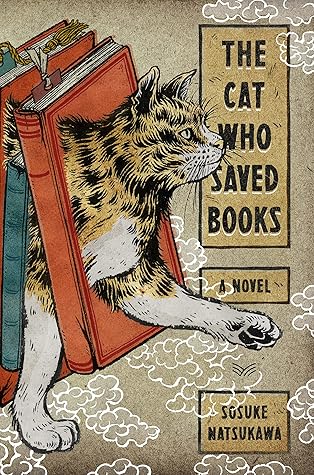
The Cat Who Saved Books contains four labyrinths, both a classical reference to the ancient Greek myth of Theseus and the minotaur, and a more modern interpretation of the labyrinth as journey of self-discovery. Throughout the novel, Rintaro Natsuki confronts monsters in the form of people who mistreat books, as well as his own demons.
