
Kindle Notes & Highlights

Read between
February 8 - April 16, 2022

Martin Luther King Jr. quote—“Darkness cannot drive out darkness; only light can do that. Hate cannot drive out hate; only love can do that”—and
I haven’t had time to read all the comments, but from what I’ve read, I see the true spirit of humanity. Inherently, we all want to be good. In times of crisis, we drop all the labels and rise above the meaningless stereotypes and become godlike in our actions. I’m watching this unfold before my eyes, and it’s like witnessing a miracle.
It took a long time, but I finally opened my eyes to what I had instead of dwelling on what I’d lost.
I’d spent a lot of time thinking about this passage, and I found it incredibly comforting: the idea that life’s hardest challenges are, in a way, gifts from the Lord—evidence of his great love for us.
The message I took from these words was profound: to be human is to endure hardship, and to endure hardship means that we are alive.
And being alive is the greatest gift. God’s challenges, in the end, are really blessings.
They are how we learn what it means to be one of...
This highlight has been truncated due to consecutive passage length restrictions.
Thinking of my life through this lens, and understanding that I had made it through all the hardships without losing my faith in God, also made me think that perhaps the...
This highlight has been truncated due to consecutive passage length restrictions.
It isn’t so much what you have but what you believe that defines who you are and how you live.
Gratitude and affection and, above all, connection.
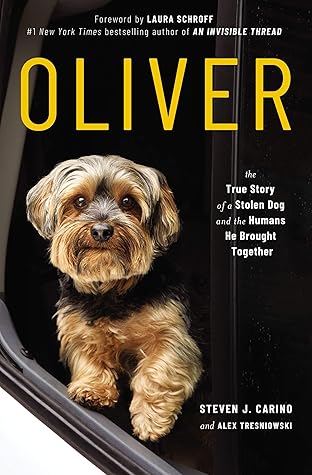
God let me use all the pain and anguish of my life to make an honest connection with someone who, only six days earlier, I had raged against. This, I realized, was a gift.
Imagine that—wisdom is more valuable than silver or gold. Nothing we desire can compare to wisdom.
If you can endure tribulations and, as it says in Proverbs 3:3, “let love and faithfulness never leave you,” you will gain the wisdom that brings true well-being.
If you can “bind them around your neck” and “write them on the tablet of your heart,” you will never again feel lost or alone.
It was as if a curtain was pulled back and I finally saw my father for what he was: a human being who was suffering.
This is what I thanked God for in Laura’s backyard—not for returning Oliver to me but for putting me through the trial of my life and giving me the wisdom to get through it.
For giving me the mountain and helping me climb it.
They depend on us for sustenance, but no more than we depend on them for love and companionship.
Dogs are closer to their humans than they are to even one another.
“Nothing ever becomes real till it is experienced,” the English poet John Keats once wrote.
Well, even a proverb is just a saying until it is actualized in your life. That is what happened to me. I learned the true lesson of Proverbs 3 by living it, and that was God’s great gift to me.
To be alive means to face just such tests all the time. Going forward, will I be able to see these tests as blessings from God? I sure hope I will.
What I do know for certain is that as long as I face these tests using God’s tools—wisdom, understanding, compassion, love—I won’t be alone in the fight. We are all part of a community. Geographic communities, spiritual communities, even accidental communities—there is always something that binds us to one another.
Which means that none of us is ever truly alone. I believe this now. It’s written o...
This highlight has been truncated due to consecutive passage length restrictions.
“Understanding is the reward of faith. Therefore, seek not to understand that you may believe, but believe that you may understand.”—St. Augustine (354–430)
