
More on this book
Community


Kindle Notes & Highlights
by
Jason Sobel
Read between
August 28 - September 7, 2023

But these numeric values should never be used to create novel interpretations that are unsupported by Scripture or that contradict its intended meaning.
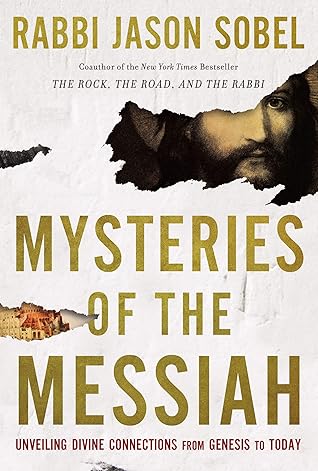
this book is about the Messiah and unveiling the factual story that He is not merely a New Testament, end-times persona. Instead, the Messiah and the mysteries wrapped around Him are found throughout the entire Bible, starting in Genesis and ending in Revelation.
In my innermost being I knew exactly what he was saying, but I needed to ask, “Lord, am I chosen?” He sweetly smiled and replied, “Yes.”
I was overcome by the peace and presence of God—energized and in awe of the experience. I felt as if I were in a state of euphoria. This filling, which was much like an indwelling, kept me in a state of deep contentment. I ran down the steps and into my front yard. Not caring who was watching, I jumped up and down, screaming at the top of my lungs, “I am called to serve Him! I am called to serve Him!”
The Creation and fall of humanity are connected to the number six. Man was created on the sixth day, and in Jewish thought the Fall occurred on the sixth day.
“In the beginning God created the heavens and [vav] the earth.” In this verse, vav literally connects “heavens” and “earth.”

As it was in the Garden of Eden and as represented in the Tabernacle, the Temple and latterly in Jesus Christ and his follows following the pouring out of the Holy Spirit.
When Adam and Eve sinned, they broke the vav, the connection between heaven and earth, which, again, according to Jewish tradition, happened on the sixth day (a Friday).
There are six dimensions of the physical world, as seen in the six factors that make up the basic units of measurement—length, comprised of (1) left and (2) right sides; breadth, which is (3) front and (4) back; and depth, which is (5) top and (6) bottom. The numeric value of vav also corresponds to the six directions of the physical universe: (1) north, (2) south, (3) east, (4) west, (5) above/up, and (6) below/down. Since Adam and Eve were created on the sixth day, this also makes the number six the number of mankind.
An interesting view of the world which I suspect is typically Jewish
In Hebrew, anything said or written three times expresses the highest degree or quality. The reason the angels cry out, “Holy, holy, holy” is because they are declaring that the Lord is the One who exhibits maximum, complete, and ultimate holiness (Isa. 6:3). Since six represents the number of the physical world, 666 (the number six expressed to the highest degree) represents total materialism. It is complete physicality, earth apart from heaven.
The tripple nature of this statement is also reflective of the triune nature of God in that 7 is the number associated with God and 777 with the triune nature of God.
In the beginning, God created heaven and earth, and He created mankind to embody the ideal union between heaven and earth.
Being created in Gods image is a key part of this
Adam’s name means “man,” and it is comprised of three letters: aleph, dalet, and mem. Man, who is a microcosm of Creation, has both a physical body and spiritual soul. Likewise, Adam’s name can be broken into these two parts. The Hebrew letter aleph represents the spiritual aspect of man: his soul. The name of God used in the Creation account, Elohim, also begins with the letter aleph, which underscores the connection between aleph and the spiritual part of mankind. The other two letters of Adam’s name, dalet and mem, spell “blood” in Hebrew, which points to the physical aspect of humanity.
The Fall can be summarized by one word: “exile” (Hebrew, golah). The antidote to exile is redemption (geulah). In Hebrew, there is only a one-letter difference between the words “exile” and “redemption”—the letter aleph, the letter of God’s name.
the Seed of the woman, the Messiah, would come and reverse the effects of sin and death caused by Adam and Eve’s disobedience. The promised messianic Seed of the woman died on a Friday, the sixth day of the Hebrew week, to restore the vav, the connection between heaven and earth.
The Messiah, who is known as Shiloh (345), will be the incarnation of El Shaddai
Since the Messiah would not have a biological human father, it makes perfect sense that the Messiah is associated with the woman in Genesis 3:15.
More than any other passage of Scripture, the Lord has used Isaiah 53 to open the eyes and hearts of Jewish people like myself to the truth that Yeshua is the promised Messiah.
by understanding and reading the Scripture in a way that connects the Old and New Testaments, we introduce ourselves to the Jewish roots of our faith and gain a heightened perspective.
The Creation account is where it began for all of us and the world we live in today. It was not written to provide a deeply scientific or detailed history of how the universe came into being. Rather, it sets the foundation for the much larger story of Scripture, which focuses on relationship, redemption, and restoration.
One of the main reasons given by the rabbis is because bet is the first letter of the word for “blessing”: beracha. God created the world to be a blessing, and only through His blessing would the world endure. The letter aleph, however, is the first letter of the word for “curse”: arirah.1 God created the world for blessing and not for cursing.
The last word in Revelation, the Hebrew word amen, ends with the letter nun. And when you put the first letter (bet) of Scripture together with the last letter (nun), it spells BeN, which, as previously stated, is Hebrew for “son.”† From the first letter to the last letter, Scripture points to the Son—the
God predestined the Messiah’s suffering. The New Testament confirms this idea by referring to Jesus as “the Lamb slain from the foundation of the world” (Rev. 13:8 NKJV). The Messiah, out of His deep love for us, committed to be slain as the antidote to sin and death even before the world’s Creation. Yeshua is the Reisheet (the First), associated with the firstborn, as Colossians states:
Jesus was God’s plan even before the foundation of the world, knowing He would become the sacrifice for all that was to come in man’s disobedience.
You are not a mistake or ugly or worthless, for God created you with wisdom. Let the light of God’s wisdom and understanding dispel the dark lies that deceive you and lead you into emotional, relational, and spiritual bondage.
The words “Let Us make” express God’s intentionality, deliberation, and personal engagement in making the first man and woman.
The verb used here is bara, which is composed of three letters: bet, resh, and aleph. These three letters are the first letters of each of the Hebrew names of the Trinity. Bet alludes to the Ben (the Son), resh to the Ruach (the Holy Spirit), and aleph to the Av/Abba (the Father). The three letters connect to the Trinity’s involvement in Creation.
Work is a part of life, but being worshipers is our primary calling. Work apart from God has no eternal benefit and lacks true meaning. But when we work from a place of worship and prioritize it in our lives, we fulfill our role as image bearers walking in our priestly calling.
Man’s original call to be priests, which was gradually lost as a result of the Fall, was restored when God gave Israel the Torah at Sinai and called His people to be “a kingdom of priests and a holy nation” (Ex. 19:6 NIV). This was emphasized with the coming of Jesus and the establishment of the New Covenant. The apostle Peter wrote that we are “a chosen people, a royal priesthood, a holy nation” (1 Pet. 2:9).
Too often, believers focus on saving souls without emphasizing making souls—mature followers of Messiah Jesus. We forget that discipleship is the fundamental and long-term aspect of outreach.
Abraham and Moses both using the same donkey to fulfill their divine mission prophetically points to the greater work of redemption through the Messiah, who would also ride on a donkey (Zech. 9:9).
Tbis pushing traditionas interpretation too far IMHO…
There were several generations seperating the two events and unless the donky was ressurected or blessed with extrealy long life it couldnot be the same donkey
that siad it would not surprise me that the donky's were somehow related but the important thing is the prophetic link between Abraham's use of a donkey and Jesus's triumphal entry into Jerusalem
Yeshua, the only begotten and beloved Son of the Father, also had to leave His home in heaven to go to the place of sacrifice, which was in Jerusalem, on the same mountain range where Abraham offered Isaac. This fulfilled the messianic prophecy that the Messiah would die but come back to life (Gen. 3:15; Hos. 6:2).
The offering of Isaac is seen by the rabbis as providing atonement for future generations in the same way the New Testament holds that Yeshua’s death brings complete atonement for all generations’ transgressions.
The word for “stone” in Hebrew (evan) has three letters, aleph, bet, and nun, and can be seen as an acronym for the Godhead: The aleph, which has a numerical value of 1, represents the Abba/Av (Father). The bet is symbolic of the Son; it is the first letter of the word ben and has a numerical value of 2. The nun has a numerical value of 50, which is associated with the Holy Spirit (Ruach HaKodesh) because the Holy Spirit was given at Pentecost, the fiftieth day. Fifty in Jewish thought is associated with freedom (“Where the Spirit of the Lord is, there is freedom,” 2 Cor. 3:17 NIV).
The only way to overcome gratuitous hatred is with unconditional love, which is what Yeshua preached and lived.
The teachings of Rabbi Alshich argue that the scapegoat did not completely wipe out Israel’s sin but only prevented the negative consequences of sin from being manifested against the people.
What is true of the scapegoat is true of all the sacrifices offered on the Day of Atonement: they only provided a covering for Israel’s sins but did not remove them altogether.9
The Brit Chadashah, New Testament, makes it clear that the scapegoat offering, as well as all the other sacrifices, foreshadowed the better sacrifice provided by Messiah Yeshua.
According to the Talmud, forty years before the destruction of the temple, the scarlet cord stopped turning from red to white, proof that the Yom Kippur sacrifices were no longer efficacious.10 The temple was destroyed in AD 70, which means that the cord stopped turning around AD 30, the time when the Messiah began His spiritual mission to bring redemption.
There is no logical reason why this would be the case from the Jewish perspective .
However from the view of he NT it is of significant importance
The large number of Gentiles who embraced the promised Jewish Messiah believed the Gospel, which is Jewish to the core. Jesus said to the Samaritan woman, “Salvation is from the Jews” (John 4:22). These Gentiles embraced the Old and New Testaments, which were written almost exclusively by Jews. However, the Gentiles quickly forgot and rejected the Jewish roots of their faith. As a result, Jesus was concealed among the Gentile nations as Joseph was concealed among the Egyptians. The Jewish Yeshua has become the Gentile Jesus.
If Yeshua’s Jewish brothers are going to recognize Him today, Yeshua needs to dress in Jewish garments and be put back into His Jewish context. This context is key to preparing the way for the Messiah’s return.
The fact that you are reading this book is just one sign of the times. The eyes of the church must be opened to the Jewishness of Jesus, His Hebrew identity must be restored, and the church must embrace the Jewish followers of Yeshua—messianic Jews—as
No matter how difficult the situation, we have to understand that God is generous, He is good, and He desires to bless us and provide for our needs. He wants us to have prosperity of our souls—spiritually, emotionally, and relationally.
Refreshing for his not to slip into the "prosperity gospel" that pervades so much of western chrsitianity
Messiah, Son of Joseph will be rejected and suffer to atone for the sins of Israel, like Joseph in the book of Genesis. The Messiah fulfilled this role at His First Coming when He prophetically fulfilled the spring holidays of Passover, Firstfruits, and Pentecost.
The Messiah, at the Second Coming, will return and fulfill the role of Messiah, Son of David. As the descendant of King David, Messiah Yeshua will defeat God’s enemies and establish the messianic Kingdom for one thousand years from Jerusalem. On that day the Messiah will also fulfill the fall holidays of the Feast of Trumpets, Day of Atonement, and Feast of Tabernacles.
In Hebrew, “Messiah, Son of Joseph” has a numeric value of 566 and “Messiah, Son of David” totals 434. When you add these two aspects of the Messiah together, you get 1,000. When Yeshua—the “Holy One” (1,000)—finally fulfills both messianic roles, as the sacrificial Lamb of God and as the Lion of Judah, the lion will lie down with the lamb,...
This highlight has been truncated due to consecutive passage length restrictions.
Persecution means we’re blessed, not cursed. Persecution brings blessing because it allows us to know Christ more.”
The Lord is attuned to the pain of His children and, like any loving parent, wants to alleviate it. His loving care for us should give us pause and cause us to praise our heavenly Father. The fact that the Creator of the universe sees our pain and cares deeply for us is truly amazing and should be a source of comfort for us in difficult times.
All of life is preparing you for who you are called to be and what you are called to do.
God’s appearing to Moses in the midst of a burning thornbush was an eternal promise that the Lord would forever be with His people in their pain and suffering until the curse is reversed and exile has ended.
being a servant is the essence of spiritual leadership.
To be a leader for the Lord, you must be humble, faithful, and have a servant spirit. Character and calling are inextricably bound. Calling and charisma are not enough, for charisma without character leads to chaos. In the Kingdom, character is what truly counts.
