
More on this book
Community


Kindle Notes & Highlights


today’s excess of digital stimuli causes our brains to become overwhelmed as they filter and sort through the glut. Being in nature, by contrast, gives us fewer choices, allowing the brain’s attentional system to function better in higher order things like deep thinking and reflection.
When we feel our createdness more directly (as we do in nature, whether huffing and puffing in altitude or sweating in a humid field), we naturally feel closer to our Creator and thus happier. We are in our proper place.
we are creatures and not the Creator. Our bodies, and the natural world, are not just playthings to manipulate and modify to suit our wills; they are gifts to accept, respect, and carefully steward. And yet this is a lesson lost on many today, who assume an autonomy that denies our creatureliness. It is the height of contradiction that vast segments of the pro-environment population—who rightly recognize the harm in genetically modified vegetables, inorganic chemical fertilizers, and so forth—are also advocates for the chemical and surgical manipulation that allow humans to “modify” their
...more
The cold biological truth is that sex changes are impossible. Every single cell of the human body (except for blood) remains coded with one’s birth gender for life. Intersex ambiguities can occur, but they are developmental anomalies that represent a tiny proportion of all human births.
damaged. I agree with Gavin Ortlund when he says, “Christians should be the best environmentalists on the planet,”25 in part because we know how much can go wrong when the symphony of creation is muted or silenced. I love how Tim Keller puts it, commenting on Psalm 19 (“the heavens declare . . .” v. 1): The Bible says creation is speaking to you. The stars. The waterfall. The animals, the trees. They have a voice. They are telling you about the glory of God. And it’s your job as stewards of creation, as stewards of nature, to make sure they keep speaking, to not let that voice go out.26
It is folly to do anything—either intentionally or by neglect—that silences the voice of creation. To do so is to cut ourselves off from a key source of wisdom, but also a key context for worship.
In our distracted age, books give us perspective, focus, and space to reflect. Reading books—a wide variety, from different eras and places and worldviews, both fiction and nonfiction—keeps our anachronism and self-centeredness in check.
It’s hard to develop empathy when you only read a tweet by someone; but a book-length immersion in someone’s world creates the opportunity for understanding. The act of reading a book is literally the act of being “quick to listen, slow to speak.” In literary fiction, we develop empathy by getting inside characters’ minds. We may love or hate them, but to the extent that we listen to and live with them for a time, we can learn from the particularity of their existence. Research shows that literary fiction especially helps readers develop empathy—a better understanding of the complexity of what
...more
about how each of us naturally only sees the world from one point of view, yet we want to “see with other eyes, to imagine with other imaginations, to feel with other hearts, as well as with our own.” We demand windows. Literature as Logos is a series of windows, even of doors. One of the things we feel after reading a great work is ‘I have got out.’ Or from another point of view, ‘I have got in;’ pierced the shell of some other monad and discovered what it is like inside.
“Those who have read widely and well will have many resources to apply to what they read,” Wolf writes, while those who don’t will have “less basis for inference, deduction, and analogical thought,” making them “ripe for falling prey to unadjudicated information, whether fake news or complete fabrications.”
If you think you know everything, you’ll have no use for books; if you are humble and curious (key foundations for a life of wisdom), you’ll devour them. It’s not a coincidence that the wisest people I know are not know-it-alls. What they know for sure is they don’t know it all. They are eager to be taught, enlightened, influenced.
He suggests a rule I have tried to follow: read one old book for every three new books. Lewis explains the reasoning: Every age has its own outlook. It is specially good at seeing certain truths and specially liable to make certain mistakes. We all, therefore, need the books that will correct the characteristic mistakes of our own period. And that means the old books.11
Here’s a radical thought for today’s echo chamber world: you can benefit from reading something even if you disagree with much of it! An educated mind can entertain and grapple with another’s ideas without accepting them.
Read things that stoke your love of reading. If you’ve been slogging through a book for eight months and can hardly muster energy to turn the page, don’t force yourself to continue! Move on to something more enjoyable. And if you love a book, revisit it! Feel no shame in re-reading your favorite books rather than reading that new buzzworthy bestseller.
If we believe everything in creation bears the mark of the Creator, then any book—whether philosophy, biography, biology, or fiction—that puts this creation under the microscope has potential to illuminate truth.
Books are valuable sources for gaining wisdom, to be sure. But like every other category in the Wisdom Pyramid, they are valuable only insofar as they supplement God’s word rather than replace it. They have the ability to make us wise as long as their assertions of truth are consistent with and not contrary to God’s revealed truth. They are great books to the extent that they confirm and clarify the truth of the greatest book.
I believe all that is beautiful bears witness to God because God is the source and standard of beauty.
In its very nature—superfluous, unnecessary, abundant—beauty teaches us about our abundant God, whose love and grace are bountiful in
Beauty shapes our hearts, orients our loves, quiets our minds, and stills our souls in a noisy and weary world.
Wisdom is more than just what we know in our heads; it also involves our bodies, senses, emotions. Beauty works on these levels. It engages and stirs our hearts. It reveals truth on the affective, often subconscious level. It forms our loves. That’s why movies, TV, and other narrative arts are so powerful in shaping popular opinions. They grab our hearts and move us viscerally, sometimes more powerfully than logic or reason.
Beauty gives truth a feeling, tone, and resonance. Truth without beauty often falls on deaf ears, just as beauty without truth rings hollow. But truth and beauty together are powerful, and we see this even in the Bible itself.
God uses beauty to communicate in Scripture: story, metaphor, poetry, song, heroes and villains, and all manner of literary devices. Rather than speaking propositionally, as if his listeners were robots merely needing binary code, Jesus speaks cryptically, through parables that paint dramatic pictures and use memorable metaphors. By communicating to his creatures in a way that emphasizes the power of form, our Creator makes the best case for why beauty matters.
Art is “a handmaiden to faith,” Jeffrey writes. “Great art can give us a glimpse, when referred to its source, of the deep echo in beauty, especially in the beauty of a holy love, of the beauty of holiness, and thus of the love of our heavenly Father.”3
Beauty is beautiful because it demonstrates man’s creative capacity to make new things out of the raw materials God provides.
Beauty shines a spotlight on creation, focusing our attention on what we are often too busy or too distracted to see. Beauty heightens our senses and helps us notice the wonder around us—which is why beauty is more important than ever. Our over-mediated age is rife with visual stimuli. We glance at, scroll through, and passively watch all manner of things. But we increasingly don’t have eyes to see reality.
We fill our senses with all manner of diversion and distraction, constantly consuming whatever micro-spectacle comes across our feed. But we rarely stop long enough to appreciate, understand, or critically evaluate any of it. Artists help focus our attention and awaken our senses. The painter or photographer literally frames one rectangle view of reality so we can see something (whether a landscape, still life, or portrait) in a more concentrated way.
Beauty can be a healthy part of one’s wisdom diet, but only if it is in its proper place, as neither the most or least important “food group.” When beauty occupies the preeminent place it can become an idol, a drug-like high we constantly chase. When beauty has no place in our diet, we miss out on certain textures, depths, and dynamics of truth. But in its right place, beauty can do wonders for our wisdom, helping us know and love God more by tasting, seeing, touching, smelling, and hearing his glories in the diverse harmony of creation.
When we encounter something beautiful our first instinct should not be to take a selfie with it. Rather, we should be still, quiet, and amazed.
We need to be intentional about cultivating spaces of silence and reflection, where our attention can be directed to one or two things rather than fifty. Making space for beauty is one way we fight against the solitude deprivation and desensitizing noise of our age. But to do this we need to also value things like rest and leisure, recognizing the importance of unproductive space and simply being in a world prone to filling every moment with doing.
When we refuse to observe the Sabbath and don’t allow space for the enjoyment of beauty, we implicitly signal a scarcity mentality that doubts the goodness of God. But when we do stop to rest, to feast, to “smell the roses” as they say, we display a contentedness and calm acceptance about the world and the one who holds it together—a confidence that however tragic and unpredictable it is, we can still pause for a party (or a nap).
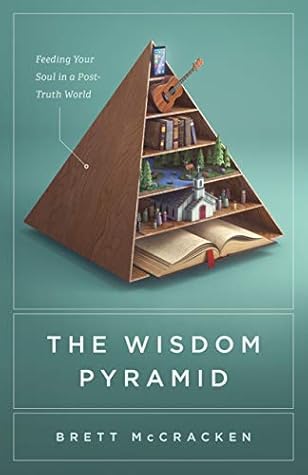
Like the “fats, oils, and sweets” food group atop the Food Pyramid, the Internet and social media should be a “use sparingly” portion of our wisdom diet.
There are diamonds in the digital rough.
We need habits that help us take what is good and avoid what is bad, habits conducive to gaining wisdom.
On YouTube you can gain the knowledge you would get at a university. An uneducated pastor in rural India who might never be able to attend seminary can, through the Internet, access all manner of theological resources—essays, sermons, book reviews, video lectures—to help him better handle Scripture and care for his flock.
But this just makes it all the more important to not abandon the Internet but rather seek to redeem it—amplifying the voices of truth and showcasing the exemplars of wisdom.
You can lack money, connections, education, and similar privileges and still say or create something that, potentially, large numbers of people benefit from around the world. Whether you’re an aspiring singer-songwriter, photographer, or simply someone with a story, you don’t need a gatekeeper or publishing deal to get heard.
It is precisely this unconscious impulse to hop on our phone and just go somewhere that can lead us to dark places: pornography, toxic subcultures, fruitless comment section battles. Sadly, the ease with which we can jump online in our spare moments (whether 30 seconds at a stop light or 90 seconds in the Chick-fil-A drive-thru line) conditions us to eliminate every last shred of unmediated space in our lives—which is a terrible thing for cultivating wisdom.
In his helpful book The Common Rule, Justin Earley suggests our spare moments should not be filled with online wandering, but rather “reserved for staring at walls, which is infinitely more useful.” He also suggests avoiding social media in bed and avoiding unplanned scrolling, which “usually means I’m hungry for something to catch my eye—and plenty of strange, dark, and bizarre things are happy to catch the eye on social media.”2 The digital wanderer is asking for trouble. Don’t go online without a plan. Go with a purpose, and stay online only as long as you need to.
Cal Newport’s advice in Digital Minimalism, which he defines as “a philosophy of technology use in which you focus your online time on a small number of carefully selected and optimized activities that strongly support things you value, and then happily miss out on everything else.”3
In a world where your time is scarce and everything is vying for your attention, don’t be a passive consumer who clicks on whatever comes your way. Be happy to bypass most of it, trusting that a smaller amount of excellent, curated dishes will be better for your wisdom diet than a vast amount of hit-or-miss, haphazard snacks.
Don’t fear missing out on most things online. Most of it is missable and will be quickly forgotten. To slow down—until history’s filter gives you reason to pay attention—is to be a wiser consumer online. The same goes for what you contribute online. Speed is treacherous when it comes to posting your opinion on social media or fanning some rapidly spreading flame.
One way to love your digital neighbors is to listen to them, even if what they have to say is hard for you to hear. Remember, you don’t have to fully agree with others online in order to glean some truth from their perspectives.
One of the blessings of the Internet and social media is the ability to easily share what we have personally found helpful, good, true, or beautiful.
Use the Internet to turn what you love into something that blesses others, rather than turning what you hate into something that angers others.
We know the Internet and social media are often cesspools of spiritual bacteria. The downsides are indeed massive. That’s why this space occupies the least vital section of the Wisdom Pyramid. But is the Internet irredeemable? Should we just burn it all down and start over, as if it’s some flea-infested, condemned structure or a radioactive wasteland like Chernobyl? No. And this is especially true for Christians, who might be the most tempted to run for the analog hills in the Internet age. Like the leper colonies, Ebola-stricken nations, or plague-infested medieval cities where Christians
...more
Encourage the online world to breathe fresher air offline, but do what you can to improve the air quality online. With what you say and do online, plant virtual flowers and trees instead of clear-cutting virtual forests.
The right foundation doesn’t make what stands above it irrelevant; it makes everything above it structurally sound. By contrast, the wrong foundation leads to destruction and grief. And this is our problem today: we’ve flipped the pyramid and made social media and the Internet—shifting sands if ever there were!—our base. But this is a recipe for disaster.
In today’s world, wisdom looks like the discipline of spending more time turning the pages of Bibles than scrolling through social media feeds; immersing ourselves more in the serene spaces of nature than in the clanging cymbals of cable news; developing a hunger for the nutrients of a healthy, local church more than the teeth-rotting candy of online clicks. It looks like cultivating rhythms of healthy information intake: building one’s day, one’s week, one’s life around the sources most likely to bring truth.
In today’s world of speedy information, wisdom looks like patience—a willingness to slow down and process things well rather than simply amassing information and experience as fast as you possibly can.
It looks like putting devices away when you’re sitting in church or across the coffeeshop table from a friend. It looks like joyful contentment with being “out of the know,” happily oblivious to the fourteen Twitter controversies that have come and gone over the span of a week.
