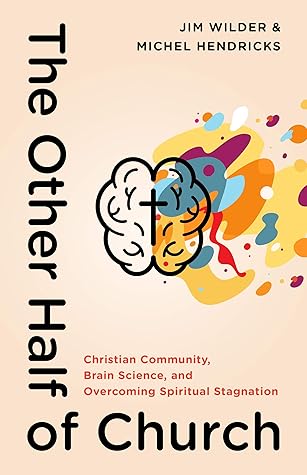
Over the last four hundred years, the cultural ground around the church has shifted. Philosophical developments from the Enlightenment altered the way we looked at ourselves as humans. The mind was elevated to be the most important part of our humanity. This emphasis on thinking and reasoning created an environment where knowledge and science flourished, with many benefits for humanity. However, many Christians began seeing themselves as mostly a mind, or as James K. A. Smith has coined it, “brains-on-a-stick.”11 Perhaps we should say “half a brain on a stick.”

There is truth to all of this explanation about how we have distorted discipleship. But not mentioned (and it is Moody Press publishing this) is the role of dispensationalism and the intentional and stated changes to focus on evangelism and not discipleship because of the imminent return of Christ as discussed in The Rise and Fall of Dispensationalism.
I don’t want to suggest that his explanation has no relevance. I think it is a very real part of the story, but I also think we need to note that this was not just an incidental result of cultural change but an explicit choice based on a theological conviction.