
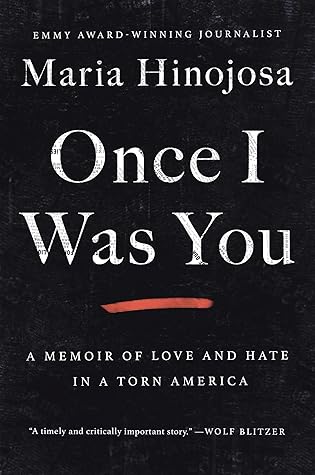
More on this book
Community


Kindle Notes & Highlights
Read between
January 2 - January 13, 2021

They looked so dejected. They were not criminals. They were seeking asylum, asking for a safe place to escape the bombings and the death squads. Wasn’t the United States the one place in the world where you could ask for asylum?
The real story is that legalizing undocumented immigrants ended up helping, not hurting, the American economy. According to the Bureau of Labor Statistics, almost immediately after people regularized their status there was an overall 20 percent wage increase for undocumented workers. Statistics show these now-legalized immigrants started spending 200 percent more on their own education, including learning English and getting GEDs, and this ended up generating new investments in businesses and, as a result, more jobs.
a country that welcomes the other.
The communists from Central America were the new boogeyman, in contrast to the nice Mexican immigrants we were legalizing.
I already knew I could never be on air. There were no on-air Latina correspondents at the networks, so why would I even think of that as an option?
I was also a killer salsa and merengue dancer because my Dominican roommate had been hell-bent on making sure I didn’t look like a Latina with no sense of rhythm. Many

The importance of dancing for her.
He was Dominican, born and raised, and not a US Latino, which meant he brought a Latin American sensibility to life.
To me, being a reporter meant seeing the humanity in everyone, especially people who are perceived as invisible, and then making it hyper-visible to others. The people and stories I wanted to do focused on the forgotten, the other, those who are thought of as different.
What it means to be a reporter for her.
as if you were telling your mother what happened. Connect the heart of the story to someone else’s heart.
The piece for Soundprint was titled “Silver or Lead,” “Plata o Plomo,” and the producers loved it.
It was a story that had been right in front of journalists’ faces for years and yet for them and therefore the rest of us, these kids were invisible. Their stories didn’t matter.
There were people from everywhere in the world who were happy that they had finally made it to this point. For some it might have been years in the making. I had to leave my Mexican citizenship behind and return my Mexican passport in an act of humility and shame because at that time you still couldn’t have dual citizenship. I was relieved it was done, but I had no idea that my citizenship would one day change how I understood my role in this country. Forever.
Becoming a US citizen.
Most people do not want to leave their homelands; desperate, increasingly dangerous circumstances are usually what push them to embark on perilous journeys to other countries
Why people migrate
The feeling toward immigrants in America around this time was filled with contradictions. In many ways, the continued influx of people and refugees, first from the CIA-sponsored dirty wars in Argentina and Chile and then Central America, Nicaragua, El Salvador, and Guatemala, was a direct result of US policy and its role in destabilizing the entire region. The US had trained and funded the contras (contra-rrevolucionarios) and helped stoke a war where before there was none. Salvadorans and Guatemalans were leaving because their countries were now flooded with military hardware, spies,
...more
I wanted them to experience some sort of deep emotion when they listened to one of my pieces. I wanted the people they met in my stories to be unforgettable. I wanted people to see and hear themselves in the characters they met in my reporting. I wanted them to feel what I felt when I met people—that we are all connected as humans, that when our paths cross you can see your suffering in mine and I can see a bit of hope in yours.
Lo que ella quiere con sus historias.
The posters and photos all shared one word: MISSING. Missing, or desaparecido, a word that people had come to know from the missing of Argentina and Chile during the dictatorships in both countries.
“You are carrying many spirits and much grief. You are enveloped in sorrow. We got through some of it today, but you have layers of this, so come back as soon as you can. You’re going to be okay. But there is much weight on your soul.”
The day after our story aired on CNN and all over the world, Canada officially shut down its borders to refugees from the United States. People would no longer be allowed to apply for asylum from inside of Canada. After all of that reporting, our story ended up making the policy worse for human beings. Not better. It was a low point in my career. I was doing the opposite of what a good journalist was supposed to do.
Sandra Cisneros, who became a dear friend after I reported for CNN on her purple house in San Antonio, gave me some writing advice once. “Write
about the things you wish you could forget,” she told me. “Not the things you remember. But the things you try but can’t forget about.”
Sobre lo que se debe escribir según Sandra Cisneros
Sergio was the first member of the family who told me that my border crossings were what made me special and magical—like a bird who can fly thousands of miles. Not like a dirty specimen who doesn’t fit in in either country and often feels like the borders slice her apart from the family and person she wants to be.
This hatred and suspicion of the other is a sickness that is spreading everywhere. Every one of us is responsible for trying to stop its expansion and dissemination; that much is within our control.
Noemi is like my own mother. She stood up for herself and her vulnerable child. Noemi, like my mom, was a woman born to be an American citizen because she was actually willing to die for her right to speak up and protect her child. My mom was ready to take on a man who looked like a redwood; she was prepared to do whatever it took to never let them take me, just like Noemi did with Bobby.
