
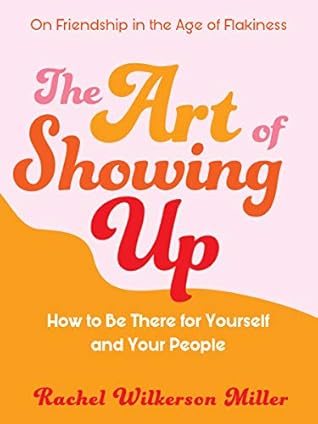
More on this book
Community


Kindle Notes & Highlights

Read between
June 15 - June 15, 2020

So, what does knowing yourself even mean? Being able to name the main qualities that make you you Having a clear sense of your core values and your priorities Knowing what you like and don’t like Identifying what makes you feel comfortable and uncomfortable Acknowledging what you are willing and unwilling to do Being aware of how you’re likely to react (or are reacting) in a given situation
Here are some of my favorites for self-reflection. What was the last thing that pleasantly surprised you? When was the last time you really wanted to scream? What is the exact level of famous you’d want to be? What was a trip or vacation you took that lasted too long? What’s something about yourself that you hope will never change? What is the best compliment you’ve ever received? What is your favorite birthday memory? What are you a natural at?
Laura Vanderkam writes in 168 Hours: You Have More Time Than You Think, “When you focus on what you do best, on what brings you the most satisfaction, there is plenty of space for everything.”
To get a clear sense of where your TME is going, first do a time and energy audit.
Start with a blank weekly calendar that is broken down by the day, and then by the half hour or quarter hour. (Spreadsheets work well for this, but you can also use graph paper, a journal, or a calendar app.) For the next week or so, use it to record how you spend your time. Try to update it every sixty minutes, if possible, but if it’s not, just do it as often as you can, doing your best to remember all of the “small” activities that can actually fill a lot of time. While you’re at it, rate your energy during each time slot on a scale of 1 to 5, with 1 being the lowest and 5 being the
...more
Once you’ve finished your audit, spend some time going through your data. Where is the bulk of your time and energy going? What patterns do you notice?
As an alternative to your personal time sheet—or immediately following it—here’s a similar but slightly different approach: Fill out a blank weekly calendar (broken down by the day and then by the quarter hour) with your ideal schedule.
Unf*ck Your Habitat, Rachel Hoffman defines the two: “Excuses are things that people use to justify not doing something because they don’t want to do it. Reasons are how people explain not doing something because they aren’t able to do it.
We all know the old adage that perfect is the enemy of good. But how many of us believe that this advice only applies to other people, and that we personally have to do everything perfectly?
Being OK with being alone is critical to showing up for yourself, and to living an authentic, fulfilling life.
Go through each app on your list and write down the core reasons you are using each one. It might be things like . . . to see what my friends have been up to to connect with people like me to get creative inspiration to catch up on important news to find new, interesting things to read. Once you’ve done that, identify any ways in which your current app usage isn’t helping achieve that goal and/or is bringing about other negative consequences in your life. Then brainstorm other ways you might fill that same need, but via a more direct (read: app-free) route.
Monotasking is focusing on a single task for a set period of time. The opposite of monotasking is what experts call switch-tasking. Switch-tasking is moving between cognitively demanding tasks,
The Mind of the Leader, in which the authors write that switch-tasking makes us “masters of everything that is irrelevant.”
Anne Poirier says that body image is a spectrum, and that body neutrality can be seen as a resting place within all the noise—the noise of self-hatred, and the noise of “you need to love yourself.” She says it can be particularly helpful if the idea of loving your body is so far from where you currently are that you can’t really envision ever reaching that point. Body neutrality invites you to focus on what you can do with your body instead of what it looks like.
“My body does things for me.” “My body deserves respect.” “My body deserves to be taken care of.” “I’m doing the best I can.” “I accept myself as I am right now.” “This is me.”
Write a letter to your body or to a specific body part. It doesn’t have to be a love letter, either—you’re allowed to be critical here. But once you’ve done that, it’s time to write a letter to yourself from your body (or from that same body part).
if you’re overwhelmed by all of the possible worst-case scenarios, try thinking smaller. Take a tiny next step. When the time comes, take another. And don’t look down.
Susan David makes a suggestion in Emotional Agility that I found helpful; she recommends making sense of mindfulness by looking at its opposite: mindlessness.
“How can I best support you right now?” This is my all-time favorite question when a friend is dealing with something difficult (or is simply stressed out).
“What are you in the mood for right now?”
When your friend is dealing with something difficult, they shouldn’t ever feel like they need to make you feel better about their situation.
Showing up is about showing up for everyone, especially people who have less privilege and power than you do.
Believing everyone is equal and deserving of love, support, and happiness is a good thing, but saying “I didn’t even realize you were [identity]” or “I don’t see color” communicates that these differences don’t matter. What you probably mean is it shouldn’t matter.
Instead of expecting others to educate you, educate yourself.
Listen to people from different groups or backgrounds regularly.
Shut down shitty jokes and comments. My two favorite responses for these moments come from Alison Green of Ask a Manager: “I hope you aren’t saying that because you think I/we agree with you” and “I hope you don’t mean that like it sounds.”
Radical candor, the brainchild of Kim Scott (who worked at Google and has consulted for several other big tech companies), is direct communication that is rooted in caring personally.
“I think we are different in some pretty significant ways, and I actually don’t think either of us is wrong or should be expected to change. But I am realizing it’s difficult for me to be friends with someone who [doesn’t share any of my interests/has certain political beliefs/feels so different about their career than I do].”
The Art of Gathering: How We Meet and Why It Matters by Priya Parker
There Is No Good Card for This: What To Say and Do When Life Is Scary, Awful, and Unfair to People You Love by Kelsey Crowe, PhD, and Emily McDowell
The Friendship Fix: The Complete Guide to Choosing, Losing, and Keeping Up with Your Friends by Andrea Bonior, PhD
Frientimacy: How to Deepen Friendships for Lifelong Health and Happiness by Shasta Nelson
Unf*ck Your Habitat by Rachel Hoffman
We Need to Talk: How to Have Conversations That Matter by Celeste Headlee
Captain Awkward blog, written by Jennifer Peepas
“The Missing Stair” by Cliff Pervocracy
Ask a Manager blog, written by Alison Green
Recipe: Deb Perelman’s Quick Pasta and Chickpeas
Recipe: Sue Kreitzman’s Lemon Butter Angel Hair Pasta
