
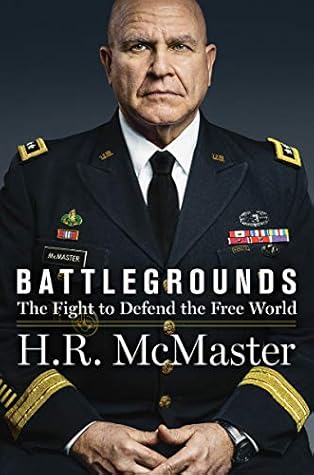
More on this book


Kindle Notes & Highlights

THIS IS not the book that most people wanted me to write. Friends, agents, editors, and even family, asked me to write a tell-all about my experience in the White House to confirm their opinions of President Donald Trump. Those who supported the president would have liked me to depict him as an unconventional leader who, despite his brash style, made decisions and implemented policies that advanced American interests. Those who opposed the president wanted an account to confirm their judgment that he was a bigoted narcissist unfit for office. And they wanted me to write it immediately, so that
...more

Why this book
I BELIEVED we were at the end of the beginning of a new era. At the end of the last era, the United States and other free and open societies had reason to be confident. The Cold War ended in victory over Communist totalitarianism. The Soviet Union collapsed. Then, during the 1991 Gulf War, America put together a broad international coalition and demonstrated tremendous military prowess to defeat Saddam Hussein’s army and free Kuwait. But after the end of the Cold War, America and other free and open societies forgot that they had to compete to keep their freedom, security, and prosperity. The
...more
Joe liked this
IN RETROSPECT, what those cavalry troopers experienced in Coburg, Germany, and what would become known as the Battle of 73 Easting in the Iraqi desert, marked the end of an era.4 It was then, in the 1990s, that American leaders, flush with victories in the Cold War and the Gulf War, forgot that the United States had to compete in foreign affairs.
America’s stature as the only superpower encouraged narcissism, a preoccupation with self, and an associated neglect of the influence that others have over the future course of events. Americans began to define the world only in relation to their own aspirations and desires.
Second, many assumed that old rules of international relations and competition were no longer relevant in what President George H. W. Bush hoped would be “a new world order—a world where the rule of law, not the rule of the jungle governs the conduct of nations.” The post–Cold War world was unipolar. Russia was in disarray after the collapse of the Soviet Union. China’s economic miracle was just beginning, and Chinese Communist Party leaders adhered to paramount leader Deng Xiaoping’s directive to hide their capabilities and bide their time. An emerging condominium of nations would vitiate the
...more
Hubris, an ancient Greek term defined as extreme pride leading to overconfidence, often results in misfortune. In Greek tragedies, the hero vainly attempts to transcend human limits and often ignores warnings that predict a disastrous fate.
An underlying premise of the New Left interpretation of history is that an overly powerful America is more often a source of, rather than part of the solution to, the world’s problems. To return to the Icarus analogy, under the Obama administration, we began to fly too low.
As I got on the flight to Palm Beach, Florida, to be interviewed by a man I had never met, I thought that, if given the opportunity, I would try to help restore America’s strategic competence. And I thought that the first step might be to begin with historian Zachary Shore’s concept of strategic empathy, what Shore describes as “the skill of understanding what drives and constrains one’s adversary,”18 as a corrective to strategic narcissism. During the interview at Mar-a-Lago, President Trump seemed sympathetic to my observation that the United States had not competed effectively in recent
...more
First, great power competition was back with a vengeance, highlighted by Russia’s annexation of Crimea, invasion of Ukraine, intervention in Syria, and the sustained campaign of political subversion against the United States and the West. And it was clear that China under Chairman Xi Jinping was no longer hiding its capabilities and biding its time as the People’s Liberation Army accelerated island building in the South China Sea, tightened control of its population internally, and extended its diplomatic, economic, and military influence internationally.
As we began to frame those challenges as the first step toward developing integrated strategies, we paid particular attention to improving our competence. We emphasized the importance of history. Ignorance or misuse of history often led to the neglect of hard-won lessons or the use of simplistic analogies that masked flaws in policy or strategy. Understanding the history of how challenges developed would help us ask the right questions, avoid mistakes of the past, and anticipate how “the other” might respond.
more than 2,500 years ago, the Chinese military theorist Sun Tzu wrote, “If you know the enemy and know yourself you need not fear the results of a hundred battles.”21 So, in order to overcome strategic narcissism, we must strive to understand our competitors’ view of history as well as our own.
On February 7, 2018, the week prior to the Geneva meeting, Russian mercenaries and other pro-Assad forces reinforced with tanks and artillery attacked U.S. forces and the Kurdish and Arab militiamen they were advising, in northeastern Syria. The mercenaries were from the company owned by Yevgeny Prigozhin, a Russian oligarch known as “Putin’s cook,” a man indicted by U.S. Special Counsel Robert Mueller and sanctioned by the Trump administration for his role in sowing disinformation during the 2016 U.S. presidential election.7 It was an ill-conceived and poorly executed attack. U.S. forces and
...more
traveled with Dr. Fiona Hill, the National Security Council’s senior director for Europe and Russia, and Mr. Joe Wang, director for Russia. During our long flight on the “big blue plane,” as we referred to the air force Boeing 757, we discussed Vladimir Putin, Russian policy, and the man whom I would soon meet, Nikolai Patrushev. Fiona is one of the foremost experts on Russia under Putin. In her book Mr. Putin, coauthored with Clifford Gaddy, she observed that “Putin thinks, plans, and acts strategically.” She also observed, however, that “for Putin, strategic planning is contingency planning.
...more
The future Russian president’s climb began in the late 1990s, when he was head of the GKU, the government’s inspectorate charged with uncovering fraud and corruption in government and federal agencies. He used that position to build dossiers on Russian oligarchs, powerful businessmen who had accumulated great wealth during the era of Russian privatization in the 1990s. He detailed their finances and business transactions. Putin had dirt on everyone. Because the rule of law had broken down in Russia, the oligarchs regarded him as an arbiter whose persuasive power derived from holding them
...more
One of the historical parallels to Russia’s invasion of Ukraine was Austria-Hungary’s invasion of Serbia in 1914, which triggered World War I. World War I was a powerful analogy because it was a war in which none of the participants would have engaged had they known the price they would pay in treasure and, especially, blood. Many people wanted war, but no one got the war he or she wanted. Moscow and Washington both needed to acknowledge the risk that the next Russian attempt might trigger a military confrontation, even if Russia intended to act below the threshold of what might elicit a
...more
both nations must protect our people from jihadist terrorist organizations. That is why it did not seem to be in Russia’s long-term interests to provide weapons to the Taliban in Afghanistan or to spread disinformation that the United States supported terrorist groups. Such actions strengthened organizations that posed a common threat to both our countries. Moreover, Russia’s support for Iran, Iran’s proxy militias, and Bashar al-Assad’s forces in their brutal campaign in Syria not only perpetuated the humanitarian and refugee crisis, but also fueled a broader sectarian conflict that
...more
As journalist (and later Canadian foreign minister) Chrystia Freeland observed, Russia was “an ex-KGB officer’s paradise.” Under Boris Yeltsin’s government, the Siloviki (hard-line functionaries of the Soviet-era Ministry of the Interior, the Soviet Army, and the KGB) comprised only 4 percent of the government. Under Putin, it grew to 58.3 percent. Fear of losing control as the post-Soviet economy and social structure were collapsing propelled the Siloviki into power. And Putin, Patrushev, and their Siloviki colleagues wanted Russia to be feared again.20
Russia does not have the power to compete directly with the United States and its allies in Europe and Asia. By all measures, the combined economies of the United States and European nations dwarf Russia’s economy. The European Union and the United States had a combined gross domestic product (GDP) of $36.5 trillion in 2017; Russia’s GDP was a meager $1.5 trillion. Russia’s GDP per capita in 2017 was approximately $10,750, roughly one sixth of the U.S. GDP per capita and ranking below far less powerful countries such as Chile, Hungary, and Uruguay. Russia’s economy is also woefully
...more
Whether under the moniker of Russia new-generation warfare, the Gerasimov Doctrine, or hybrid warfare, Putin’s playbook combines disinformation and deniability with the use of disruptive technologies to target states’ strengths and exploit their weaknesses. It also entails cultivating economic dependencies, especially on Russian-supplied energy, while brandishing and using improved, unconventional, conventional, and nuclear military capabilities. With this playbook, Putin aims to kill his neighbor’s cow and restore Russia’s relative power.
Russia also uses media arms such as the television network RT (formerly Russia Today) and the news agency Sputnik to broadcast a steady stream of disinformation. RT has a $300 million annual budget for broadcasting propaganda that looks like legitimate news in multiple languages. The network has more subscribers on YouTube than Fox News, CBS News, or NBC News.
The Kremlin has learned to tailor disinformation campaigns to the target country. In smaller countries less able to resist Russian efforts, such as Montenegro, a country of 640,000 people on the Adriatic Sea, the Kremlin made audacious attempts to determine an election outcome. In large, more distant countries like the United States, Russia prioritized undermining confidence in democratic institutions and processes. Disinformation and sabotage in Montenegro and in the United States, both in 2016, reveal how the Kremlin customizes its campaigns based on opportunities, risks, and the ability of
...more
conventional military strength is important to intimidate weak neighbors and deter U.S. and NATO forces from responding to Russian aggression. Here Putin faces a challenge: Russia does not have the defense budget to compete with the United States and its NATO allies, either in advanced conventional weaponry or in the ability to conduct integrated land, aerospace, maritime, and cyberspace operations—what the U.S. military calls joint warfighting.
As it undertook massive reforms in the 2000s, the Russian military did not try to match U.S. and NATO capabilities. Instead of exquisite systems, Russia invested in cheaper combinations of air defense, offensive cyber and electronic warfare, drones, long-range missiles, and massive artillery. This approach seemed to work. During the annexation of Crimea and the invasion of Ukraine in 2014, the Russian military established air supremacy from the ground with sophisticated air defenses rather than expensive stealth fighter jets. A reforming Russian military was emboldened under Putin. In the
...more
A country that does not respect the rights of its own people will not respect the rights of its neighbors. —ANDREI SAKHAROV
Deterring Russian aggression in cyberspace requires more than a purely government response. While the U.S. National Security Agency (NSA) has exquisite capabilities to attribute actions in cyberspace, it is often reluctant to do so because attribution might reveal its tools and methods. The scale of the problem alone demands efforts across the public and private sectors. Social media and internet companies must continue the work they began after the 2016 election to expose and counter disinformation and propaganda. Facebook, which took the most blame for the vulnerabilities its system created,
...more
A Russian proverb describes education as light and ignorance as darkness. A public informed about challenges to national security and to issues that adversaries use to sow dissension, such as race, gun control, and immigration, will prove less vulnerable to manipulation. Education inoculates society against efforts to foment hatred and incite violence on the basis of race, religion, politics, sexual orientation or any other sub-identity.
What education is for
Finally, education combined with the restoration of civility in public discourse can reduce the vitriol that widens the fissures in society that Russia and others exploit. A renewed focus on civics education in the United States and other Western societies is important to deter and defeat Russia’s campaigns of disinformation and denial. While keeping in mind the importance of self-criticism, civics curricula in Western nations might emphasize the virtues of those nations’ free, open, and democratic societies. For example, while acknowledging that the American experiment is flawed and
...more
This highlight has been truncated due to consecutive passage length restrictions.
Sage advice
The United States and NATO are behind in countering Russian capabilities in electronic warfare, layered air defense, and a range of other disruptive capabilities designed to close the gap in advanced military technologies.
Should Russian aggression continue or expand, however, the United States and like-minded nations should be prepared to exploit the Kremlin’s many vulnerabilities. Those include Putin’s and the Siloviki’s personal vulnerability to public scrutiny, the Russian people’s growing desire for a say in how they are governed, and the frailty of an economy overburdened by corruption, self-imposed isolation, and a demographic time bomb.
People were angry in part because Putin raised the retirement age even as more Russians became aware that he had become a billionaire many times over only by looting the country.37 By 2019, protests were a regular occurrence in Russian cities as Putin’s popularity dropped. In regional elections in September of that year, Alexei Navalny, an anticorruption activist and lawyer, developed what is known as a “smart-voting” strategy. Creating a list of candidates across the country who he believed could defeat those backed by Putin’s United Russia party, he urged opposition-minded citizens to vote
...more
