
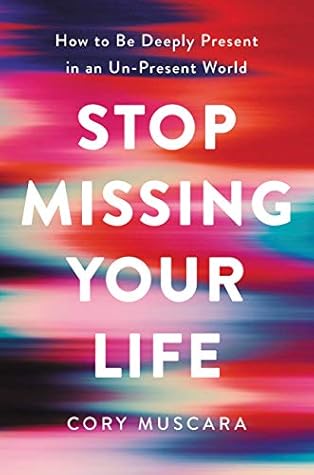
More on this book
Community


Kindle Notes & Highlights

by
Cory Muscara
Read between
September 2 - September 5, 2024

building a particular lifestyle to compensate for an unmet need (which we tend to do subconsciously) will often lead us into relationships, careers, or communities that don’t nourish us in the ways we most need.
Your task is not to seek for love, but merely to seek and find all the barriers within yourself that you have built against it. —Rumi
When we can meet pain and discomfort without shutting down, we give our walls an opportunity to soften. And when our walls soften, we make contact with our life.
When we hold ourselves or our lives to some predetermined plan, we’re no longer responding in the aliveness of the moment; rather, to past ideas about how things should be. Sometimes those past ideas are important reminders of what our values are, and other times they may be outdated or limited, therefore keeping us bound to a way of being that is no longer true to who we’re becoming.
“When we are present, our mind does not try to go somewhere else. It meets the moment as it is. This is our practice, learning not to run from, and learning not to hold on to, what is here. Bad moments come and go. Good moments come and go. You can fight the bad, but it will be back. You can hold on to the good, but it will pass. The only way to find real peace is to be present with what is. Just be present, more and more, more and more.”
All experience—thoughts, emotions, sensations, sights, sounds, smells, tastes—everything that makes up your experience of being human—is in constant flux, always changing. If we have a fantasy that one day it will all piece together into our perfect, permanent arrangement—that we’ll attain some level of wealth, status, appearance, accomplishment, healing—and then it will be smooth sailing, well, I hate to tell ya, but we’re running east looking for a sunset. Even if by some divine turn of the cosmos, our external conditions match everything we always dreamed, our internal conditions will
...more
who we are is bigger than the experience of the moment; a fearlessness rooted into the core of our being.
If we don’t attend to our pains and shadows, we’ll be shut off from important parts of ourselves. So much of our suffering is for that very reason—fracturing the whole into parts that we accept and parts that we don’t accept. As we integrate the more painful parts of who we are, there is an organic sense of wholeness that arises, and an associated depth in our happiness.
That’s how I define intimacy: The experience that emerges in moments when you feel truly seen and accepted.
There’s often so much that we’re holding back of ourselves that it’s impossible to feel a deep connection with someone.
The depth of intimacy you can experience with yourself is directly related to the depth of intimacy you can experience with another person.
You play an equal, if not greater, part in your experience of intimacy as the person with whom you’re trying to experience intimacy. You are the gatekeeper. It doesn’t matter how much someone says they love, appreciate, and enjoy being with you; if you don’t believe it at your core, they’re just words that don’t get through.
connection doesn’t happen at the level of “you’re great, I’m great, let’s be great together.” That’s just boosting each other’s egos, and it holds the same fragility as you only loving yourself when you’re at your best. Real connection is about having the permission to be human with one another. When you give yourself that permission, you also give the other person that permission. At the heart of what we’re looking for is a feeling that, on the deepest level, we are “okay.”
A human being is part of the whole, called by us “Universe”; a part limited in time and space. He experiences himself, his thoughts and feelings as something separated from the rest—a kind of optical delusion of his consciousness. This delusion is a kind of prison for us, restricting us to our personal desires and affection for a few persons nearest us. Our task must be to free ourselves from this prison by widening our circle of compassion to embrace all living creatures and the whole of nature in its beauty.
The fuel that creates separation between us and everything else, though, is largely made of our struggle against ourselves.
