
More on this book


Kindle Notes & Highlights

Read between
May 2 - May 8, 2021

Most of our epics and puranas have a structure of frame tales (story within a story).
We could feel the sadness, helplessness, frustration, anger and ultimately sublime peace along with the Aadhi yogi. The emotions could be experienced through his words; as the Swayambo turns into Rudra, Veerabadhra, Viroopaksha and again back to the yogi with his Abhaya mudra.
The narration of the author is so powerful that the reader is made to sit up with anxiety and read the disrobing of Draupathi to the already known end.
Story telling is a very natural, psychological and scientific means of communication. People easily identify with the characters depicted and characteristics displayed. They see in them their own woes and worries, and sometimes find ways to get over the hardships they face.
The highest knowledge found in the Vedas was made practical and lucid through the Puranas.
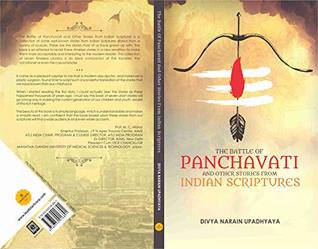
narrating seven episodes selected from the Ramayan, Mahabharat. Srimad Bhagavatam and Buddha Charitam in his book ‘The Battle of Panchavati And Other Stories from Indian Scriptures’, which is a precious gift to readers world wide.
As complexity inherently suggests simplicity, so also diversity culminates in unity.
Usha, the goddess of the morning colored the sky crimson.
the ash-smeared form of the yogi1 who wandered the lands of Bharata, the land of the gods.
he was the Swayambho2 the self-born,
Sadness would give way to anger, his eyes would roll upwards, and his eyelids would droop as he entered the semi-trance state again.
He had taught his followers Yoga and Aarogya4 and Natya5 and Tantra6
Daksha had invited all the gods and the sages, but had deliberately omitted Shiva.
she had visited her father only to be given the cold shoulder in the beginning and public humiliation later.
He sat down in the Padmaasana13, at the altar near Sati’s charred remains and, laying Sati down on his lap, howled in pain.
to reveal Veer Bhadra and Bhadra Kaali, Shiva’s alter
He became Rudra – the angry one. He opened his eyes slowly and rose from the Lotus posture, carrying Sati’s body with him.
Veer Bhadra and Bhadra Kaali laid waste to anything they set their eyes on.
he the Virupaaksha15 the angry eyed one, roamed the earth while the gods huddled together in guilt and shame and fear and wondered how to stop him from destroying all of creation.
To cure or to curse, he used the Tandav in different ways and with devastating effect.
Bhairav stood guard where Sati’s body parts fell16. The ganas or followers hurried to cover the part with fresh earth, pay obeisance, do Prana Pratishtha17 to consecrate the place and name it after the part that fell. Thus Rudra kept walking and his followers kept making Shaktipeethas or ‘houses of Shakti,’ another name for Sati, the divine Mother.
All baby girls were considered to be an earthly expression of the heavenly mother, the shakti, the mother of all gods. And hence, girls were sacred and were worshipped. To send a baby girl to definite death was an evil Karma.
the true inheritors of the empire with its twin capitals of Hastinapur and Khandavaprastha.
Ganga sprung forth in six streams. Five streams, the Alaknanda, the Dhauliganga, the Nandakini, the Pindar and the Mandakini took different directions from the mountaintop and one, the Bhagirathi followed Bhagirath.
