
More on this book
Community


Kindle Notes & Highlights

Read between
December 30, 2022 - January 17, 2023

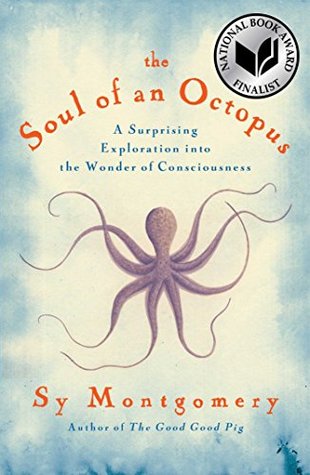
Another measure scientists use to assess brain power is to count neurons, the mainstay of the brain’s processing capabilities. By this measure, the octopus is again impressive. An octopus has 300 million neurons. A rat, 200 million. A frog, perhaps 16 million. A pond snail, a fellow mollusk, at most, 11,000.
The human brain, for instance, is organized into four different lobes, each associated with different functions. An octopus brain, depending on the species and how you count them, has as many as 50 to 75 different lobes. And most of an octopus’s neurons aren’t even in the brain but are in the arms.
But other changes certainly reflect mood. Nobody has figured out what all the color changes mean. A few are known: A giant Pacific octopus who turns red is generally excited; a white one is relaxed. An octopus presented with a difficult puzzle for the first time often undergoes several rapid changes in color, like a person who frowns, bites his lip, and furrows his brow when trying to solve a problem. A nervous octopus takes special care to disguise its head and especially its eyes, and can create a variety of spots, bars, and squiggles to confuse a predator. The small, deadly poisonous, blue
...more
“Just about every animal,” Scott says—not just mammals and birds—“can learn, recognize individuals, and respond to empathy.”
Once, walking into a hallway behind the scenes where some cichlids had just been moved from one tank to another, Scott had announced to me with concern, “I smell fish stress.” The scent is subtle—I cannot smell it at all—but the low-tide odor Scott detects, he explained at the time, is that of heat-shock proteins. These are intracellular proteins that were first discovered to be released, in both plants and animals, in response to heat, and are now known to be associated with other stresses as well. The scent makes Scott feel sick to his stomach—not because the smell is nauseating, but because
...more
Octopus and human intelligence evolved separately and for different reasons. She believes the event driving the octopus toward intelligence was the loss of the ancestral shell. Losing the shell freed the animal for mobility. An octopus, unlike a clam, does not have to wait for food to find it; the octopus can hunt like a tiger. And while most octopuses love crab best, a single octopus may hunt many dozens of different prey species, each of which demands a different hunting strategy, a different skill set, a different set of decisions to make and modify. Will you camouflage yourself for a
...more
Losing the shell entailed a trade-off: Now that the animal is “a big packet of unprotected protein,” as one researcher put it, just about anything big enough to eat it will do so. Octopuses are well aware of their vulnerability and make plans to protect themselves.
To see my friends, seasoned, graceful divers, looking so pathetically awkward and helpless, so willing and vulnerable, is a shock. In a heartbeat, the diver is reborn, swallowed into another reality, transformed from a shambling monster into a being of weightless grace. Is this what happens to the spirit at death when it flies up to heaven?
The service is conducted in Tahitian, a language I don’t understand. But I understand the power of worship, and the importance of contemplating mystery—whether in a church or diving a coral reef. The mystery that congregants seek here is no different, really, from the one I have sought in my interactions with Athena and Kali, Karma and Octavia. It is no different from the mystery we pursue in all our relationships, in all our deepest wonderings. We seek to fathom the soul.
