
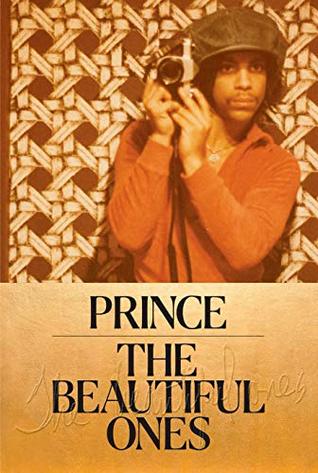
More on this book
Community


Kindle Notes & Highlights


“I wanted to ask: Do you believe in cellular memory?” He was speaking of the idea that our bodies inherit our parents’ memories—that experience is hereditary. “I was thinking about it because of reading the Bible,” he explained. “The sins of the father. How is that possible without cellular memory?”
Prince wanted to explain how he emerged as the synthesis of his parents. Their conflict lived within him. In their discord, he heard a strange harmony that inspired him to create. He was full of awe and insight about his mother and father, about the way he embodied their union and disunion.
“The space in between the notes—that’s the good part,” he would say. “However long the space is—that’s how funky it is. Or how funky it ain’t.”
One of the editors asked Prince about songwriting. It was fundamentally aspirational, he thought. You write where you want to go. From his earliest memories, he told the group, he wrote music to imagine—and reimagine—himself.
“Mystery is a word for a reason,” he said. “It has a purpose.” The right book could add new layers to his mystery, Prince thought, even as it stripped others away.
Prince sat at the head of the table and told me to take the seat next to him—a bit of instruction he always offered, I’d later notice. “Sit here.” He gave the impression of someone who’d grown accustomed to choreographing the space around him.
Prince had developed fastidious ideas about which words belonged in his orbit and which did not. “Certain words don’t describe me,” he said.
Now he was curious about the process. What did writing a book have in common with writing an album? I could tell that he wanted to learn: to apply the same diligence with craft and technique that he’d used to master so many different instruments. He wanted to know the rules, so he could know if and when to flout them.
“Just look at a word and see if it’s one I would use. Because magic isn’t one I’d use. Magic is Michael’s word,” he said. (Michael was Michael Jackson, whom Prince only referred to by his first name.) “That’s what his music was about.”
I was more consumed by the moment-to-moment reality of occupying a motor vehicle with Prince in the driver’s seat. His posture, for instance: upright. His turn signaling: impeccable. But wasn’t this exactly the sort of gee-whiz exoticizing that he’d inveighed against a few minutes ago? He’d told me he brushed his own teeth every morning. Why shouldn’t he have been an excellent driver? To believe that everything around him was glazed in surrealism was tantamount to believing in a kind of magic, too.
I feared a distant showdown between author and publisher on this count—I could practically hear the tense phone call in which some industry bigwig tried to convince Prince that only the true devotees would suffer through hundreds of pages of 2s and Cs. Which side was on? Weirdly, after the first page, I was kind of into it. Though it seemed distant and alien at first, soon it helped me hear him.
The room had the tense, promissory energy of a New Year’s Eve party at 11:30, with the caveat that midnight—in this case, Prince—might never come.
He sounded exhausted, like he couldn’t turn his mind off. It was always working through things like this: The promotion of the project, the project’s reception in the world, existed parallel to the thing itself for him. He would discuss the marketing of the book as often as the writing, always with a nimble, try-anything-once approach to entrepreneurship that reminded me of an effective small business owner more than an international superstar.
He could quell the chorus of doubts in people’s heads—could make you settle into your own potential. Later I’d read something that Gwen Stefani remembered him saying: “ ‘Have you ever just tried writing a hit? Like, don’t just try writing a song, try and write a hit song.’ I remember him saying that and me thinking, Yeah, you’re right. Why would you write anything else?”
One of the people closest to him told detectives that, after his last show in Atlanta, he’d said that he “enjoyed sleeping more these days,” and that maybe it meant he’d done all he was supposed to do on Earth; waking life was “incredibly boring.” I found those words wrenching when I read them, a disavowal of everything we’d talked about. Then I remembered that he’d said essentially the same thing at the first Piano & A Microphone show: “I like dreaming now more than I used to. Some of my friends have passed away, and I see them in my dreams. It’s like they are here, and the dreams are just
...more
a book that blended our voices to tell a story, his story, with purpose. By now you must know what that purpose is. I hope you’re ready to give yourself over to it. “Try to create,” Prince told me that day in Melbourne. “I want to tell people to create. Just start by creating your day. Then create your life.”
The eyes & the ears of a songwriter can never get enough praise.
There have been many who decry this as self-destruction, but prefer the term FREE WILL. Life is better lived. What path one takes is what sets us apart from the rest.
Hidden Places, Secret Abilities. A part of oneself that is never shown. These r the necessary tools 4 a vibrant imagination & the main ingredients of a good song.
If not traditionally beautiful, what characteristic can a woman possess that still makes her irresistible 2 men? The answer is this—a fully functional imagination.
Handwriting is a lost art in need of resurrection. Everyone should have a pen pal 2 actually write 2 as often as possible. Having an audience who will not judge U opens the pen up 2 a more honest fluid style of songwriting.
Fred Anderson and his wife, Bernadette5, were friends of my parents, &, though never asked, believe now that Bernadette & my mother secretly had each other’s back when it came 2 their husbands. 4 that matter think that the entire planet has been maintained this long by the feminine principle. can always let my guard down when there’s a woman present.
Music is healing. Some secrets r so dark they have 2 b turned in2 song 1st b4 one can even begin 2 unpack them.
There r many great singers but [not] that many funky singers. How a word is shaped in the mouth & the velocity or subtlety that a word is sung [with] is what characterizes a funky singer or not. Truly funky singers actually sound like they’re singing in everyday conversation. Look at an interview with some of the greats. U know the names. If U feel like dancing while they’re just talking, that’s funk.
was looking for myself outside of myself. When you’re little you see yourself in other people and try to find out who you are. People say things about me like, How is his skin so light? Or, Why doesn’t he age? It’s because of my self-image. I don’t think about myself as wrinkly. Why is your hair like that? My hair is like this because it’s unadulterated. Remember that scene in The Matrix, where Neo is feeling the back of his neck and saying the plugs aren’t there, and Morpheus says, that’s your residual self-image? That’s why I made lists and things. That’s what I mean by visualization. I was
...more
Peace will come when it becomes irrelevant to strike out at people. When you see that it’s striking out against your own genome.
The way it worked, she’d put on breakup music, have a drink, and then make the phone call. I think that’s why I can write such good breakup songs, like “Nothing Compares 2 U.” I ain’t heard no breakup song like I can write. The flowers are dead. [Miming receiving an urgent phone call] “Sir, the garden’s dead.” I have that knowledge. By the same token, love songs. No one writes love songs like I do. I play the ones that have love in them, whether they’re mine or someone else’s.
With my parents, it was like two alphas got together and outdid each other. My mother thought there was no one cooler than Prince, my father. He had the best clothes, played the best music. She could never replicate it with someone else. Always carried a torch. I always say there’s some part of your heart you should never give away. I’ve always lived that way. Because otherwise, I’ve seen it, there are times where you believe that’s it. And then you close yourself off to people.
When learned the foundation that stayed with me 4 the next 25 years was after reunited with my real father. He said, “U got a girlfriend? Good. Don’t get married & whatever U do don’t get anybody pregnant. Cya when U get home.” He would never take me 2 a trashy R-rated movie. This man read the Bible daily.
Calling back 2 mind the whole experience reminds me 2 do the best possibly can every chance get 2 b onstage because somebody out there is c-ing U 4 the 1st time. Artists have the ability 2 change lives with a single per4mance.
Religion is about self-development. That’s all it is.
A good ballad should always put U in the mood 4 making love. The way the Emotions’ lead singer’s voice breaks on the words “ love, love, love U baby…” just when the end vamp is starting. Fellas, U don’t need Debbie’s breasts in Ur hands 2 make U appreciate the value of a good ballad.
If U’re funky4, even on a ballad U’ll hear it. It’s just what U R.
Trying 2 outdo the funky ballads that preceded R work in the ’80s never seemed insurmountable. just figured that was then, this is now.
A local DJ is like a vortex of energy. DJs should bring communities together. The president should be like a local DJ.
If I want this book to be about one overarching thing, it’s freedom. And the freedom to create autonomously. Without anyone telling you what to do or how or why. Our consciousness is programmed. We see things a certain way from a young age—we’re programmed to keep doing them that way. Then you have to spend adulthood learning how to overcome it, to read out the programs. Try to create. I want to tell people to create. Just start by creating your day. Then create your life.
Once you got your thing right, you’d stop looking at someone else. You’d be yourself, and you’d feel comfortable.
I’m not saying that I’m great or anything like that; I’m just saying that I’m an alternative. I’m something else. And I long to hear something else from everybody.
When I’m onstage, I’m out of body. That’s what the rehearsals, the practicing, the playing is for. You work to a place where you’re all out of body. And that’s when something happens. You reach a plane of creativity and inspiration. A plane where every song that has ever existed and every song that will exist in the future is right there in front of you. And you just go with it for as long as it takes. (Essence, 2014)
