
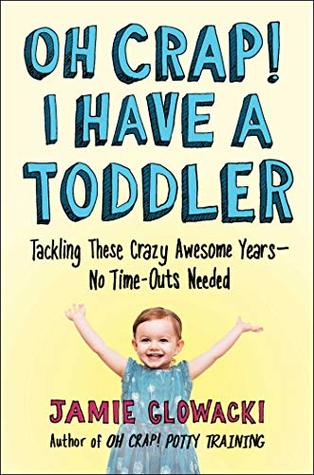
More on this book
Community


Kindle Notes & Highlights

Read between
June 13 - August 3, 2025

Honesty
Respect
Routine
Most “bad behavior” is caused by • acting out of feelings. • testing your boundaries and their limits. • curiosity: your child thinking, “What happens if I do this?” • your child not being appropriately challenged and therefore becoming challenging.
There was a tape and scissors table. Rolls and rolls of tape and scissors.
If you’re reading this book, it’s a fair assumption that you are in the upper echelon of parenting. You care enough about your parenting to seek help with your parenting.
We have a large portion of kids who don’t have life skills. Parents have done everything for them and give them no responsibility. Of course this makes kids entitled. They’ve learned it. Giving responsibility is what builds self-esteem, not saying “good job, buddy” a thousand times.
There is no type of play that is useless. It’s all important. Our guiding question should be “What can our children do for themselves?”
Reframing the whole day into life skills instead of education and scheduled activities can change everything for the whole family.
“If you have to tell a child something a thousand times, perhaps it’s not the child who is stupid.”
art is about process, not product.
First and foremost, you have to let go of the fear of mess. Real expression, true art, and letting go of control means there will be messes. Create space for that in your home. I promise the rewards will be greater than the mess.
Try to create an art space, a table, a corner—a place where the supplies can be left out. This fosters creation when the moment hits, as opposed to, “Okay. Let’s do art now.”
Rather than guessing what it is (and being woefully wrong), ask instead, “Can you tell me about it?”
With toys, go for less.
You don’t want the toy to direct every action the child does.
We all tend to slip into “Now I’m going to teach you this,” when actually, “Let’s do this thing together” can be a wonderful tool.
Josée Bergeron of BackwoodsMama.com has a fantastic list that I adore: Every time you want to say “Be Careful!” see it as an opportunity to help your child foster greater awareness of their environment and their bodies. Try saying: Notice how . . . these rocks are slippery, the log is rotten, that branch is strong. Do you see . . . the poison ivy, your friends nearby? Try moving . . . your feet slowly, carefully, quickly, strongly. Try using your . . . hands, feet, arms, legs. Can you hear . . . the rushing water, the singing birds, the wind? Do you feel . . . stable on that rock, the heat
...more
Be willing to hold out your hand to block another parent who moves in to intervene and say, “Wait. Hold on a minute. Let’s see how they handle this.”
We do not trust the preschoolers for accurate claims of being tired.
hiding out in the parental office, otherwise known as the bathroom.
Experimenting with diet is one of the few things you can do on your own that have no ramifications except inconvenience.
