
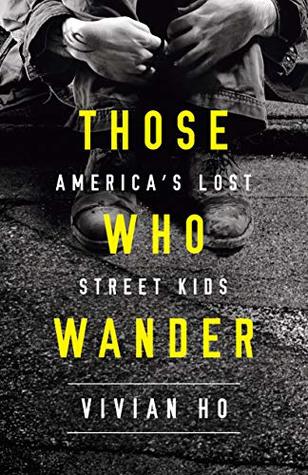
More on this book
Community


Kindle Notes & Highlights


“I, uh, actually have been fried to a point that if I do hallucinogens, I have seizures,” Momo said. “Or I become paralyzed. Mushrooms paralyze me. LSD makes me have seizures.” Could that all happen just from one bad trip? Christ, maybe all that antidrug fearmongering we had to sit through in school has some merit. “All from that burrito?” I asked, stupidly.
She spoke of this ordeal as casually as if she were disclosing basic facts about herself like her age, or where she was born—as if this weren’t the sort of traumatic urban-legend stuff of nightmares that parents tell their children to frighten them into not trusting strangers. I didn’t know how to wrap my head around what she was saying to me, and it took me a good few minutes to absorb the full gravity of what she had endured.
At the heart of it is a hustle that has existed for as long as mankind has felt entitled to nonconsensual sex, and as is too often the case, those who live on the margins of society are more at risk for sexual exploitation.
She said she felt disappointed that this had happened to her—“disappointed,” as if her captors had forgotten to do their chores rather than drugging and raping her.
“We live in a world where, when somebody beats you down and brutally rapes you and treats you like a dog for months, it’s unheard of,” she said. “But on the opposite side of that, if you look at humans historically, we have always been this way. We have always raped and murdered each other. We have always stolen, always warred. That’s how it is.”
It was almost like the conversation I had with Haze, in which I sought any kind of reaction or emotion from him over the murder of Audrey Carey. I found myself pushing Momo, seeking more than pragmatism, more than logic. Instead, I was met with just more calm. “Not everyone is mentally capable of going through trauma without breaking,” she said. “I’m really happy that everything fucked-up in my life happened to me. ...
This highlight has been truncated due to consecutive passage length restrictions.
“The women out here are victimized constantly,” Miriam said. “They’re raped, they’re beaten. I can think of one or two off the top of my head who would rather pee on themselves and smell like stale urine as a defense mechanism, rather than be clean and get raped.”
I asked her whether her friend had been raped by other street kids. “Yeah,” she said. “It’s pretty much people stealing from their own people, people hurting their own people.”
The fact that there haven’t been more stories about these victimized kids doesn’t mean this cycle of hurt isn’t still turning. It means that we only pay attention when the cycle’s radius spins wild and wide enough to affect us, the ones with homes and jobs and stability—when the person hurt or killed is someone outside the homeless or street kid community.
After Audrey Carey’s body was found in Golden Gate Park, local news was slow to report out the details, not just because it had happened over one of the busiest weekends in the city, but because many—including myself, I regret to admit—wrote her death off as yet another homeless-on-homeless crime gone awry.
As a rule, Rainbows never publish the location or coordinates of their camp, and they go to great lengths to inform only those who plan on going. They don’t believe in getting permits and allowing the federal government to dictate the terms of their gatherings, and the secrecy prevents any interference from local law enforcement.
Around a campfire one night, over a discussion about washing a kid’s mouth out with soap, somebody made a crack about how his parents had never abused him, and the rest of the circle responded by ragging on him: “Ohhh, look at this guy with parents who weren’t abusive!”
The few that had gathered around the campfire grew quiet. “That’s not funny,” someone muttered. Like so many Rainbows, many that sat around the campfire that night had mothers who actually were bitches. Many there would have loved to have had a mother who worried about their whereabouts, who searched for them when they were lost. Many there would have loved to have had a mother who cared.
Those few days I was at the Rainbow Gathering, my own mother had hounded me for updates that I was safe, that I hadn’t fallen victim to a murderous hippie cult in the middle of the desert. “You know I’m almost thirty, right?” I’d hissed over the phone before the gathering. “Yes, but you’ll always be my baby,” she replied. The concern that Echo’s mother had for her daughter was not unfamiliar to me, and I considered, for the first time in my career, stepping away from my role as an objective observer and reaching out to her mother to make sure Echo got the help she needed.
One lesson Haze’s mother imparted to him that he has closely adhered to all his life was “no snitching,” whether it was to the cops, to medical professionals, or to any other kind of authority figure in his life—even those who wanted to help him.
It’s the long-fought debate of nature versus nurture, and if there’s anything we can take away from Haze Lampley’s life, it’s that it’s both.
I had no way of confirming whether it was this shooting that he remembered so specifically. I could not prove that he was lying, yet I felt certain that the trauma was real.
It was the answer to the question that gnawed at him, the question he tried to ignore, the question of whether there was more to life than his current broken existence. It was a promise after a lifetime of broken promises, a promise of safety, of happiness, of something better. It was a glimmer of hope in a hopeless existence, the tiniest flicker of light in the constant darkness of endless night. It was a home.
“They say go get a job,” she said. “What’s the first part of a job application? An address. And you need ID. How do you get ID? In Oregon, you have to have a utility bill or a lease or something to prove that you live here. If you’re a homeless person in Oregon, how do you pull that off?”
She shook her head. “It’s the definition of irony. There are people who are literally dying on the street because it’s so cold out while two blocks away they’re putting up apartments that are going to cost $1,200 for a studio. And those are the people who are going to complain because they don’t want to look out their window and see a homeless person dying.”
She proposed rubbing dirt on my face and having me go undercover with her to the local housing office to see how difficult the process is. “The housing authorities have talked to me for years,” she said. “They know me. They know I’m out here. But they’re making it so I can’t make a move, and the people want me to jump through their hoops and stuff. It’s just impossible sometimes.”
felt like walking outside on the first day of spring. I wondered whether, one day, those clear blue eyes that looked up at me so earnestly over her burger would deaden like Haze’s, whether they would one day stare out blankly as if nothing reached them. I wondered whether, one day, this emotive girl would witness or experience enough violence that she too could walk away from bloodshed without a second thought.
Something I don’t think a lot of journalists are willing to acknowledge is that while we strive to go into our interviews with an open mind and a blank-slate attitude, with certain subjects, we know what we want them to say. Anyone who claims otherwise is lying to you, because as hard as we fight it, we’re still human beings who abide by the same societal contract and have the same expectations of behavior as everybody else.
Stripped of societal niceties and general expectations of decent human behavior, this mentality is our survival instincts at their basest. Retrospection is a luxury. Compassion is a privilege. And remorse, the ability to feel guilt, to take responsibility for your misdeeds? A suicide mission, a death wish, quicksand in the fight to survive.
We can live, but they can only survive. And we hate them for it. We criminalize their existence, making it illegal for them to sit or sleep or be. We donate our money to soup kitchens and homeless charities, but complain when we see someone panhandling in front of our establishments or using a public restroom.
There’s the J. R. R. Tolkien quote beloved by so many travelers and drifters: “Not all those who wander are lost.” The travelers I met on the road love this saying, with many splashing it up on their Facebook pages. In my time talking to them, I came to understand that they love this quote not so much because it defends the lifestyle they chose, but because it’s a nod to the fact that they are actually lost, even as they wander—and that so are the “housies” and “normies” and others who act as functioning members of society and have roots holding them firm in one place.
Not all wanderers are lost, and not all who remain in one place are found.
This had been their destination in all this, the reason for all the bloodshed and death and destruction, but it wasn’t even his at the time. It wasn’t a real possibility, just a wisp of a dream slipping through their fingers.
Not all wanderers are lost, but they are all searching for something. In the end, I realized that all so many of us are searching for, especially those who have been forced to wander for so long, is our proverbial cabin in Oregon. A place of our own. A place where we are safe. A place where we can be, where we can rest. A place that no one can take.
First and foremost, to the families of Audrey Carey and Steve Carter: Please know that this book is not offered as an excuse. There is no excuse. This is an attempt to understand why and how we got here so that no family will ever again have to experience the pain that you have suffered. I hope that this book does the memories of Audrey and Steve justice.
