
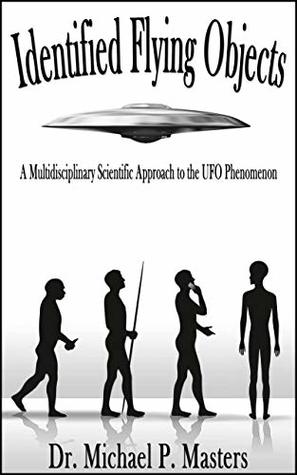
More on this book

Kindle Notes & Highlights

Read between
January 21 - January 29, 2020

When asked about these recent results, nuclear physicist Stanton Friedman, who has worked as a Ufologist for decades, unequivocally stated that “It’s always been intriguing to me how we act as though only kooks and quacks and little old ladies in tennis shoes believe in flying saucers. And it’s never been true, at least for 30 or 40 years…. The believers are far more quiet, but far more on the side of reality.”
This includes a fellow scientist who occasionally witnessed lights hovering above the horizon of their family ranch late at night, only to discover the following morning that some of their cows had been dissected with surgical precision.
The UFO Experience: A Scientific Inquiry,
he and Russian tycoon Yuri Milner would be spearheading a $100 million project called “Breakthrough Listen,” dedicated to searching for intelligent extraterrestrial life in our galaxy.
Saqqara Bird
Intentional cranial modification is an ancient practice.
The Legend of the Hollow Boat (Utsuro-Bune), and a number of complimentary accounts of it have been archived in a text called the Hyouryuukishuu (Tales of Castaways), which is housed at the Iwase Bunko Library in Japan.25 The legend of the Utsuro-Bune describes an encounter in which a strange saucer-shaped craft washed ashore near the small village of Harashagahama on the coast of Japan
According to Kevin Randle and David Schmitt, authors of The Truth about the UFO Crash at Roswell,28 the military had been tracking an unidentified flying object on radar for about four days leading up to the night of July 7, 1947, when this crash allegedly occurred. The following morning, the Roswell Daily Record ran a story stating that a flying disk had been recovered in the desert about 30–40 miles northwest of Roswell
Most nations have a propensity to romanticize instances of past warfare, and few capture our collective morbid interest to the same extent as World War II. Even after more than seventy years, there remains a widespread and somewhat sadistic fascination with it. If WWII continues to rank among the most interesting of international conflicts long into the future, it may help explain the unusually high level of IFO activity in and around regions most heavily engaged in this conflict throughout the mid-20th century, as it may become an important stop on any time tour of historical human conflicts.
Because simple lifeforms are small, because immense distances separate us and other planets, and because of interference from light emissions coming from the sun and other stars, astrobiologists are not able to simply zoom in with high-powered telescopes to look for plants and animals on the surface of distant planets. As a result, they primarily make use of spectroscopy, which examines light emission and absorption patterns at various wavelengths as it interacts with different forms of matter, on what is a rapidly expanding list of exoplanets.
Indeed, it is unfortunate but true that if we live long enough, nearly all of us will suffer from being bipedal. Not just aching feet, sprained ankles, or arthritic knees and hips, but a whole host of conditions that are as unique to our species as is our peculiar way of walking. For example, only our species regularly endures such common maladies as fractured hips, bunions, hernias (inguinal and femoral), fallen arches, torn menisci, shin splints, herniated intervertebral discs, fractured vertebrae, spondylolysis, scoliosis, and kyphosis—just to name a few.
An integral part of Einstein’s theory of special relativity is known as time dilation, in which the effect of high-speed motion on the passage of space and time is different for people in different inertial reference frames. This case is often depicted in the context of the “twin paradox,” which is where one member of a twin pair sets off on a high-speed round-trip voyage and upon returning home, discovers that her/his (formerly) identical twin is now much older by comparison (figure 5-1). In spite of the name, this scenario is not actually paradoxical in any way, although it is a good
...more
if you were to return to Earth after living on the moon for a few years, you would find that all of your clocks are slightly faster than those of your terrestrial counterparts. This is simply because there is less gravity on the moon, which dilates time and slows clocks to a lesser extent than on Earth.
In his 1995 book Black Holes & Time Warps: Einstein’s Outrageous Legacy, Thorne describes how he mulled over the problem of creating and maintaining a wormhole so that some advanced civilization could use it for interplanetary travel, without it collapsing or killing them by some other means.13 In order for this to be achieved, Thorne postulated that it would first be necessary to connect two points in hyperspace, which is a theoretical concept advocating that our three dimensions of space are embedded in six dimensions of hyperspace.
Seth Horowitz, a neuroscientist and author of the book The Universal Sense: How Hearing Shapes the Mind,18 believes vibration-based communication will develop everywhere that life arises in the universe: Vibration sensitivity is found in even the most primitive life forms, even bacteria. It’s so critical to your environment, knowing that something else is moving near you, whether it’s a predator or it’s food. …If we find life on other planets—if it’s more complex than microbes or viruses—they’ll have vibrational sensitivity.
We are sensitive to, or can at least detect with auditory devices, the vibrational communications of most other animals. However, we remain unable to translate and understand what it is they are actually communicating, despite using it ourselves and despite having lived alongside these animals for millions of years on the same planet. In fact, it took until the 1960s before we realized that humans could engage in any form of meaningful communication with other animals here on Earth. In 1967, Beatrix and Allen Gardner began a language acquisition study at the University of Nevada, Reno, which
...more
standing upright meant that our heads needed to rotate downward in order to see where we were going. This reconfigured our mid and lower faces, palates, airways, and vocal chords, pushing our larynx steadily downward over the last 6 million years. Our more inferiorly positioned larynx granted us the exceptional ability to vocalize a broader range of sounds and, in association with our larger and more complex brains, helped facilitate what has become the most adept form of communication on this planet.
some solutions to Einstein’s field equations allow for Closed Timelike Curves (CTCs), which are formed through the bending and warping of spacetime in such a way that travel to the past becomes possible.
A paper by Earman et al. (2009) titled Do the Laws of Physics Forbid the Operation of Time Machines? sought an answer to this question of whether backward time travel is impossible, using a broad approach rooted in physics, history, and philosophy. This review paper examined the vast amount of literature concerning backward time travel research, with a specific focus on more critical studies whose results suggest that time travel to the past is not possible. This included more skeptical approaches like Stephen Hawking’s Chronology Protection conjecture (which is the idea that the laws of
...more
This highlight has been truncated due to consecutive passage length restrictions.
Events occurring now and in our immediate past are clearly more tangible, as we have access to memories of them. However, future events remain sheltered from us, until which time as we exist alongside them, as part of our collective forthcoming consciousness. In the context of physical universal time, we are already there at those points in the future, as well as everywhere else we have ever been during every moment of our lives. However, because of biological constraints that only allow us to see time unfold linearly, we are only able to access memories of moments that make up our past.
Perhaps all of space and time exist at once and our travels through time are simply something that our conscious minds undertake. If we could break this force that is propelling us forward, maybe we could travel back in time.
In this way, life’s origins may be associated with a dissipation-driven adaptation of matter, in which the physical properties of the environment encourage organic elements of that environment to restructure themselves to dissipate greater amounts of energy and with greater efficiency, across each generation.
These results indicate that the future state of the second screen, as either present or not, has an effect on whether the photons leave the first screen as a particle or a wave. In essence, the future event (cause) would appear to dictate the past state (effect) of the helium atom, as if it somehow knew ahead of time whether the second screen was going to be inserted. This stands in stark contrast to how we perceive cause and effect in a linear conceptualization of time and indicates that our notion of time flowing only from past to future is largely a product of our perception. It also
...more
Einstein once said, “People like us who believe in physics know that the distinction between the past, the present, and the future is only a stubbornly persistent illusion.”
The remarkable thing about space-time is that it contains all the events that ever happened. It also includes all the events that ever will happen. So, in this big, 4-D space-time representation of the universe, there’s Julius Caesar getting stabbed and the Mets winning the 1969 World Series. But the coffee you are going to spill on your pants at that meeting next Tuesday is there, too . . . In fact, everything that will ever happen to you—including your death—is strung across space-time as a linked string of already existing events. Physicists call this your world line.
Human life revolves around the division of time into past, present and future; people will not relinquish these categories just because physicists say they are discredited . . . This is perhaps what disturbs people most about block time. If the future is somehow “already there,” then we can have no hand in shaping it . . . In their professional lives most physicists accept without question the concept of the timescape, but away from work they act like everybody else, basing their thoughts and actions on the assumption of a moving present moment.
If it wasn’t disheartening enough that all of our decisions are predetermined, a growing body of research in the fields of neuroscience and psychology also indicate that we may not even be a part of the decisions we feel we make. Rather, these conscious “decisions” actually occur after the neurological triggers that initiate the specific action. In other words, we become aware of what is happening after our brains have already begun the necessary cognitive functions to carry it out, despite feeling like we are the cause of these actions.
our brains decide to initiate an activity before we have any actual awareness of that decision.
For if our distant descendants are to ultimately bridge different slices of four-dimensional spacetime, they will simply be uniting both halves of a past-future pair, with each member of their respective time cohort placing omnipresent threads upon the intricately woven web of time.
changing environments have not caused a broad-based reversal of the two most prominent craniofacial trends in human evolution: encephalization (increased brain expansion) and facial orthognathism (reduction and retraction of the mid and lower face).
One of the earliest morphological changes associated with bipedalism was a shortening and broadening of the pelvis, which helped us maintain balance while also creating a basin-shaped receptacle to hold our now-vertically oriented guts and babies. Later changes in hominin postcranial morphology (i.e., our skeletal anatomy from the neck down) included a heel and arch adapted for two-legged walking; a lengthening of the lower limbs that gave us a longer and more efficient gait; an inwardly angled femur that put our center of gravity more toward the center of our bodies; a big toe that was more
...more
This broad-based reorientation of the visual plane and associated forward movement of the foramen magnum were a vital part of how our brains came to be so large in relation to other animals on this planet.
Another way of demonstrating paedomorphosis throughout human evolution, which currently only exists as a thought experiment, would be to abduct the most “average” adult human alive today and then take them back 300,000 years into the past. Finding a person that looked the most like them in that period would likely involve searching among the teenagers, as opposed to the full-grown adults of 300,000 years ago. If we took the adult from our time back 900,000 years in the past, we might find they look more like the 10- or 12-year-olds. At 2 million years in the past, we may be better off
...more
The development of larger more projecting foreheads and smaller cuter faces, which occurred in association with heterochrony and paedomorphosis, has been a prominent and accelerating trend in human evolution. If this pattern of anatomical change were to continue into the future, as it is likely to do, then our adult descendants will retain even more juvenilized traits and to a far greater extent than modern humans, relative to our distant and even recent hominin ancestors. Moreover, because of the neotenous nature of this process, the continuation of these conspicuous craniofacial changes
...more
You can’t have a large brain and big guts at the same time. Digestion was the energy-hog of our primate ancestor’s body. The brain was the poor stepsister who got the leftovers. What we think is that this dietary change around 2.3 million years ago was one of the major significant factors in the evolution of our own species.18 After we began to focus more of our energy on obtaining meat, a number of important changes to our guts, masticatory anatomy, brains, and even social systems started to take place.
These novel additions to past hominin lifeways were important, both individually and in conjunction with one another. For instance, hunting provided more opportunities to procure meat as compared to scavenging; it facilitated better communication; and being the first one to a kill meant less competition from large and dangerous predators, as well as hungry and potentially hostile neighbors. Additionally, more meat meant softer food, which allowed our faces and guts to get out of the way of our expanding brains. The advent of fire and cooking made the meat safer, easier to digest, and softer
...more
In fact, when averaged across even the last 500,000 years, it is clear that our brains have experienced an extraordinary increase in size, which has also occurred in association with a marked change in neurocranial shape. Most notably, we have evolved proportionally larger and more anteriorly positioned temporal poles, an expanded precuneus and parietal surface, and a much wider and more anteriorly positioned frontal cortex, which have contributed to the uniquely globular, or bulbous, craniofacial shape that defines us as anatomically modern Homo sapiens.
among the Dutch, the tallest people in the world, between 1858 and 2009 the height of boys increased from 163 cm to 183.8 cm, which is an average increase of 21 cm, or 8.27 inches.44 This high level of stature variability is largely because height does not carry a high heritability in humans, meaning that it is not completely dictated by our genes. Rather, the average height of individuals at any given time, both within and among populations, is primarily the result of secular trends influenced by diet, health, climate, occupation, income, education, and numerous other cultural and
...more
The introduction of cesarean sections in more recent history could certainly change this age-old antagonistic relationship between the human brain and birth canal. However, the degree to which it affects the morphogenesis of our crania and pelvises cannot yet be known, considering that we have only been performing C-sections for approximately 500 years.11 In the context of the last 300,000+ years of difficult and deadly childbirth, this is but the blink of an eye. Though one would expect that this vital contribution to infant and maternal health may also act to relax what is arguably the last
...more
In light of these anatomical concessions, it is easy to see how a bigger, more forward-projecting brain—as well as the ensuing competition for space that this imparts on adjacent features—can result in so many uniquely human problems. This includes such things as crowded and impacted dentition, reduced respiratory function, the unfortunate capacity to choke and die, the inability to smell as well as other mammals, a misalignment of our jaws with the mandibular fossa which can result in Temporomandibular Joint Disorders (TMJ), and, for an increasing number of individuals—particularly those who
...more
encephalization, facial reduction and retraction, neoteny, and an equally prominent shift toward feminization of the modern human skull during more recent stages of human evolution.
I would hazard a guess that millennia of human space colonization of Earth-orbit and other solar system space colonies will also select for… 1. Larger eyes in response to the dimmer environment of colonies further from the Sun than Earth . . . Eyes would seem unnervingly large to us and have “eye shine” from the tapetum lucidum. Sideways blink of the reintroduced plica semilunaris to further protect from cosmic ray effects would be particularly startling. 2. More pigmented skin to alleviate the damaging impact of much more harmful UV radiation outside of the Earth’s protective ozone. 3.
...more
the discovery of ancient DNA in the remains of Neanderthals and Denisovans—another archaic Homo sapiens group with whom we also share a recent common ancestor—has shed light on a number of mysteries of our genetic past. Most remarkable was the revelation that modern humans, Neanderthals, and Denisovans had all been interbreeding with one another, despite the longstanding notion that these three groups were each an entirely different species.3 4 5 In fact, as a result of the discovery of preserved ancient DNA, we now know that all modern human groups outside Africa retain some amount of
...more
Large-scale homogenization of the entire human genome could present some problems, if this trend were to continue into our evolutionary future…as it is likely to do. Most evident is the degradation of genetic variation, which is vital to maintaining the adaptability and survivability of any organism, as per the laws of evolution. For example, decreased genetic variation in the human leukocyte antigen system (HLA) that encodes the major histocompatibility complex (MHC), which together form the backbone of our immune system, would make us more susceptible to diseases, which could potentially
...more
The field of brain-to-brain interfacing (BBI), which entails the real-time transfer of brain activity between living organisms, has seen a number of advances in recent years. For instance, the feasibility of a computer-mediated brain-to-brain interface was recently demonstrated in a study that linked the central neural functions of a human and a Sprague-Dawley rat. In this rather odd yet revealing experiment, human researchers were able to move the tail of an anesthetized rat…with their minds.
during more recent stages of human evolution, we began to develop a more caudally located tongue, hyoid bone, and larynx—meaning these features became positioned farther down in the throat. At birth, these structures are situated as high in the throat as in other mammals. However, they begin to migrate downward relatively early during growth and development in humans.41 The result of this unique pattern of ontogeny is that the adult human supralaryngeal vocal tract forms a double resonator. This, along with our remarkably limber tongues and more advanced brains, grants us the ability to
...more
It is common to think about different outcomes resulting from different decisions we feel we could have made at any time in our lives. For instance, “what would have happened if I had turned left at that stop light instead of right, would I still have been in that 30-car pileup?” “What would my life have been like if I was born to parents in Yemen instead of South Korea?” “What if I never had a horse, would I still have gone to college?” It is common to imagine alternative outcomes to any decision we feel we made. However, because of the nature of time, there actually aren’t any.
...more
Novikov’s self-consistency principle espouses that all events spread out across the landscape of time are intricately linked. As such, there can never be a “change” to the course of events that follow, given that any perceived alteration was always going to be a part of that which already existed.
physicist Enrico Fermi once famously asked: if there are billions of stars, with a certain percentage possessing earthlike planets, and a high probability of life arising on at least some of them, then where is everybody?
Physicist Stephen Hawking was among those who focused extensively on this Fermiesque question, as it relates to the possibility of time travel among members of the future human race. However, while Fermi was open to the possibility of intelligent life on other planets, Hawking took a much more critical approach to this time-tourist dilemma. Most notably, he was fond of saying that because we are not overrun by future human time tourists coming back to observe events of their past, this should be taken as evidence that backward time travel will never be possible, at any point in the human
...more
This highlight has been truncated due to consecutive passage length restrictions.
