
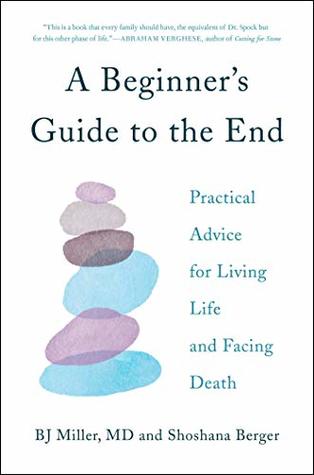
More on this book
Community


Kindle Notes & Highlights

by
B.J. Miller
Read between
January 2 - March 6, 2020

Though the process of sorting through your belongings after you go will never be easy for the people you leave behind, you can make it a lot easier. That’s why cleaning up is one of the best gifts you can give loved ones. It will save them time, money, and no small amount of heartache. I was certainly happy to inherit my dad’s collection of Whole Earth Catalogs but not so much his file cabinets full of phone bills and tax returns from ten years ago.
Here’s a foreseeable truth: your family doesn’t need or want most of your stuff. People develop their own tastes, and though they might appreciate what they grew up with, they may not want to replicate it exactly.
This one is for all the people sharing a household. One mess that will keep on messing with your survivors has to do with billing accounts. Cable, internet, cell phones, club memberships, anything else that bills for services on an ongoing basis;
DESIGNATE A “CLEANER” Yes, you can elect a “cleaner” to scrub down your life after you die. That person is a friend or acquaintance whom you trust to shred, erase, dump, and otherwise whitewash any secrets that you wish to keep secret. You can ask that person to go through your home, medicine cabinet, electronic files, and . . . any closet where you kept your sex toys.
The Bottom Line DON’T LEAVE A MESS It’s not an easy thing to do, but cleaning out your attic buys you and the people you love a lot of freedom; freedom from the unnecessary suffering of sorting through baggage, both the psychic kind and the actual suitcases full of stuff. Get the armoires out of the way, and do your best to say what you want to say. Lighten your load so you can be more present for the rest of your life.
Your Legacy YOU HAVE SOMETHING OF VALUE to give. Maybe it’s a folder of quotations that you’ve collected over the years, a collection of favorite recipes, works of art, a slideshow, a movie, a poem, or some other invention that’s all your own.
LEAVE YOUR STORY What made you you? Telling the story of your life and leaving a record of experiences, people, and ideas that matter to you gives those who love you a feeling of continuity from one generation to the next.
YOUR BEST AGENT MIGHT NOT BE YOUR PARTNER
You might say, “If I become unable to make decisions about my health due to Alzheimer’s or other dementia (be as specific as you can to avoid misinterpretation), please do not administer any curative treatments or medications, such as antibiotics, should I become ill, except to keep me pain-free and comfortable. I do not want to be forced to eat or drink or have the reflexive opening of my mouth to be interpreted as giving my consent to being fed.”
If you want all your major organs to be donated after you die, you’ll have to be in a hospital at the time of your passing. People who die at home are not within range of equipment that keeps the organs viable and safe for the intended recipient.
If you choose organ donation, and die in the hospital, your body will be whisked away almost immediately after you’re declared dead. We’re not suggesting this should dissuade you from choosing to donate—on the contrary, we see it as a noble, important, and generous act—but this little-known part of the process is something to talk over with your family so everyone is prepared to let the body go quickly.
When a body cannot process it, food or fluid will cause trouble: bloating, delirium, shortness of breath, and pain; so the body is being smart by saying no. At this point feeding tubes will not extend life.
MEDICAL FORMS TO COMPLEMENT AN ADVANCE DIRECTIVE For those already living with a serious medical condition or advanced age, a POLST form should be completed, and a DNR form should be discussed and completed if appropriate. Unlike an advance directive, these forms need to be signed by a doctor to be valid. The fact that they are signed by a doctor is what makes them more rigorous and likely to be honored by health care institutions. Physician’s Order for Life Sustaining Treatment (POLST)I The POLST is a one-page, double-sided form that asks you to mark your preferences for the most common
...more
advance directive to complete a POLST, though it’s best to have both.As of now the only states that do not meet the National POLST Paradigm criteria are Vermont, Maryland, Nebraska, and Massachusetts. That just means they have a different type of form for patients to complete to make their wishes known. If you are elderly or know yourself to be in the late stages of illness, especially when your body is growing weaker no matter what you do, having a completed and signed POLST form is the best single thing you can do to protect whatever wishes you have for your own end-of-life care.
