
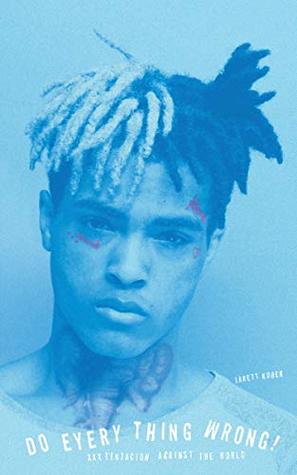
More on this book

Kindle Notes & Highlights

by
Jarett Kobek
Read between
April 11 - April 23, 2019

25,882 of the tweets predate his arrest on 14 July 2016 AD for, allegedly, stabbing and robbing his former manager.
If we combine his tweets with this manufactured morality, we can achieve a portrait of his life from the age of fourteen. But we know almost nothing about what happened before 13 August 2012 AD.
His father was absent, a casualty of the United States government and its multi-decade War on Drugs, which was, and is, a systemic conspiracy to ruin the lives of several generations of Black men.
As mentioned: his father’s money laundering charge, and the mandatory drug sentencing, are the products of a governmental conspiracy. Both derived from legislation signed into law by President Ronald Wilson Reagan. Who loved anti-drug rhetoric and policy. His wife came up with JUST SAY NO.
It isn’t the litany of suffering that is mandatory in every biography. It’s the story of how systemic influences in a society shape and create the contours of an individual. And it starts with the governmental conspiracy to put several generations of Black men into prison.
And the hypocrisy of a society that tolerates unspeakable crimes from its highest elected officials but brooks no forgiveness for the sins of its poor.
Think about the craziest people in American public life. You know who I mean. They’re also the most famous. What is the commonality between them? Twitter.
So when he does lie, it’s remarkable. And telling. Because he only lies about one thing: thug life. When he’s a lonely teenager and he has no fans. When no one is watching. An adolescent boy who wants to be perceived as hard on social media.
Rap is almost entirely rhythm and timbre. Which means it’s based in individual performance. The idea of an individual performance of music having its own intrinsic reproducible value—as opposed to its merit being the underlying composition—is new enough that prior to the Copyright Act of 1972 AD, you couldn’t copyright a recording of a musical performance with the United States Government.
XXXTentacion sounds like a wounded animal that stays down. He sounds like the saddest person in the world. He sounds like someone who overdosed on The Weeknd’s mixtapes and chased them with a dose of pure sorrow.
XXXTentacion understood, consciously or not, that if hip-hop as a culture is different than the genre of rap, and if that culture emerged from a musical style determined entirely by timbre and performance, then if you came from hip-hop you could do anything and still be hip-hop. And he also realized that rap is the culmination of a certain tendency in American popular music.
The radicality of rap has always freaked people out. From the beginning. You can see this in the academic quest to find its antecedents.
No genre of American music has been given greatest emphasis on lyricism, and lyrical constraints and finesse, than rap. But the amount of people who actually give a fuck about lyricism is small and ever diminishing.
