
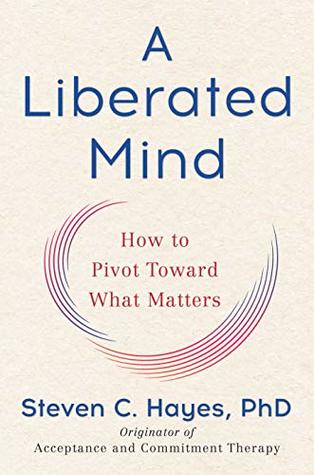
More on this book
Community


Kindle Notes & Highlights
Read between
December 1, 2021 - January 2, 2022

http://bit.ly/StevesFirstTED
In 1990, depression was the fourth leading cause of disability and disease worldwide after respiratory infections, diarrheal illnesses, and prenatal conditions. In 2000, it was the third leading cause. By 2010, it ranked second. In 2017 the World Health Organization (WHO) rated it number one.
Each step forward—radio to TV to the Internet to the smartphone—has created greater mental and social challenges, and our culture and minds haven’t adjusted rapidly enough in effective and empowering ways.
only a few decades ago children ran and played freely in ways that could bring child endangerment complaints today. This increased protectiveness is not due to the world actually becoming more dangerous; research suggests it has not. Our impression that the world is less safe results more from exposure to uncommon events through the media.
Over the last thirty-five years, my colleagues and I have studied a small set of skills that say more about how human lives will unfold than any other single set of mental and behavioral processes previously known to science.

More than IQ tests? Peterson suggests that IQ tests account for 25% of human…something
In over one thousand studies, we’ve found that these skills help determine why some people thrive after life challenges and some don’t, or why some people experience many positive emotions (joy, gratitude, compassion, curiosity) and others very few. They predict who is going to develop a mental health problem such as anxiety, depression, trauma, or substance abuse, and how severe or long-lasting the problem will be. These skills predict who will be effective at work, who will have healthy relationships, who will succeed in dieting or exercise, who will rise to the challenges of physical
...more
Psychological flexibility is the ability to feel and think with openness, to attend voluntarily to your experience of the present moment, and to move your life in directions that are important to you, building habits that allow you to live life in accordance with your values and aspirations. It’s about learning not to turn away from what is painful...
This highlight has been truncated due to consecutive passage length restrictions.
It’s about looking in a nonjudgmental and compassionate way at the places in ourselves and in our lives where we hurt, because the things that have the power to cause us the most pain are often the things we care about most deeply.
This goes back to what I said in the podcast: we find the most purpose and meaning in working towards eradicating the pain we suffer ourselves, in not just ourselves, but in all others.
Psychological flexibility empowers us to accept our pain and live life as we desire, with our pain when there is pain.
We fall into patterns of psychological rigidity, where we try to run from or fight off the mental challenges we face, and we disappear into rumination, worry, distraction, self-stimulation, work without end, or other forms of mindlessness, all in the attempt to evade the pain we’re feeling. Psychological rigidity is at its core an attempt to avoid negative thoughts and feelings caused by difficult experiences, both when they occur and in our memory of them.
If you’re thinking positive thoughts explicitly to avoid or contradict negative thoughts . . . well, that’s another form of psychological rigidity and now the positive thoughts will remind you of the very thoughts you hoped to avoid. A recent study showed that positive affirmations like “I’m a good person!” work great as long as we don’t really need them. When we do need them, like when we start feeling bad about ourselves, such affirmations make us both feel and do worse!
First, although you begin on a path of rigidity to avoid pain, soon enough you have to avoid joy as well. Studies have shown that anxious people who are rigid and avoidant start out intolerant of anxiety, but they end up intolerant of happiness too! Joy makes them nervous. If you are happy today, you might be disappointed tomorrow. Better to be numb.
rigidity makes it more difficult to learn from your emotions.
people who have been abused by others are more likely to be abused again, but that effect is not direct—it’s particularly likely to happen to those who respond to the initial abuse by becoming distant from their own feelings.
Not being aware of your patterns gets you back into those patterns, reincarnated.
I call this aspect of our minds the Dictator Within, because it is constantly suggesting “solutions” for our psychological pain,
It can lead us to buy into a damaging story about our pain and how to deal with it. It weaves its advice into tales about our childhoods, about our abilities and who we are, or about the injustices of the world and how others behave.
Because we don’t like feeling pain, it seems appropriate to treat difficult thoughts, feelings, and memories as “the problem” and to view elimination of them as “the solution.”
We are paying a psychological price because what is really wrong within is treating life as a problem to be solved rather than a process to be lived.
What makes logical sense for action in the outside world does not necessarily make psychological sense in the world of thoughts and feelings.
But in order to get rid of something deliberately, we have to focus on it.
If we instead distract or self-soothe in order to deal with the pain—say, by reading a good book or listening to a favorite piece of music—these otherwise enjoyable activities can actually over time become related to what we are avoiding and can even open a back door into them. After just a few times, that soothing book or piece of music might remind you of the memory you are avoiding or trigger a revisiting of the trauma you hoped would recede.
Trying to combat anxiety, for example, can lead to increased anxiety about our anxiety.
If we are afraid of being rejected by others, we see signs of imminent rejection everywhere.
Our deficiencies at as lenses through which we perceive the world
The fields of psychology and psychiatry have also inadvertently contributed to the problem. Ideas that are not evidence-based proliferate,
While mental health is important
To talk about, its also causing issues with Pop psychology, and new language tools people are using to tak about their pains
In the midtwentieth century, psychological strength would often have been defined largely as emotional avoidance.
a central tenet of traditional CBT that is problematic came to dominate the popular understanding of the approach—we need to change negative or distorted thoughts and convert them to positive and rational ones. This “cognitive restructuring” was supposedly the route to mental health because it was flawed habits of thinking—not
The truth about mental health is that the causes of all of the mental conditions you hear about are unknown, and the idea that “hidden diseases” lurk behind human suffering is an out-and-out failure.
trying to eliminate or completely restructure our thoughts is unnecessary and even futile. Our nervous system does not contain a delete button, and thought and memory processes are too complex to make them neat and tidy. It will also reveal how flawed the cultural message is that people have something that makes their lives difficult. It is what we do that matters, and that gives us the means to live in a way that is richly meaningful to us, despite even quite difficult challenges.
If you want to find peace of mind and purpose, you will have to let go of finding a way out and instead pivot toward finding a way in.
the tendency toward psychological rigidity evolved right alongside human language and cognition.
Our symbolic thinking talents invest our thoughts with a reality comparable to that of the external world.
each of the rigid ways in which our minds trap us in unhealthy patterns of thinking and behaving contains a healthy yearning hidden deep within it. We are doing the wrong things, but for the right reasons—because we want our lives to have important qualities.
Defusion. Requires pivoting from cognitive fusion to defusion; redirects the yearning for coherence and understanding.
we are programmed to notice the world only as structured by thought—we see the terrible this or the awful that—but we miss the fact that we are thinking.
we judge our experiences and then buy into the judgment instead of realizing it is a judgment to begin with.
The flip side of fusion is seeing thoughts as they actually are—ongoing attempts at meaning-making—and then choosing to give them power only to ...
This highlight has been truncated due to consecutive passage length restrictions.
Self. Requires pivoting from allegiance to a conceptualized sense of self, or our ego, to a perspective-taking self; redirects the yearning for belonging and connection.
Inside our stories, we note what is special about us (our special skills; our special needs), and we hope this will earn us a place in the group.
the conceptualized self leads us to defend these stories as if our life depends on it, which creates alienation, not true connection.
The alternative is to connect more deeply with a perspective-taking self—a sense of observing, witnessing, or purely being aware.
We also see that we are connected in consciousness to all of humanity—we belong not because we are special, but because we are human. Some people think of this as a transcendent or a spiritual sense of self.
Acceptance. Requires pivoting from experiential avoidance to acceptance; redirects the yearning to feel.
Acceptance is the full embrace of our personal experience in an empowered, not in a victimized, state. It’s choosing to feel with openness and curiosity, so that you can live the kind of life you want to live while inviting your feelings to come along for the ride. As a result of the Acceptance pivot, the focus moves from feeling GOOD, to FEELING good.
Presence. Requires pivoting from rigid attention driven by past and future to flexible attention in the now; redirects the yearning for orientation.
Flexible attention in the now, or being present, means choosing to pay attention to experiences here and now that are helpful or meaningful—and if they are not, then choosing to move on to other useful events in the now, rather than being caught in mindless attraction or revulsion.
This one to me sounds very interesting because it’s not just a presence, it’s not just an awareness of what is around us. Kind of like when you meditate, there are many things that you can meditate on, however, this is suggesting that we should pay attention to the things and experiences that serve our needs. And so, it would be useful to meditate on the breath, if I need to focus on work afterwards. Or, it would be useful to have an open mind presence, if I am trying to appreciate beauty.
Values. Requires pivoting from socially compliant goals to chosen values; redirects the yearning for self-direction and purpose.
This seems to tie in with self-determination theory. I need to read more about that
socially compliant goals give rise to motivation that is weak and ineffective.
we also secretly resent them because they undermine our own process of unfolding.
The yearning for self-direction and purpose cannot be fully met by goal achievement since that is always either in the future (I haven’t met m...
This highlight has been truncated due to consecutive passage length restrictions.
Living in accordance with our values is never finished; it is a lifelong journey.
