
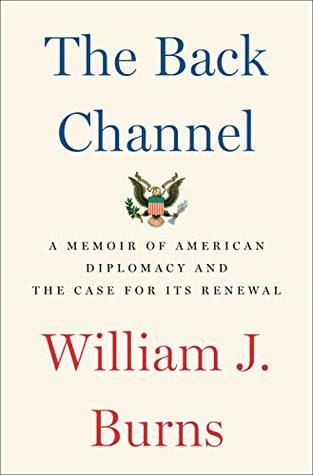
More on this book


Kindle Notes & Highlights

Read between
March 24 - April 19, 2019

The value of American leadership is no longer a given—at home or abroad. Fatigue with international intervention after nearly two decades at war has fed a desire to free the United States from the constraints of old alliances and partnerships and reduce commitments overseas that seem to carry unfair security burdens and economic disadvantage. The disconnect has grown between a disillusioned American public and the conceits of a Washington establishment often undisciplined in its policy choices and inattentive to the need to explain plainly the practical value of American leadership in the
...more
In the age of Trump, America is diminished, the president’s worldview smaller and meaner, the world full of difficult currents. The enlightened self-interest at the heart of seventy years of American foreign policy is disdained, and the zero-sum joys of mercantilism and unilateralism are ascendant. Seen from the Trump White House, the United States has become hostage to the international order it created, and liberation is overdue. Trump’s worldview is the antithesis of Baker and Bush 41, who combined humility, an affirmative sense of the possibilities of American leadership, and diplomatic
...more
Bull’s thesis was straightforward: Even in a Hobbesian world, sovereign states have a self-interest in developing rules and institutions to help shape their interactions and enhance their chances for security and prosperity.
“Sometimes the most important test of leadership is not to do something, even when it looks really damn easy. Overreaching is what gets people in trouble.”
“There’s honor in continuing to serve,” said one longtime colleague, “so long as you’re honest about your dissent. But you never entirely escape the feeling that you’re also an enabler.”
When Clinton made public comments critical of the conduct of the Duma elections—consistent in tone and substance with what we would have said in similar circumstances anyplace in the world—Putin lashed out, accusing her of sending the “signal” that drew demonstrators into the streets, and the State Department of quietly supporting opposition parties. Putin had a remarkable capacity for storing up grievances and slights and assembling them to fit his narrative of the West trying to keep Russia down. Clinton’s criticism would rank high in his litany—and generate a personal animus that led
...more
The administration’s profoundly self-destructive shock and awe campaign against professional diplomacy only compounded the challenge. Its early unilateral diplomatic disarmament, born of equal parts ideological contempt and stubborn incompetence, was taking place at precisely the moment when diplomacy mattered more than ever to American interests, in a world where we were no longer the only big kid on the block but still a pivotal power best positioned to lead the world in managing the problems before us.
Even Pentagon and military leaders went out of their way to highlight the perils of the imbalance between force and diplomacy. Secretary of Defense Bob Gates regularly reminded Congress that U.S. military band members outnumbered foreign service officers, and one of his successors, Jim Mattis, famously noted that cutting funding for diplomacy would require him “to buy more ammunition.”
In July 2018, President Trump asserted at a press conference in Finland with President Putin that he was an advocate of “the powerful tradition of American diplomacy,” but his behavior bore no resemblance to thoughtful, well-prepared exemplars of that tradition like Jim Baker.3 Trump’s view of diplomacy was narcissistic, not institutional. Dialogue was unconnected to strategy; the president seemed oblivious to the reality that “getting along” with rivals like Putin was not the aim of diplomacy, which was all about advancing tangible interests. And “winging it” in crucial high-level encounters
...more
