
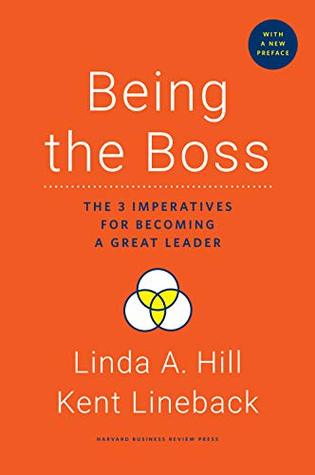
More on this book

Kindle Notes & Highlights

Read between
April 13 - April 17, 2025

Getting the right relationship with your people is the foundation of all else on your journey.
No group can succeed by itself. As a result, instead of the freedom and independence you probably expected as a boss, you found dependence—or, more accurately, interdependence.
Keep your efforts clearly focused on the good of the enterprise, and don't be surprised when well-meaning people disagree about how to achieve that good.
Don't make disagreements personal or let them become personal. Here's where a strong but not big ego is critical. Stay engaged with those who disagree with you. Don't demonize others or let your group fall into the “us versus them” trap.
Conduct yourself according to a set of standards important to you: honesty, forthrightness, openness, dependability, integrity. Even if others don't follow the same standards, stay true to yours.
Weak ties are network relationships with individuals who are usually on the periphery of your daily work that connect you with worlds different from your own and extend your reach to provide access to unique information and other resources.
trust is the foundation of influence in a network.
trust means that others believe they can count on you to do the right thing, and it's based on two components: your competence and your character.
Competence. Your network colleagues' trust is built on their perceptions of your technical, operational, and political know-how, along with your track record of accomplishment. It's their belief ...
This highlight has been truncated due to consecutive passage length restrictions.
Character. Much the same standards apply here as with your direct reports. Your intentions—your values and standards—are as important as your capabilities. People assess you not just by what you do and say but by who you are and what you intend. You need to demonstrate a dependable internal compass that leads you consistently to deal with people honestly and respectfully.
A team is a group of people who do collective work and are mutually committed to a common team purpose and challenging goals related to that purpose.
Here are the key elements of a written plan: Be clear about where you are now. Define where you want to be in the future. Identify how you will get from the present to that future.
Culture is crucial to the trust that links team members because it defines what they expect of each other.
The right culture can reduce conflict and keep it productive.
Clarity about individual roles—who does what and how each role contributes to the team's purpose and goals Clarity about how the team does its work—work systems, practices, and processes Clarity about how team members work together—the values and norms for collaboration that prescribe and guide interaction among group members Clarity about progress—feedback for the team as a whole and for individual members about both work results and how well the group is functioning as a team
Feedback about performance is the fourth type of clarity a team needs. Because real teams serve a compelling purpose and strive toward challenging goals, members want current, concrete information about progress.
Manage your people as a team, but never lose sight of this reality: team members are people who still want to be seen and cared about as individuals.
A significant portion of people's trust will be based on their day-to-day interactions with you.
In effective relationships, both parties initiate contact.
Empathy is possible only if you realize that others are fundamentally different from you.
It's not simply understanding how you would feel in someone else's position but how that person feels, given who they are.
Delegating well requires making judgments person by person about current skill levels, whom to trust, the importance of the work at hand, the consequences of failure, and the level of involvement to maintain. It can be risky, but you cannot succeed without doing it.
Developing people is also a way to engage them.
Most of us like to get better and we even like to be pushed moderately.
Recognizing and managing your own feelings—emotional maturity—will help you treat the person with dignity through the difficult process of termination.
