
Kindle Notes & Highlights

Read between
January 1 - April 22, 2019

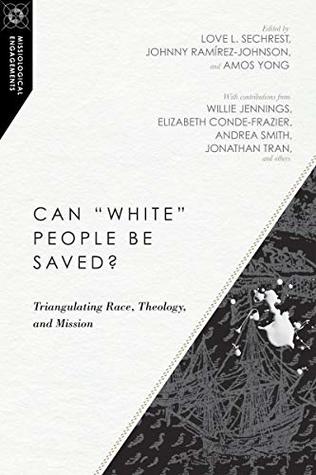
know that my tears and my enlightenment alone are not meaningful for people of Color. Rather, we must identify the ways in which the structures in which we participate retain power for White folks, and then we must work toward the redistribution of power, even at our own expense. As a friend recently commented, “Some of these ‘woke’ folk need to take a nap.”
In these and countless other times, I have had the choice to apologize and change rather than dig in my heels and protest that “I meant well.” It is common that some White people who are regularly defensive about being corrected are the first to become gravely offended when people of Color make statements that could be interpreted as unfair, even when those statements are made out of places of deep hurt. What if we as White people saw correction and anger as gifts given to us by people of Color, gifts that signal a desire to relate in a healthier manner?16 And what if we reciprocated that
...more
the New Testament concept of repentance entails not just rational assent or recognition of sin but a continuous renewal of the mind embodied in a change of direction.18 For example, messianic Jewish theologian Mark Kinzer maintains that what are needed more than Gentile Christians’ apologies for their anti-Semitic relationship to Jews are concerted efforts that dismantle the supersessionism that has marginalized non-European flesh for centuries.19 The same can be said in regard to the need for White people to move beyond self-centered introspection toward working in solidarity with people of
...more
Repenting of whiteness entails recognizing that the tortured history of race in the West is animated by a theological history of White centrality that made it possible for “Christian” nations to order their political practices so as to marginalize and subjugate non-White bodies. If White Christians are serious about pursuing reconciliation, we must recognize that our theological traditions of appropriating the Christ event, while perhaps confessionally faithful, are nonetheless culturally particular.
Once the world has been fashioned according to our liking, it costs White folks very little (and means very little) to claim that we are welcoming or desiring of diversity.
In regard to Christian mission, Amos Yong has maintained that being guests of the other must be the central frame in which Christians imagine missional engagement with people of other faiths.57
According to King, racism violates the interdependence of humanity in God. It is anticommunity. All human beings are interdependent as they share their common origin in God as creatures made in God’s image. Racism inevitably creates distrust, hatred, and enmity among different races. It is the antithesis to the beloved community because it divides people on the basis of skin color.
From a Kingian perspective, liberation is necessary but not sufficient; it is the first step but not the final step, just as the exodus was the first step, not the final goal. Metaphorically, the covenant at Sinai and the time in the wilderness were as important as the exodus for the Israelites to enter the Promised Land. Although it is not possible without liberation, the beloved community does not automatically emerge after liberation, either. “In a multiracial society no group can make it alone. . . . To succeed in a pluralistic society, and an often hostile one at that, the Negro obviously
...more
Global peace and justice cannot be achieved by any one race, one nation, or one religious group alone; the destiny of humanity is tied together. In our claim of legitimate rights, we also need to heed King’s insight that the formation of a community indicated the most creative turn of human history: a true sense of human civilization arose when primitive persons put aside their stone axes and decided to cooperate with one another.35
King helps to rediscover the beloved community as the telos of Christian mission. If Martin Kähler’s assertion that “mission is ‘the mother of theology’ ” is true,36 then for King, his search for the beloved community was the source and inspiration of his mission. I think King’s claim is biblically faithful: the idea of community (associated with the people of God) is central to God’s mission. God’s reign is not individualistic but communal, ultimately encompassing the entire creation for the fulfillment of shalom. Whenever God’s reign takes place (that is, whenever missio Dei happens), God
...more
King demonstrated that social justice can be approached missionally without compromising theological convictions and identity. Justice is also integral to Christian mission, just as almsgiving and evangelism are. For King, the fight against segregation and racism expressed his sense of Christian mission.
This picture of reconciliation puts an enormous amount of weight on forgiveness as the mechanism that exorcizes the past.19 But too often reconciliation goes forward without the ameliorating work of reparations, without addressing the past for the sake of the future, leaving reconciliation incomplete. Forgiveness tied to an incomplete picture of reconciliation is not strong enough to carry all the weight this picture of reconciliation puts on it. Without reparations there can be no forgiveness, and without forgiveness there can be no reconciliation.
I have been arguing that postracial theory does not work for the simple reason that it cannot do what it most wants to do, that is, outrun the past.
We are trained to perceive our own group’s mistakes as discrete incidents and the mistakes of the other are character traits applicable to the whole group.
White superiority requires the inferiority of Blacks. Such was the justification for slavery. The Duke de La Rochefoucault-Liancourt presented in written form a poignant example of the seventeenth century’s logic of White superiority over Blacks. The duke’s accounts of his travel to North America documented in vivid fashion the “decided superiority to the white colour, even in the eyes of the blacks.” His words are very clear: “the abolition of the slave trade is the dream of a mistaken philanthropy. . . . The great danger a slave has to encounter after his emancipation is, that of not being
...more
What Wilson Jeremiah Moses called “messianism,” the idea that White Europeans were called by God for a “manifest destiny” to fulfill a special role “to bring about the kingdom of God on earth,” has been used to define whiteness and in turn to create the myth of a White race.28 Prentiss documented the role of religion in creating the White race myth as an elaborate Western social construction.29 The whiteness myth was central in implying that God gave a superior status to royalty and that nonroyalty were inferiors and naturally defined as subjects of the queen or king.
Human society moved from a view that legitimized diversity as the norm toward a view by which scientific categories were used to divide human groups and thus facilitate the epistemological creation of the other.
first, Peter saw himself and all Jews as the people of God. Second, as a result of the intense learning forced on Peter and the early church by God, Gentiles and Jews were accepted equally as the people of God, without requiring conversion of the Gentiles to Judaism. These self-reflection skills that were forced by God on Peter are available to us today. You cannot develop what you cannot see, and until Peter saw his biases clashing with God’s ways, he could not welcome Gentiles as equals. This was not easy for him, and it is not easy for us today. The first step is the most difficult.
My family and social experiences have formed the values of culture, race, and ethnicity that shape my customs, ideals, and ways of doing things. We identify behaviors in others—like ways of dressing, musical tastes, smells, and other aspects of human diversity—that seemingly reflect values we consider less than ideal. We are unable to see our own ways as culturally grounded and to acknowledge that these ways are equally culturally derived.
The outpouring of the Holy Spirit should be the final evidence of God’s intentions for a multicultural church. It was the final argument for accepting Gentiles in the early church, and it should be the same for inviting the reader to embrace diversity. But such embrace only happens after we recognize that our ways are the ways of our cultural group. The next set of skills invites us to recognize that other cultural, ethnic, and racial groups have lovable values and preferences, allowing us to see that alternative preferences exist.
The question John presents is as valid today as it was in the first century: Do you love God by loving the other, or after all are you a liar?
Michael Omi and Howard Winant define racism as the perpetuation of hierarchy among racial groups. With its focus on hierarchy, this statement is an improvement over other definitions of racism that focus on the combination of prejudice and power.5 When privileged individuals deny racism because they do not manifest personal prejudice and have little access to the levers of power, Winant’s definition of racism challenges them to focus on the manifestations of hierarchy that they do enjoy.
As Andrea Smith’s chapter intimates, the civilizing of the world went hand in hand with the humanizing of the barbarians, which not only made possible the salvation of these non-White creatures but also justified the means—genocidal in many contexts, exploitative otherwise along every economic register—toward such ends.3 On these accounts, race and ethnicity are central rather than marginal to this history of modern Christian mission.4
The reality is that much of what we call the Old Testament was forged out of the experience of exile within and out of the Babylonian empire. Post-Christendom missional perspectives cannot be comprehended so long as Christian mission feels itself sustained by political power and economic means. Instead, once we recognize that Israel’s witness and mission to the nations were forged not out of the strength of the Davidic or monarchic regimes but resounded through the weakness of exile and its aftermath, then we realize that Christian mission itself might proceed from a similar posture. In fact,
...more
