
More on this book
Community


Kindle Notes & Highlights

Read between
September 16 - November 18, 2024

DISC—an acronym that stands for Dominance, Inspiration, Stability, and Compliance ability—
Everything you say to a person is filtered through his frames of reference, biases, and preconceived ideas.
By adjusting yourself to how other people want to be treated, you become more effective in your communication.
You help other people understand you by creating a secure arena for communication—on their terms.
Flexibility and the ability to interpret other people’s needs is what characterizes a good communicator.
“We see what we do, but we do not see why we do what we do. Thus, we assess and appraise each other through what we see that we do.”
In any other situation, it might be a good idea to understand how you are perceived and to learn how other people function.
is relatively predictable. Every person reacts in a habitual manner in similar situations. But it’s impossible to predict every possible reaction before it happens.
is part of a pattern. We often react in consistent patterns. Therefore, we should respect one another’s patterns. And understand our own.
is changeable. We should learn to listen, act, speak openly, and reflect in order to do what is relevant ...
This highlight has been truncated due to consecutive passage length restrictions.
… can be observed. We should be able to observe and consider most forms of behavior without being amateur psychologists. Everyone can take note of the people around them.
is understandable. We should be able to understand why people feel and do what they do—right now. Everyone can think about why.
… is unique. Despite the conditions that we have in common, each person’s behavior is unique to him. S...
This highlight has been truncated due to consecutive passage length restrictions.
is excusable. Dismiss personal jealousy and complaints. Learn to have tolerance and patience, both w...
This highlight has been truncated due to consecutive passage length restrictions.
The stronger your self-understanding is, the greater your probability of adapting to the people around you.
BEHAVIOR = f (P × Sf) Behavior is a function of Personality and Surrounding factors. Behavior is that which we can observe. Personality is what we try to figure out. Surrounding factors are things that we have an influence on.
Conclusion: We continually affect one another in some form or other. The trick is to try to figure out what’s there, under the surface. And this book is all about behavior.
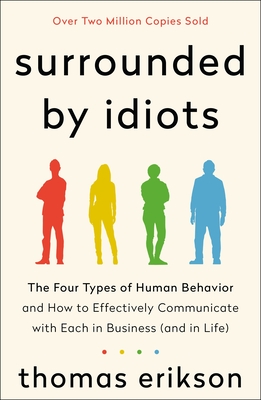
A Red person is a dynamic and driven individual.
People who have lots of Red in their behavior are task-oriented extroverts and they enjoy challenges. They make quick decisions and are often comfortable taking the lead and taking risks.
You can also recognize Reds by other behavior patterns.
But a Red detests inactivity. Things must happen. Add to this a sense of constant urgency, and a great deal will get done.
Reds are both groundbreaking and strong willed.
Naturally, there are also downsides. Reds get bored with the status quo quickly and so they change it—the people around them have no idea what will happen next.
Reds are quick and more than happy to take command if needed. They make things happen.
Yellows can be amusing, creative, and elevate the mood regardless of who they’re with. However, when they are given unlimited space, they will consume all the oxygen in the room, they won’t allow anyone into a conversation, and their stories will reflect reality less and less.
The friendly Greens are easy to hang out with because they are so pleasant and genuinely care for others.
The analytical Blues are calm, levelheaded, and think before they speak. Their ability to keep a cool head is undoubtedly an enviable quality for all who aren’t capable of doing that.
Some basics to keep in mind about Reds. They: • keep their distance from others • have powerful handshakes • lean forward aggressively • use direct eye contact • use controlling gestures.
Yellow Body Language Some simple basics to keep in mind about Yellows. They: • are tactile • are relaxed and jocular • show friendly eye contact • use expressive gestures • often come close.
Green Body Language Some simple basics to keep in mind about Greens. They: • are relaxed and come close • act methodically • tend to lean backwards • use very friendly eye contact • prefer small-scale gestures.
Blue Body Language Some simple basics to keep in mind about Blues. They: • prefer to keep others at a distance • either stand or sit • often have closed body language • use direct eye contact • speak without gestures.
