
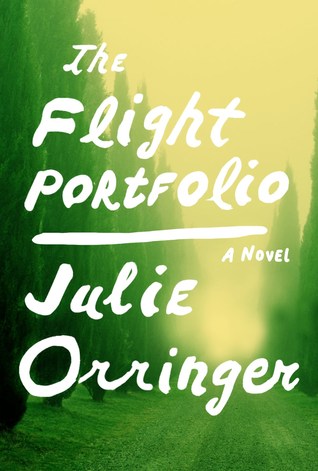
More on this book
Community


Kindle Notes & Highlights


If we could pin down the moments when our lives bifurcate into before and after—if we could pause the progression of milliseconds, catch ourselves at the point before we slip over the precipice—if we could choose to remain suspended in time-amber, our lives intact, our hearts unbroken, our foreheads unlined, our nights full of undisturbed sleep—would we slip, or would we choose the amber?
“You quoted Seneca at me,” Grant said. “Vivamus, moriendum est.” “ ‘Let us live, since we must die’? That’s rather pretentious, even for a sophomore classicist.” “You’re the one who said it, Tom.”
THE WHITE STAG I ha’ seen them ’mid the clouds on the heather. Lo! They pause not for love nor for sorrow, Yet their eyes are as the eyes of a maid to her lover, When the white hart breaks his cover And the white wind breaks the morn. “Tis the white stag, Fame, we’re a-hunting, Bid the world’s hounds come to horn!”
Most recent evidence: Joyce’s new novel, Finnegans Wake, wherein, like a fluttering banner, his own name appeared (To funk is only peternatural its daring feers divine. Bebold! Like Varian’s balaying all behind me). For every problem there was a solution, either within his extant knowledge or within his ability to seek it out. He knew he’d taken on his current mission in France not just for humanitarian reasons, though those were foremost, but also for the thrill of its difficulty.
Certain people, his father had told him, were assets; others were liabilities. A shrewd businessman quickly learned to tell the difference. His father had delivered this kernel from his oak-paneled study in Ridgewood, the night before Varian left for Harvard.
He had always felt at home in the logical precision of Bach, but as he listened he began to see farther into the music, the way a stereoscope’s twinned images resolved into three dimensions. It asked a series of painful, pointed questions about mortality, about the existence of God and the conundrum of Christ, the chthonic pull of the flesh and the poor trapped spirit jailed in the ribcage, in the four dark chambers of the heart.
Then he drew the diners’ attention to one of the apothecary jars of praying mantises, where a slim green male had already mounted a female. “We are graced, as you see, by a demonstration of one of nature’s most inexorable forces. The drive to replicate! To procreate! To germinate, though the results may be disastrous.
“What do you propose to do with these?” Varian said. Zilberman raised his cap to smooth back his hair. “Liberate them from France. Get them to the States. The artists have agreed already to donate the work. Chagall has many friends in New York, and my wife has contacts in Boston. Let us transport these works to America, stage a series of exhibitions. Show everyone what’s at risk. What may be lost. Do you not think money can be raised, Monsieur Fry? Perhaps we can make lithographs, a set. The Flight Portfolio, we could call it.” Of course: a set of drawings could travel, could do work that a
...more
Ormond’s office betrayed its inhabitant’s fantasy of himself as a man of letters: the shelf behind his desk sagged under the weight of biographies and autobiographies of fascist despots, and alongside them were books about the struggles of France: Stendhal’s Le rouge et le noir, Hugo’s Les misérables, Zola’s Germinal.
A series of minor arpeggios mounted to Varian’s window and disappeared into the darkening sky. From outside came the scent of sage and wet earth; a rainstorm had tamped down the afternoon’s dust, and the mistral blew across the valley. A nightingale lit in the medlar tree beneath the window and launched into variegated song.
He paused for effect, looking around the table, which was decorated for the occasion with two great glass vases filled nearly to the top with pondwater, teeming with live miniature frogs. “We’ve survived, by my count, five raids by the police, three nights on the S.S. Sinaïa, the unfortunate sight of Jay Allen’s naked corpus, and at least two hundred and thirty instances of my own pomposity. We have shed our illusions as to the limits of our own absurdity, an admirable achievement in any season. We have survived privations of food and excesses of liquor. And for all this we have to thank
...more
The guests ate tiny squares of black-market chocolate, smoked their after-dinner cigarettes, and drank the last inches of a bottle of Armagnac. Then everyone walked out onto the terrace, where the rising wind made a disaster of the women’s dresses. No one seemed to care in the least; they were all too drunk to feel the chill. Varian stood at the terrace railing and looked down into the garden, at the shapes of the men and women drifting along the twisted garden paths like shadow puppets against a moon-illuminated sky.
Monsieur Fry, that there’s no purer embodiment of surrealism than the departure from land onto a borderless plane of water. One sails over the bodies of millions of creatures, many of them unknown to man—even over mountains uncharted, mountains higher than the highest peaks in Tibet—entirely without consciousness, without the slightest knowledge of their existence. One might, for example, while sitting in the ship’s dining room and eating iced pineapple, sail over a great underwater current propelling a fleet of leviathans and their children, thousands of tons of oily flesh moving invisibly
...more
You’re a thinking man, a Christian man, educated at the best American institutions. Why are you imperiling yourself for the sake of that filth? How do you justify it?” “Is this official business, Captain?” “I’m asking merely from personal curiosity. Tell me why.” “Those people are my people,” Varian said. “If I don’t help them, no one will.”
The sound of jazz and taxi horns and newsboys’ extras, the snort of gasoline-powered buses, the panicked cries of men hoisting a piano on a crane, a woman’s descending laugh: he could have recognized it anywhere, his city’s particular birdsong.
But you are a dealer in absolutes, one who refuses to acknowledge that we shade the truth every day of our lives. Relativism is a fact of human life, and has been from our earliest days.” He swept an arm toward the volumes on his office shelves, histories, hundreds of them. “Adherence to absolutes destroys countries, ruins lives. Evidence the Führer’s current plan. You don’t need a doctorate to understand that.”
A piano raised its black sail in a block of sun near the far wall; on the low coffee table lay a photograph album and a few 78s in their sleeves. Two geometric armchairs, fawn-colored, stood on a rug of ivory wool. There were thousands of old books in ceiling-high bookcases, and, above the mantel, a cubist painting in black and orange and white: a man’s body refracted through burning waters. At the edge of the rug lay a pair of blue Moroccan slippers.
I’m deeply grateful to the New York Public Library’s Dorothy and Lewis B. Cullman Center for Scholars and Writers, where I studied Rosemary Sullivan’s Villa Air-Bel, Sheila Eisenberg’s A Hero of Our Own: The Story of Varian Fry, Mary Jayne Gold’s Crossroads Marseille, 1940, Sybil Gordon Kantor’s Alfred H. Barr, Jr. and the Intellectual Origins of the Museum of Modern Art, copies of the Hound and Horn, and Varian Fry’s own writing for The Living Age and The New Republic.
