
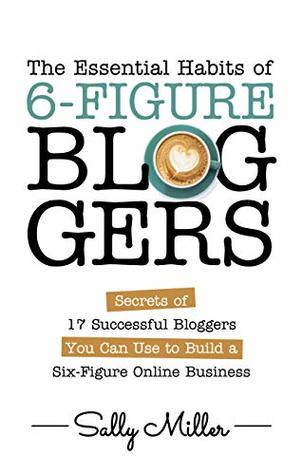
More on this book
Community


Kindle Notes & Highlights

by
Sally Miller

Successful people have a mission and take strategic action to fulfill their vision.
This habit is about setting meaningful goals and creating a plan to achieve them. It’s about being strategic.
You can define your mission and set meaningful goals.
Acting with purpose means you know where you want to go and have a proven plan to get there.
Successful people create systems so that essential tasks always get done.
Systems are not limited to the computer or software kind. They include daily rituals, outsourcing certain tasks if necessary, content planning, batching related tasks, and more. A system is anything that automates strategic activities.
Unless you’re superhuman, you need systems to stay consistent and succeed. Don’t rely on willpower alone to achieve your goals.
Successful people accept responsibility for their results and believe in their power to achieve the desired outcome, no matter what happens.
Top performers know that they, and they alone, are responsible for their results.
You have a personal mission and set goals that fit with your mission.
You follow a proven strategy to meet your goals and omit activities that are inconsistent with your mission.
The takeaway is, don’t hold on to something that isn’t working. Let it go and focus on something new or something that is producing the results you want.
When your goals align with your purpose, the work becomes effortless. For bloggers, this means having a reason why your blog exists—one that is meaningful and unique to you.
Having a mission means making your blog about something bigger than yourself.
Finding an audience for your blog that you can connect with and want to serve.
Get clear about what matters.
Write your mission statement.
Write your guiding principles.
Set meaningful goals. 5. Review your goals.
The next step is to write your mission statement. What do you want to create or achieve with your blog?
Who will read your blog and how will they benefit?
Your mission may impact your local community, a distinct group of people, or the entire world. It can’t be too big or too small.
Think of your mission statement as a compass. It’s your North Star.
Look for problems you’re drawn to solve, people you’re moved to help, positive change you want to see in the world.
In your journal or workbook, write a brief mission statement for your blog.
But don’t worry about getting this perfect. One of my favorite mantras is, “Clarity comes from action.”
Your mission statement defines who your blog serves and what difference you make in the world. Your guiding principles specify how you fulfill your mission.
Use my talents to help people (eliminate or outsource what I’m not good at). 2. Seek the truth (don’t chase trends and share untested ideas).
Keep it simple (don’t overcomplicate). 4. Do my best (don’t take shortcuts). 5. Focus on the journey (and not the end result).
goals are meaningful, they help you stay motivated.
Brainstorm what you want to achieve with your blog in the next three to twelve months (pick a period that works for you). I favor goals with a specific outcome. For example: publishing a book, launching a product or service, or learning a new skill.
Finally, review your goal(s) by answering the following questions: 1. Does each goal align with your mission statement?
Does each goal align with your guiding principles?
Do you have sufficient resources (time, skills, money) to achieve these goals?
Next, you want to define a strategy for your blog that will take you from where you are now to where you want to be.
If you attempt to learn everything there is to know about SEO, social media, content marketing, product creation, affiliate marketing, etc., you will spend all your time learning and no time doing.
You don’t need to implement every tactic or piece of advice to be successful.
Instead, you want to find a handful of activities that work for you and your blog. Then, ...
This highlight has been truncated due to consecutive passage length restrictions.
Your blog strategy should have at least three components: 1. A clearly defined purpose and audience. This is your blog’s mission statement which you created earlier in this chapter. 2. A monetization strategy. 3. A marketing strategy.
Write 100 helpful, reader-centric blog posts, as quickly as you can. Fret not about web design. Just make sure you’re treating your reader as you’d like to be treated.
Your blogging strategy doesn’t need to be complex. Know who you’re writing for and create amazing content for them. The rest will follow.
Write a blog post reviewing the product.
Compare and contrast two products.
Write a round-up of five of the best products.
Also, you must tell your readers that you will benefit from their purchase. In addition to having a full disclosure page on your blog, you need to include a disclosure on every single post that contains an affiliate link.
Monetization Strategy 2: Product Creation
Here are five common products bloggers create: 1. Ebooks
Downloadable products (workbooks, bookmarks, a PDF game, customizable labels, etc.) 3. Courses 4. A video series 5. An audio-based training series
If you want to create a product, spend time getting to know your audience’s needs. What are their secret hopes and deepest pain points?
Monetization Strategy 3: Offering Services
