
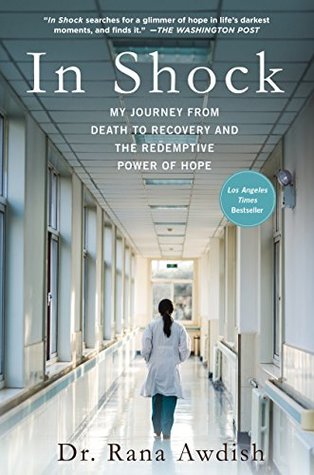
More on this book
Community


Kindle Notes & Highlights

by
Rana Awdish
Read between
October 20 - November 10, 2019

the basic rule of the Ring Theory, which I first encountered in a Los Angeles Times article by Susan Silk and Barry Goldman.
“comfort IN and dump OUT.”
The traits we revile in others are often the ones that remind us most of our worst selves. And we react most strongly to the faults and flaws we see in others that we are most ashamed of in ourselves.
But allowing ego to dominate, coddling
it
as a mechanism of self-protection, is nothing more than allowing weakness to ...
This highlight has been truncated due to consecutive passage length restrictions.
We cannot change that which is true and sad. But we can acknowledge it. We can humbly witness suffering and offer support.
That shame is unique in its wholeness, an impenetrable black orb that deflects light.
Our feelings would surface, like bubbles of gas in a liquid. Some of our classmates found reencountering their feelings unbearably difficult and instead attempted to re-drown them in alcohol and addiction. Some left medicine for alternate careers. Some committed suicide.
Because shame and guilt and sorrow always float.
Shame doesn’t strike like a fist. It rots its way in. Shame unravels us at our most fragile seams. It burns holes in our façade and allows light to shine on our self-doubt. It whispers to us, reminding us that we are imposters and, by the way, are not actually fooling anyone. It’...
This highlight has been truncated due to consecutive passage length restrictions.
We learn to stop feeling our feelings, just as we are trained to disengage from the feelings around us.
Our ability to be present with each other through our suffering is what we are meant to do. It is what feeds us when the darkness inevitably looms.
We cannot avoid the darkness, just as we cannot evade suffering. Loving each other through the darkness is the thing to look for and to mark. It’s there, in the shadows, where we find meaning and purpose.
“It is hard work being a parent,” he admitted. “And a spouse. And it is hard work being a doctor. We carry around a lot of fear and anxiety and shame, don’t we?”
Doctors bring their own ghosts to every encounter, and they come in many different forms.
We hope that the events of the day will allow each of us, physician and patient, to leave the hospital free of permanent scars.
Our greatest gift is, in fact, our ability to be absolutely present with suffering. To allow it to transform us, and, by holding the suffering of others, transform it for them as
well.
To teach something, you first have to truly master it yourself, and that requires a kind of self-discovery, an immersion that ignites the first sparks of knowledge before we are ever in front of a student.
