
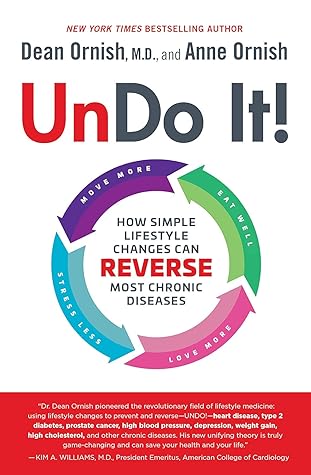
More on this book
Community


Kindle Notes & Highlights

by
Dean Ornish
Read between
August 24 - September 2, 2019

A whole-foods plant-based diet, naturally low in animal protein, fat, sugar, and refined carbohydrates and high in flavor—primarily fruits, vegetables, whole grains, legumes, and soy products in their natural, unprocessed forms.
Moderate exercise, such as walking and strength training.
Stress management.
Love, social support, and intimacy. People who feel lonely, depressed, and isolated are three to ten times more likely to get sick and die prematurely from virtually all causes when compared to those who have strong feelings of love, connection and community.
heart disease is the most expensive condition in terms of total healthcare spending.
A central theme of this book is that fear is not a successful motivator over the long term. It’s often very effective in the short run—for about a month after someone has a heart attack, for example, they’ll do just about anything that their doctor or nurse prescribes—but it usually doesn’t last. It’s just too scary to continue believing that something bad may happen. For lifestyle changes to be sustainable, they have to be pleasurable and meaningful, fun and joyful, loving and feeling good, as well as effective—and freely chosen.
lifestyle factors—moderate exercise of at least 30 minutes per day; not smoking; normal weight; and a high intake of fruits, vegetables, and whole grains and low meat consumption—had a 78 percent lower risk of developing any chronic disease, including a 93 percent lower risk of getting type 2 diabetes, an 81 percent reduced risk of a heart attack, a 50 percent lower risk of a stroke, and a 36 percent reduction in all forms of cancer!
A sedentary lifestyle increases inflammation, whereas exercise decreases it. Only twenty minutes of walking significantly reduces markers of inflammation.
Most fruits and vegetables are anti-inflammatory, especially blueberries, strawberries, tomatoes, nuts, cruciferous vegetables such as broccoli, and green leafy vegetables. Animal protein dramatically increases the risk of premature death independent of fat and carbohydrates.
In another study, eating just one slice of white bread resulted in higher blood sugar levels and an increase in another inflammatory marker (Nf-kBf). Processing whole-wheat flour into white flour or brown rice into white rice removes the fiber and bran. This turns healthy carbohydrates into unhealthy ones that promote inflammation. Fiber and bran fill you up before you get too many calories. Also, they slow the rate of absorption from your gut into your blood, so your blood sugar rises slowly and not too high. When fiber and bran are removed, your food gets rapidly absorbed, causing your blood
...more
Plants, especially cruciferous vegetables such as broccoli and cauliflower and fruits such as blueberries and strawberries, inhibit TOR. So do beverages such as green tea and soy milk and spices such as turmeric.
In addition to omega-3 fatty acids, I take a few supplements—vitamin C, a multivitamin without iron, vitamin D3, turmeric (for its anti-inflammatory properties) with black pepper (Piper nigrum) to increase absorption, magnesium citrate, CoQ10, and a probiotic.
For every hour you spend running, you gain seven hours in your life expectancy—up to three additional years of life. A word of caution. The risks of exercise—both musculoskeletal injury and sudden cardiac death—are directly related to the intensity. Walking gives many of the health benefits of more intensive exercise while minimizing the risks.
A study from Microsoft found that the average attention span since the year 2000 (when smartphones were introduced) decreased by a third, from twelve seconds to only eight seconds—less than the attention span of a goldfish! Technology is designed to be addictive. The gratification it provides is similar to that of other addictive behaviors, such as drug abuse or gambling.
Among other benefits, this reduces inflammation and enables better control of blood sugar.
And if you’re not sleeping well, either, that just makes things worse, since the brain literally detoxifies when we sleep. Stress-related diseases have been increasing for decades, including heart disease, hypertension, obesity, diabetes, addiction, anxiety, and depression.
Here are five different stress reduction techniques,
Meditation. Meditation is the act of steadying your concentration on one object, such as your breath, a word, or a feeling.
The benefits of meditation also include better concentration, a more consistent feeling of calm, clarity, and a sharpened mind.
Many studies have documented that insufficient sleep increases your risk of a wide variety of chronic conditions, including depression, heart disease, type 2 diabetes, ADHD, and Alzheimer’s disease, among many others.
Practicing deep relaxation and meditation before bed will help you fall asleep more easily and sleep more deeply. Getting a good night’s sleep is one of the most powerful things you can do to reduce stress and gain health.
Gentle Stretching
Neck Exercises
Shoulder Rolls
Wrist Stretch 1
Wrist Stretch 2
Ankle Stretch 1
Ankle Stretch 2
Toe Stretch
Cobra Pose
Half Locust
Forward Stretch
Spinal Twist
Shoulder Stand
Fish Pose
Breathing Techniques
Alternate-Nostril Breathing
Meditation
Now, go ahead and try it:
Meditation on Your Breath
Meditation on the breath reduces blood pressure, decreases muscle tension, and increases alpha brain waves. It brings the heartbeat into rhythm, increases learning ability and mental clarity, and can bring feelings of peace and tranquility. Meditation on a Word
Try it:
Meditation on a word lowers respiration rate, reduces blood pressure, decreases muscle tension, and increases alpha waves of the brain. It brings the heartbeat into rhythm, increases mental clarity, and can allow you to experience greater feelings of serenity and joy.
Walking meditation improves balance of both the body and the mind. The rhythmic movements of body and breath begin to slow the heart rate and lower blood pressure. It calms and quiets the nervous system and the mind. It can be used both as a meditation practice in and of itself and as a transition to a sitting meditation practice.
Direct Guided Imagery
Deep Relaxation: Short Version
Additional Stress-Busting Techniques
Warning: May Cause Inner Peace!
Aim for one hour minimum to make sure you are getting your full
prescription.
