
More on this book


Kindle Notes & Highlights


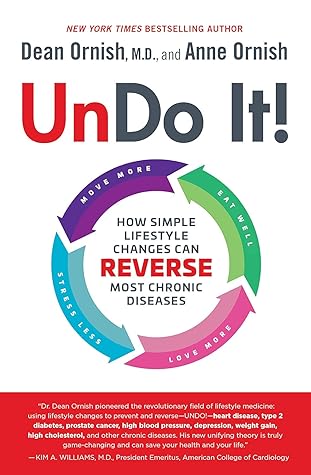
In short: eat well, move more, stress less, love more. That’s it. Boom!
For lifestyle changes to be sustainable, they have to be pleasurable and meaningful, fun and joyful, loving and feeling good, as well as effective—and freely chosen.
Physicians have among the highest rates of depression and suicide of any group—more than one doctor a day kills themself.
Most men, if they live long enough, will get prostate cancer even if it remains undiagnosed. Approximately one-third of men in their thirties or forties, one-half of men in their fifties and sixties, 70 percent of men in their seventies, and 80 percent of men in their eighties have prostate cancer even if they’re not aware of it.
What’s good for you is good for our planet. What’s personally sustainable is globally sustainable.
It also takes significantly more energy to produce a unit of food higher on the food chain than plants. For example, it takes ten to fourteen times more resources to produce a pound of meat-based protein than a pound of plant-based protein. Producing a pound of beef requires almost 2,000 gallons of water.
For example, just as chronic stress can suppress your immune function, love, altruism, and compassion can enhance it.
When you eat well, move more, and love more, then you stress less.
One study revealed that people who reported spending more than two hours per day on social media were twice as likely to feel socially isolated as those who spent less than half an hour per day.
For example, researchers at Harvard found that meditation alone can change the expression of genes that regulate inflammation, programmed cell death (apoptosis), and oxidative stress in only a few weeks.
found that as little as two weeks’ training in compassion and lovingkindness meditation generated changes in brain circuitry linked to an increase in positive social behaviors like generosity.
