
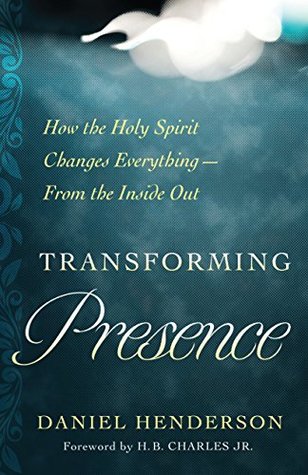
Kindle Notes & Highlights

Read between
June 11 - August 3, 2018

There is no New Testament verse teaching that music is a means of mediating the presence of the Holy Spirit. In some gatherings it appears that the worship leaders are trying to “channel” the Holy Spirit through the music, which is far more akin to mysticism than to biblical Christianity.
Music is
a part of worshiping God, but it was never meant to be the heart of it.”
We do not sing in order to be filled with the Holy Spirit. We are filled with the Holy Spirit so that we might sing.
“Vagueness about the object of our praise inevitably leads to making our own praise the object. Praise therefore becomes an end in itself, and we are caught up in our own ‘worship experience’ rather than in the God whose character and acts are the only proper focus.”
New covenant glory is not a mysterious passing by or visitation of an external presence as it was with Moses. The glory is in us!
We need to speak the words of the gospel and the teaching of the Bible to one another when we gather.
a discussion about the work of the Holy Spirit must include a balanced, biblical understanding of our very real and necessary emotions.
Emotion is a gift from God to help us relate to Him and one another. Our feelings are important to our journey of faith.
Spiritually healthy people are aware of the vital role of emotion as beings made in the image of God and saints called to transformation into the image of Jesus.
“Ignoring our emotions is turning our back on reality; listening to our emotions ushers us into reality.
Oh, the havoc that is wrought and the tragedy, the misery and the wretchedness that are to be found in the world simply because people do not know how to handle their own feelings!
Emotional reactions are essentially outward expressions of what is going on inwardly.
God designed your emotions to be gauges, not guides.
pleasure is the measure of your
treasure, because the emotion of pleasure is a gauge that tells you what you love.
“My feelings are not God. God is God. My feelings do not define truth. God’s word defines truth. My feelings are echoes and responses to what my mind perceives. And sometimes—many times—my feelings are out of sync with the truth.
When we are filled with the Spirit, our truth-based and truly healthy emotions are focused on the astonishing wonder of the person and work of Jesus.
So we must cultivate a Christlike, Spirit-prompted freedom to feel. Yet we must guard our hearts from simply being excited about excitement, emotional about emotions, or worshiping the feelings of worship.
Am I aware of and open to my God-given emotions? • What is prompting this particular emotion? • What thoughts may be fueling and shaping this emotion? • Are these thoughts being transformed by the Word of God? • Based on God’s Word, where should I focus my trust? • Are these emotions consistent with the fruit of the Holy Spirit and submitted to His control? • How can the Holy Spirit use these emotions to glorify Christ? • How are these emotions affecting others? • Is my emotional expression building up others or in some way distracting or discouraging them? • If my regular emotions are proving
...more
True worship comes from people who are deeply emotional and who love deep and sound doctrine.”
Some believers today (maybe more than we realize) are still stuck in an outdated edition when it comes to their expectations and explanations of the Holy Spirit.
Don’t try to drive the old covenant model when new covenant life is available and ready for your enjoyment.
I would compel you to ask the Holy Spirit to make your participation of the Lord’s Supper more meaningful.
If we could make much more of the institution of baptism, we would think much more of the implications of our new life in Christ.
The indwelling Spirit confirms the truth of who we really are, enabling us to overcome insecurities and enjoy a significant life from the core of our new identity.
The abiding Spirit gives us the desire and power to obey the Word of God
Every saint is a holy servant. Every member is a minister. Every Christian is a contributor—because we are stewards of the grace of the indwelling Spirit of God.
One of His primary functions in our lives is to empower us to speak boldly of Christ and His gospel
We should be reminded that Paul went to great lengths to confront disunity, identifying it as a surefire indicator of carnal people who are not surrendered to the Holy Spirit.
Now to him who is able to do far more abundantly than all that we ask or think, according to the power at work within us, to him be glory in the church and in Christ Jesus throughout all generations, forever and ever. Amen. (Eph. 3:20–21)
From a purely New Testament standpoint, could it be that the “revival” we long for and labor over is essentially an extraordinary sensitivity, surrender, and obedience to the Holy Spirit?
In revival, Spirit-filled Christians testify to one another about the great work of Jesus in their lives.
“I never want to let fear of the unexpected cause me to institutionalize lukewarmness.”12
The devil loves nothing more than to distract us from the sufficiency of the gospel.
Emphasizing an atmospheric transaction rather than an internal transformation is a distraction that can lead to spiritual disappointment.
The transforming presence of the Holy Spirit is available and sufficient for every Christian and produces radical, unstoppable gospel transformation—in us, through us, and beyond us.
be earnest to experience the teachings of Acts but cautious to teach the experiences of Acts.
Bible scholars often make the distinction between “descriptive” passages and “prescriptive” passages.
A NEW COVENANT WORSHIP VOCABULARY
