
More on this book
Community


Kindle Notes & Highlights
by
Diana Marcum
Read between
September 7 - September 14, 2021

the Azores, nine Portuguese specks of land surrounded by the Atlantic Ocean for at least nine hundred miles in every direction.
Azorean Brigadoon—a village out of place and time.
Myths cling to the Azores like mist to their volcanic peaks.
There is a Portuguese word, saudade, that they say has no translation. It’s bigger than homesickness or missing someone. It’s a yearning that can be expressed in no other language. It is, as one Azorean friend puts it, “a strictly Portuguese word.”
poverty that he said was deeper than pig shit and stickier than molasses. He never entirely escaped.
Growing up in California, you learn early that living amid great beauty comes with great risk. Our sunlit mountains, fertile valleys, and sparkling coastal cities are vulnerable to fires, floods, and earthquakes.
The volcanic Azores are also no strangers to natural disasters.
America has long been divided between those who believe its strength lies in diversity and those who are afraid of outsiders and blame social ills on whoever is in the latest wave of migrants.
Your huddled masses yearning to breathe free”—were written by Emma Lazarus, an American poet who came from a refugee Jewish Portuguese family.
‘Don’t leave for tomorrow what you can do today.’ And the Azores way is ‘If you can do it today, you can do it tomorrow.
(It would be explained to me later that on an island of green fields and hills, only Americans and Canadians felt the need to mow.)
rough translation of “A Minha Canção é Saudade”—“My Song Is of Longing”—is: I cry my own nostalgia I weep in pity for myself I cry, absorbed in my own longing.

Song by the Queen of Fado, Amalia Rodrigues
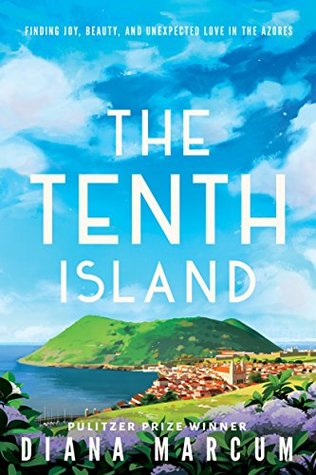
“The Tenth Island is what you carry inside you. It’s what’s left when everything else falls away. Those of us who live between worlds just know the Tenth Island better. No matter where I have lived—I have never left my island.”
There are two steady winds that circle the earth. The air blows counterclockwise in the Northern Hemisphere and clockwise in the Southern Hemisphere: the trade winds.
Just being here, at ease, alone in the dark, made me realize I had been mindlessly maneuvering just-the-way-things-are, accepting that violence was always a possibility, never realizing there are other places where it doesn’t feel that way.
Books for Living by Will Schwalbe, who wrote odes to the books he’d found most useful. He highlighted this excerpt: I believe one of the greatest pleasures of life is to curl up one’s legs in bed. The posture of the arms is also very important in order to reach the greatest degree of aesthetic pleasure and mental power. I believe the best posture is not lying flat on the bed, but being upholstered with big soft pillows at an angle of thirty degrees with either one arm or both arms placed behind the back of one’s head. In this posture any poet can write immortal poetry, any philosopher can
...more
Odie, who had lost an entire country and previous life, rolled her eyes. “Oh, Princess. They cut the tree down. You have wings, so fly.”
It could alwys worse
putting pennies on the tracks, waiting for a good-luck smashing by a passing train. Interesting concept: being flattened into good fortune. That happens, doesn’t it? You feel as if you got run over good, only to later realize you are as lucky as they come.
the trick to success is to know when you have enough and stop and appreciate it.”
Algar do Carvão, probably the only known place in the world where you can walk inside the cone of a volcano. There was an initial explosion some three thousand two hundred years ago, and then two thousand years ago another eruption at the same site spewed molten lava inside the mountain. When the lava drained, it left chambers whose rock walls were as varied in colors of bronzes and golds as the cloak of the lover in the Gustav Klimt painting The Kiss.
the same crossroads as the islands themselves—wanting to compete in the larger world but wanting to protect his essence and remain unchanged.
Home—it seemed like a fragile idea to me. Is it where we’re from or where we are?
“Almost anything you do will be insignificant, but you must do it . . . We do these things not to change the world, but so that the world will not change us.”
We have this one life. But all the roads not taken, all those other lives we might have lived, are a part of it too. Yearning—that terrible, beautiful gaping yawn of want for a person, a place, a chance, a change, or something we can’t name—leaves craters, spaces for us to hold more of life. Saudade might be a strictly Portuguese word, but aching want is a universal condition.
There’s a much-quoted line by Portuguese writer Raul Brandão: “Já percebi que o que torna as ilhas belas e as completa é a ilha em frente”—“I have come to understand that what makes the islands beautiful and complete is the island that’s across the way.” Maybe life is like that. For all our talk about living in the moment, what makes the present beautiful and complete is also imagining what we will do next.
