
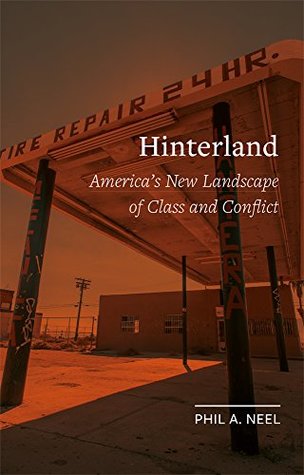
More on this book


Kindle Notes & Highlights


America is pretty much like China, I would tell them. No, they’d shake their heads. America must be better, they said, because in America you have guns.
The planet created by global capitalism is a serrated one. Some geomorphologists have taken to calling this economic earth the “technosphere,” a skein of human-enhanced advection processes comparable in scale to those of the hydrosphere or biosphere, but marked by its intense tendency toward agglomeration and long-distance mass transport.1
Tear gas drifts through the financial district like the specter of finance itself, as if that abstract swarm of shares, bonds, and derivatives had achieved its own ascension, tearing free from prisons of paper and computer circuitry like mist rising from a corpse.
A central thesis of this book, however, is that urbicide as the product of insurrection
is the point at which those excluded from the urban core and thrown out into that hinterland beyond suddenly flood back into it—this leads to the overloading of the city’s metabolism, the death of urban administration, the local collapse of civil society, and therefore the beginning of politics proper.
But beyond the city, where there is little question of inclusion, it becomes clear that these populations are also unified by something else: the commonality that comes from being increasingly surplus to the economy, though also paradoxically integral to it. This is the experience of class in the Marxist sense—the proletariat as the population that is dispossessed of any means of subsistence other than what is afforded by selling time for wages, simultaneously forced from the production process by technological development and nonetheless necessary to it, as its basic constituent.
Meanwhile, the periods of growth following ever-deepening recessions have tended to be “jobless recoveries,” in which the gap between restored growth rates and restored levels of employment has widened with each crisis. During recessions in the early 1980s and ’90s, employment recovered in a little more than two years. The most recent “recovery” took more than six.
The fundamental thesis is that the geographies detailed here are essentially international, since the crisis itself is a world crisis. New revolutionary horizons can emerge only via such connections, rather than via the ever-narrowing nexus of identitarian politics on offer in most activist circles, which share their political basis with the far right.
When the entirety of the world has been subsumed by capitalist production, the only connection we have with others is our increasing shared dependence on the obscure machinations of the economy.
This strategy puts an equally strong emphasis on “inside” work via formal administrative channels (facilitated by entry into local government and the Republican Party) in a way that synthesizes well with the “outside” work they do in defunded timber country or along the U.S.–Mexican border, where they prepare and establish parallel structures of power.
These groups are essentially engaged in a battle for “competitive control,” a term used by the Australian military strategist David Kilcullen (a senior adviser to
General Petraeus in 2007 and 2008 and then special adviser on counter-insurgency to Condoleezza Rice) in describing the rise of guerrilla forces within the interstices of failing states.
Kilcullen argues that the success of insurgencies such as the Taliban in Afghanistan as well as the rise of expansive criminal syndicates in places like Jamaica can both be explained by the ways in which such groups succeeded in providing “a predictable, consistent and wide-spectrum normative system of control”16 that helps to win ov...
This highlight has been truncated due to consecutive passage length restrictions.
People don’t throw their weight behind those they agree with, and often many in a population can’t be said to have any deep-seated ideological commitment in the first place. Instead, support follows strength, and ideology follows support. Political or religious attachment is often an after-the-fact development,
Everything seemed animated by an invisible force, all choreographed in some indecipherable ritual that simply was not meant for us.
the basis of tax revenue is in industrial production, whether taxed at the level of capital, commodity sale, land ownership, or wage income. Less industrial output means either fewer taxes or a higher share of tax-to-income for most residents. Increased property taxes likely cannot be afforded by small landholders, for whom employment is sparse—and therefore the progressive’s alternative of increasing property taxes is simply a program of dispossession for small landholders.
In reality, the far right’s political base is not defined by sheer xenophobia and idiocy, and their political analysis, though sprinkled with occult themes and mystical logic, is not entirely hollow.
The crux of Patriot Movement land politics is the desire to see federally controlled lands returned to local management in order to revive long-dead local timber, mining, and ranching industries.
In Burns, the Patriots were ultimately
outdone by the state in the game of competitive control, since the state itself provided enough stability to the population via its own normative framework, against which the Patriots could offer no real alternative, unlike in the more severely underfunded Josephine County.
evidence that simply suggests that rural proletarians,
similar to their urban counterparts, have been unable to cohere any substantial political program that has their interests at heart. In such a situation, we again see that support follows strength and belief trails far behind.
As one of the poorest generations in recent history, debt and rent are the defining features of our lives. It is this fact that makes the current incarnation of the far right an actual threat, because it increases the probability that some variant of present-day Patriot politics might actually find a mass base, as a program formulated specifically to oppose the extraction of rents from an unwilling population in the far hinterland is translated into a more general opposition of rents as a primary form of exploitation in contemporary capitalism.
The ritual reaches down to the depths of human identity. We are defined increasingly by work and debts and purchases and each seems every year to resemble more the others until maybe sometime soon all three will simply fuse into a single form of near-complete evisceration. Our families grow smaller, our groups of friends diminish. Our subcultures are evacuated of all sacrifice and intimacy until they resemble little more than many minor bureaucracies propping up the great palace of consumption. When some fragment of the communal does find some space to congeal in the world’s wastelands and
...more
The new far right is still embryonic. It’s difficult to predict exactly how it will develop, but the conditions that determine this development are more or less visible.
Once, when one of my higher-ups had been out on a job, he’d run across a den of wild foxes. He spent several days watching them, counting their numbers, excited that the nearby mine hadn’t driven away all the sparse desert fauna. But he made the mistake of telling his co-workers, and the next weekend one of the other employees—a red-faced, blundering man originally from some exurb in Florida—drove his truck out to the area, tracked down the foxes, shot them all, skinned them, and took the pelts as trophies. It often seems as if there is an unbridgeable gap between the minds of those enmeshed
...more
We might see the same economic apocalypse, the same increase in the valence of riots and insurrections, the same strategic openings offered by these events, the same placid misery offered by the status quo. But none of this makes us allies.
But the real political advance visible in the far right—and the thing that has made possible its recent ascendance—is the pragmatic focus on questions of power, which are religiously ignored by the American leftist, who instead focuses on building elaborate political programs and ornate utopias, as if politics were the exercise of one’s imagination.
All struggles within the historical party tend toward what might be called “demand-lessness,” for lack of a better word. This isn’t to say that individual struggles don’t have particular demands, but that they tend actually to overflow with demands in such a way that the only thing that coheres them is a generalized rejection of the present order—the idea that all the politicians must go, that there just needs to be some fundamental change no matter its character, that the present cannot be borne any longer.
They don’t see the historical party as foreboding a possible future at all, but instead as simply signaling the return of worlds amid the collapse of the world-shattering rituals of capital. The political event is obscured, the hastening of collapse replaces revolution, and wall-building preparation replaces communization. The far right is therefore neither the Party of Anarchy nor the Party of Order but the Anti-Party.
The material core of the far right is instead the whitening exurb, the actual home of most Patriots and Third Positionists, which acts as an interface between the metropolitan and non-metropolitan, allowing the wealthier landholders, business owners, cops, soldiers, or self-employed contractors to recruit from adjacent zones of abject white poverty, essentially funneling money from their own employment in urban industry into hinterland political projects.
After a life mostly lived in the country, I am convinced that the eyes of tweakers see something that other eyes do not. Those orbs gouged deep down into their sockets like antlions awaiting prey, their presence only hinted at by that brief glint of quivering motion beneath the surface—as if the eyes are sunk straight back into the brain and thereby opened to some sort of neural augury, the iris black like a single, dilated pupil open to the world’s many wounds and thus capable of seeing that world as it is: a congress of explosions tearing bodies apart all at different speeds and in different
...more
Tweakers have become objects of revulsion within rural America, not due to their many moral failures or seemingly plague-ridden bodies but because of their matter-of-fact recognition that those of us from the country are all already dead.
The rapture of apocalypse is therefore not on its way but instead long past. We’re adrift in its wake.
The tweaker instead represents the most basic recognition of the ways in which the far hinterland has been made futureless, an organic nihilism emerging from the American countryside, unprecedented and unpredictable.
If timber and ore were the gods of the old west, fire and flood are the gods of the new one.
before 101 was straightened in southern Humboldt, the “Redwood Curtain” even ensured that goods trucked into coastal range would have to be transferred to smaller vehicles capable of navigating the narrow highways, creating local inflation bubbles in the price of gas and staple foodstuffs.
At these times, you knew that the machines were bound somewhere, preparing to settle into alpine meadows where paramilitary soldiers would spill out across the warm summer fields to pull people from their houses at gunpoint, drag them across the wildflowers, and destroy their crops in front of their eyes.23
The resulting image, however, is not the one favored by the metropolitan think piece, which sees racial resentment as the natural outcome of such “economic anxiety.” Instead, traditional methods of transforming class antagonism into racial difference are beginning to reach a sort of saturation point, as unemployment, mortality, and morbidity rates all start to overspill their historically racial boundaries. The effects of this are extremely unpredictable, and political support will tend to follow whomever can offer the greatest semblance of strength and stability.
Liberals ignore these areas because low-output, low-population regions very simply do not matter much when it comes to administering the economy—and that is, in the end, what liberalism is about.
To the extent that there is a correlation between one’s experience of oppression and one’s openness to revolution, it tends to be a non-linear probability distribution, with the highest probability lying not among the “most oppressed” but among the groups who, for whatever reason, had experienced some degree of prolonged improvement in their condition followed by a sudden, sharp reversal.33 In certain ways, this describes the post-Civil-Rights experience of the black population, seemingly advanced by desegregation and the growth in home ownership, all capped by the rise of a not-insubstantial
...more
If history is any indicator, the social plagues that gestate in the swamps and wastelands of the rural fringe eventually make their way to the gates of the palace.
Since whites compose the bulk of the impoverished population, if not always its lowest rungs, the far left’s persistent refusal to address white poverty is a refusal to address the conditions of the single largest demographic composing the lower class in the United States—and one that has very clearly experienced the J-Curve of heightened expectations suddenly plummeting into a sharp reversal of prospects.46 This is an inherently politicizing process, and at this point the far right has been almost the only force attempting to shape it. They tend to target the perceived inequities pointed out
...more
The ability of partisans to succeed in the environment of competitive control opened up by this failure will correlate to their ability to offer strength and stability to populations in the midst of crisis.
But while organizing among poor whites is a persistent necessity of any future revolutionary prospect, the far hinterland does not provide a solid foundation for such activity, due to its low share of total population, crumbling infrastructure, and distance from key flows within the global economy. Any attempt to organize in such conditions is quickly transformed into a quasi-communitarian attempt at local self-reliance—the endless repetition of those failed downriver communes, which invariably become retreats for urban Buddhists or walled compounds flying money-colored flags.
But the reality is that, whether left wing or right wing, political activity is something that is built, not something that emerges naturally from the experience of oppression—this experience only places the success of political organization along a probabilistic curve and colors the character of its result.
As early as 2011, the suburbs housed more poor than the cities—with 16.4 million suburban poor making up about one third of the national total.
In other areas, the greenery might be entirely transplanted for the express purpose of creating a desirable landscape for ex-urban residents. Rather than attempting to pin down what, exactly, is the proper outer border of such a city, it makes more sense simply to acknowledge that the old categories of urban, suburban, and rural may simply have less explanatory power for the contemporary capitalist city than they once had. Instead, we can define clear islands of affluence, encircled by a near hinterland composed of identifiable industrial-logistics expanses that gradually fade into a farther
...more
In January 2016, people from the surrounding suburbs poured into Red Cross shelters, unable to return to homes torn apart by the rising water. But even with such disasters gradually becoming the new, more violent equilibrium, federal aid is perpetually insufficient. The Red Cross itself was a minimal presence compared to the swarm of church groups sifting through the wreckage to offer disaster relief.
Politics in these conditions can only appear apolitical, as all functional organizing is given political significance when confronted with devastation of such scale: Baptists and Mennonites organizing supply caravans through the wreckage of long-decayed postwar suburbs, the crosses emblazoned on their white vans floating above silt-clogged cul-de-sacs.
