
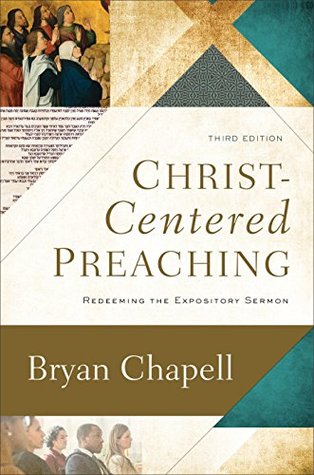
More on this book
Community


Kindle Notes & Highlights

The two words around which this whole book could be wrapped are authority and redemption.
The first well-documented foe of the gospel is the erosion of authority.

The first of two opposing forces that challenge the effective exposition of the Word of God, namely the erosion of authority.
Expository preaching that explains precisely what the Word of God says for the issues of our day, the concerns of our lives, and the destiny of our souls provides an alternative. In keeping with the mandates of Scripture, such preaching offers a voice of authority not of human origin and not subject to cultural vagaries (Isa. 40:8; 1 Thess. 2:13; Titus 2:15).
Isa. 40:8: “The grass withers, the flower fades, but the word of our God will stand forever.”
1 Thess. 2:13: “And we also thank God constantly for this, that when you received the word of God, which you heard from us, you accepted it not as the word of men but as what it really is, the word of God, which is at work in you believers.”
Titus 2:15: “Declare these things; exhort and rebuke with all authority. Let no one disregard you.”
The time has come for redeeming the expository sermon—not only reclaiming a needed voice of biblical authority for our day but also rescuing the expository approach from practitioners unaware of (or unconcerned about) cultural forces, communication resources, and biblical principles that should be engaged to connect the Word to God’s present purposes and people.
Along with providing practical instruction, this book also attempts to confront a second foe of the effective communication of the gospel.
The second of two opposing forces that challenge the effective exposition of the Word of God, namely making moral instruction or societal reform the focus of preaching.
However well-intended and biblically rooted a sermon’s instruction may be, if the message does not incorporate the motivation and enablement of the grace of God that culminates in the ministry of Jesus Christ, then the preacher proclaims mere self-improvement.
How can all Scripture center on Christ’s redeeming work when vast portions make no mention of him? The answer lies in learning to see all of God’s Word as a unified message of human need and divine provision (Luke 24:27; Rom. 15:4).
Luke 24:27: “And beginning with Moses and all the Prophets, he interpreted to them in all the Scriptures the things concerning himself.”
Rom. 15:4: “for whatever was written in former days was written for our instruction, that through endurance and through the encouragement of the Scriptures we might have hope.”
The first error is moralism, preaching whose entire focus is the promise of a better life through better behavior. The opposite error is cheap grace, preaching the promises of a gracious God without regard for the cost of God’s love for us or the response of our loyalty.
These—moralism and cheap grace—are two polar errors, well intended but ill-conceived, in evangelical preaching.
Both moralism and cheap grace are undermined by preaching whose hope is accurately rooted in the unfolding message of God’s unfailing mercy, and whose fruit is thanksgiving offered in God-honoring lives empowered by the Holy Spirit.
These priorities indicate that the goal of preaching is not merely to impart information but to provide the means of transformation ordained by a sovereign God that will affect the lives and destinies of eternal souls committed to a preacher’s spiritual care.
English preacher Ian Tait once quipped that those who study the Bible only to gain more information may believe their minds are expanding when, in fact, only their heads are swelling.
Rev. Ian Tait: https://www.evangelical-times.org/21122/rev-dr-ian-malcolm-tait-1918-2013/
Robert G. Rayburn taught seminary students, “Christ is the only King of your studies, but homiletics is the queen.”
Ultimately, preaching accomplishes its spiritual purposes not because of the skills or the wisdom of a preacher but because of the power of the Scripture proclaimed (1 Cor. 2:4–5).
1 Cor. 2:4-5: (4) and my speech and my message were not in plausible words of wisdom, but in demonstration of the Spirit and of power, (5) so that your faith might not rest in the wisdom of men but in the power of God.
God infuses his Word with his own spiritual power. The efficacy of the truths in God’s message, rather than any virtue in the messenger, transforms hearts.
Scripture’s portrayal of its own potency challenges us always to remember that the Word preached, rather than the preaching of the Word, accomplishes heaven’s purposes.
By identifying Jesus as his Word, God indicates that his message and his person are inseparable.
Christ’s redemptive power and the power of his Word coalesce in the New Testament, with Logos (the incarnate Word of God) and logos (the inscripturated Word about God) becoming so reflexive as to form a conceptual identity.
Preaching is a redemptive act in which Christ himself ministers to his people, by his Spirit opening and transforming their hearts with the truth that same Spirit inspired in the pages of Scripture.
When preachers perceive the power that the Word holds, confidence in their calling grows even as pride in their performance withers.
An expository sermon may be defined as a message whose structure and thought are developed from a biblical text, covering its scope, in order to explain how the features and context of the text disclose enduring principles for faithful thinking, living, and worship intended by the Spirit, who inspired the text.
Without an ultimate authority for truth, all human striving has no ultimate value, and life itself becomes futile.
Long ago Augustine simply summarized, “When the Bible speaks, God speaks.”
The meaning of the passage is the message of the sermon.
If no amount of eloquence and oratory can account for spiritual transformation, who alone can change hearts? Leaders of the Protestant Reformation answered, “The Holy Spirit working by and with the Word in our hearts.”
The Holy Spirit uses our words, but his work, not ours, affects the hidden recesses of the human will.
Faithful preachers of all generations pray for what was once called “unction,” the work of the Holy Spirit that accompanies his Word with a spiritual anointing that rises above the personal thoughts and talents of the preacher, to melt and mold the hearts of listeners through the biblical message anointed with God’s transforming power.
Neglect of prayer signals serious deficiencies in a ministry even if other signs of success have not diminished.
The technical excellence of a message may rest on your skills, but the spiritual efficacy of your message resides with God.
Early American pastor John Shaw once preached at an ordination: “It’s true as one observes, God can work by what means He will; by a scandalous, domineering, self-seeking preacher, but it is not His usual way. Foxes and wolves are not nature’s instrument to generate sheep. Whoever knew much good done to souls by any pastors but such as preached and lived in the power of love, working by a clear, convincing light, and both managed by a holy, lively seriousness? You must bring fire to kindle fire.”
Aristotle’s classic rhetorical distinctions, though not inspired, can help us understand the basic components of every message we preach so that we do not needlessly cause others to stumble over what or how we speak. In classical rhetoric, three elements compose every persuasive message: logos: the verbal content of the message, including its craft, organization, and logic pathos: the emotive features of a message, including the passion, fervor, and feeling that a speaker conveys and the listeners experience ethos: the perceived character of the speaker that listeners evaluate by assessing the
...more
well-crafted logic (though it is important) does not effectively communicate the gospel if expressions of one’s heart and character are inconsistent with its truths.
Although this book of homiletical method necessarily focuses on the elements of logos and pathos in preaching, the Bible’s own emphases remind us that pastoral character remains the foundation of ministry.
Phillips Brooks’s oft-cited observation that preaching is “truth poured through personality” reflects biblical principles as well as common sense.
People sense more than they can prove by the way we present ourselves in the most inadvertent ways.
No truth calls louder for pastoral holiness than the link between a preacher’s character and a sermon’s reception.
People may not remember what we say, but they will remember us and whether our lives gave credence to the message of Scripture.
Effective ministry corresponds so much with the character of a minister that theologian John Sanderson advised people to play softball with pastoral candidates interviewing for a position. “Then on a close play at second base,” Sanderson said (with his tongue mostly in cheek), “call him out when he is really safe. Then see what happens!”
But as the eighteenth-century minister George Campbell said, “When our practice conforms to our theory, our effectiveness trebles.”
The credibility and compassion of a minister more than the excellence of the message preached determine the quality of the message heard.
While it is certainly true that a life of consistently hidden or unrepentant sin makes a poor vehicle for the gospel, it is equally true that pride in one’s moral superiority is damaging to the communication of faith in Christ alone.
You must know grace to preach it.
testimony that reinforces the message of the gospel is not merely a matter of public conduct. It is a product of consistent private meditation on the gospel that conforms our character and heart to God by daily repentance and reliance on grace that makes it real and precious to us.
Jack Miller’s encouragement to “preach the gospel to our own hearts” is not just to provide us with a daily lift but to flood our hearts and minds with the grace God’s people require from us.
Grace-focused ministers embrace the daily repentance their private prayers must include, confess to others the divine aid that grants them the strength of their resolutions, obey God in loving thankfulness for the forgiveness and future Christ supplies, model the humility appropriate for a fellow sinner, express the courage and authority of one confident of the Savior’s provision, exude the joy of salvation by faith alone, reflect the love that claims their souls, and perform their service without any claim of personal merit.
Preaching without a grace focus concentrates on means of earning divine acceptance, proofs of personal righteousness, and comparisons with those less holy. Preaching with a grace focus concentrates on responding to God’s mercy with loving thankfulness, joyful worship, humble service, and a caring witness to the Savior’s love.
What is critical at this point as we begin to consider the structural components of a sermon is to understand that our union with Christ is the end and the means of all biblical obedience (Rom. 6:1–14; Phil. 2:1–5). Thus the Bible requires that we construct our messages in such a way as to reveal the grace that is the ultimate foundation of every text, the ultimate enablement for every instruction, and the only source of true holiness.
Joseph Ruggles Wilson, a nineteenth-century Presbyterian minister and the father of Woodrow Wilson, advises, “Become what you preach and then preach Christ in you.”
John Calvin said, “God has ordained his Word as the instrument by which Jesus Christ, with all His graces, is dispensed to us.”
First, the statements lack unity.
This is the first reason a set of clear, true, and biblical statements may not form a sermon.
Without a unifying theme, listeners have no means of grasping a sermon’s many thoughts.
