
More on this book
Community


Kindle Notes & Highlights


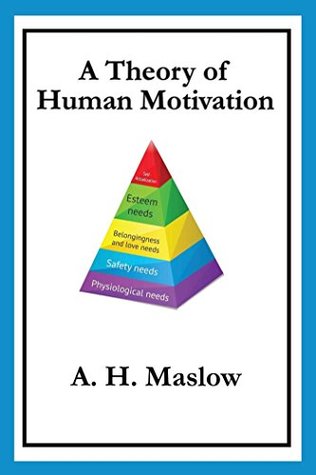
The ‘physiological’ needs. — The needs that are usually taken as the starting point for motivation theory are the so-called physiological drives. Two recent lines of research make it necessary to revise our customary notions about these needs, first, the development of the concept of homeostasis, and second, the finding that appetites (preferential choices among foods) are a fairly efficient indication of actual needs or lacks in the body. Homeostasis refers to the body’s automatic efforts to maintain a constant, normal state of the blood stream. Cannon (2) has described this process for (1)
...more
A person who is lacking food, safety, love, and esteem would most probably hunger for food more strongly than for anything else. If all the needs are unsatisfied, and the organism is then dominated by the physiological needs, all other needs may become simply non-existent or be pushed into the background.
At once other (and ‘higher’) needs emerge and these, rather than physiological hungers, dominate the organism. And when these in turn are satisfied, again new (and still ‘higher’) needs emerge and so on. This is what we mean by saying that the basic human needs are organized into a hierarchy of relative prepotency.
The safety needs. — If the physiological needs are relatively well gratified, there then emerges a new set of needs, which we may categorize roughly as the safety needs. All that has been said of the physiological needs is equally true, although in lesser degree, of these desires. The organism may equally well be wholly dominated by them. They may serve as the almost exclusive organizers of behavior, recruiting all the capacities of the organism in their service, and we may then fairly describe the whole organism as a safety-seeking mechanism. Again we may say of the receptors, the effectors,
...more
Other broader aspects of the attempt to seek safety and stability in the world are seen in the very common preference for familiar rather than unfamiliar things, or for the known rather than the unknown. The tendency to have some religion or world-philosophy that organizes the universe and the men in it into some sort of satisfactorily coherent, meaningful whole is also in part motivated by safety-seeking. Here too we may list science and philosophy in general as partially motivated by the safety needs (we shall see later that there are also other motivations to scientific, philosophical or
...more
The love needs. — If both the physiological and the safety needs are fairly well gratified, then there will emerge the love and affection and belongingness needs, and the whole cycle already described will repeat itself with this new center. Now the person will feel keenly, as never before, the absence of friends, or a sweetheart, or a wife, or children. He will hunger for affectionate relations with people in general, namely, for a place in his group, and he will strive with great intensity to achieve this goal. He will want to attain such a place more than anything else in the world and may
...more
The esteem needs. — All people in our society (with a few pathological exceptions) have a need or desire for a stable, firmly based, (usually) high evaluation of themselves, for self-respect, or self-esteem, and for the esteem of others. By firmly based self-esteem, we mean that which is soundly based upon real capacity, achievement and respect from others. These needs may be classified into two subsidiary sets. These are, first, the desire for strength, for achievement, for adequacy, for confidence in the face of the world, and for independence and freedom.5 Secondly, we have what we may call
...more
This highlight has been truncated due to consecutive passage length restrictions.
The need for self-actualization. — Even if all these needs are satisfied, we may still often (if not always) expect that a new discontent and restlessness will soon develop, unless the individual is doing what he is fitted for. A musician must make music, an artist must paint, a poet must write, if he is to be ultimately happy. What a man can be, he must be. This need we may call self-actualization. This term, first coined by Kurt Goldstein, is being used in this paper in a much more specific and limited fashion. It refers to the desire for self-fulfillment, namely, to the tendency for him to
...more
This highlight has been truncated due to consecutive passage length restrictions.
