
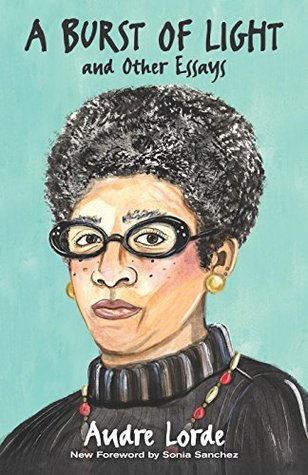
More on this book
Community


Kindle Notes & Highlights


That time we all heard it, cool and clear … Warning, in music-words devout and large, that we are each other’s harvest: we are each other’s business: we are each other’s magnitude and bond. –Paul Robeson by Gwendolyn Brooks
your voice a prayer in exile, pushing past the debris of human sacrifice.
Where are we on this food chain of life to be eaten so easily century after century, decade after decade?
We hear the sound of bravery in your teeth. And we store in our blood the memory of your voice. Your genius, your words linking continents, making us broaden our minds.
Without a rigorous and consistent evaluation of what kind of a future we wish to create, and a scrupulous examination of the expressions of power we choose to incorporate into all our relationships including our most private ones, we are not progressing, but merely recasting our own characters in the same old weary drama.
Erich Fromm once said, “The fact that millions of people take part in a delusion doesn’t make it sane.”
I’m not questioning anyone’s right to live. I’m saying we must observe the implications of our lives.
If what we are talking about is feminism, then the personal is political and we can subject everything in our lives to scrutiny.
We have been nurtured in a sick, abnormal society, and we should be about the process of reclaiming ourselves as w...
This highlight has been truncated due to consecutive passage length restrictions.
I speak not about condemnation but about recognizing what is happening and qu...
This highlight has been truncated due to consecutive passage length restrictions.
if we are to scrutinize our human relationships, we must be willing to scrutinize all aspe...
This highlight has been truncated due to consecutive passage length restrictions.
The subject of revolution is ourselves,...
This highlight has been truncated due to consecutive passage length restrictions.
In order to make integrated life choices, we must open the sluice gates in our lives, create emotional consistency.
there is an underlying integrity that asserts itself in all of our actions. None of us is perfect, or born with that integrity, but we can work toward it as a goal.
integrity has to be a basis for the journey.
who is profiting from this?
The conflict is supposedly self-limiting because it happens behind bedroom doors. Can this be so, when the erotic empowers, nourishes, and permeates all of our lives?
Much of the gay white movement seeks to be included in the American dream and is angered when they do not receive the standard white male privileges, misnamed as “American democracy.”
If it were only about personal sexual exchange or private taste, why would it be presented as a political issue?
Feelings are not wrong, but you are accountable for the behavior you use to satisfy those feelings.
The s/ m concept of “vanilla” sex is sex devoid of passion. They are saying that there can be no passion without unequal power. That feels very sad and lonely to me, and destructive. The linkage of passion to dominance/ subordination is the prototype of the heterosexual image of male-female relationships,
It is not who I sleep with that defines the quality of these acts, not what we do together, but what life-statements I am led to make as the nature and effect of my erotic relationships percolate throughout my life and my being. As a deep lode of our erotic lives and knowledge, how does our sexuality enrich us and empower our actions?
as with all families, we sometimes find it difficult to deal constructively with the genuine differences between us and to recognize that unity does not require that we be identical to each other.
we do not have to become each other in order to work together.
meeting across difference always requires mutual stretching, and until you can hear me as a Black Lesbian feminist, our strengths will not be truly available to each other as Black women.
questioned the textures of their daily living
I do not want you to ignore my identity, nor do I want you to make it an insurmountable barrier between our sharing of strengths.
When I say I am a Black feminist, I mean I recognize that my power as well as my primary oppressions come as a result of my Blackness as well as my womanness, and therefore my struggles on both these fronts are inseparable.
When you read the words of Langston Hughes you are reading the words of a Black Gay man. When you read the words of Alice Dunbar-Nelson and Angelina Weld Grimké, poets of the Harlem Renaissance, you are reading the words of Black Lesbians. When you listen to the life-affirming voices of Bessie Smith and Ma Rainey, you are hearing Black Lesbian women. When you see the plays and read the words of Lorraine Hansberry, you are reading the words of a woman who loved women deeply.
those stereotypes are yours to solve, not mine, and they are a terrible and wasteful barrier to our working together. I am not your enemy. We do not have to become each other’s unique experiences and insights in order to share what we have learned through our particular battles for survival
I do not want to be tolerated, nor misnamed. I want to be recognized.
I sit before the typewriter for days and nothing comes. It feels as if underlining these assaults, lining them up one after the other and looking at them squarely might give them an unbearable power. Yet I know exactly the opposite is true—no matter how difficult it may be to look at the realities of our lives, it is there that we will find the strength to change them. And to suppress any truth is to give it power beyond endurance.
These outbreaks, however severely curtailed by the South African police and military, are beginning to accomplish what Oliver Tambo, head of the African National Congress, hoped for in his call to make South Africa under apartheid “ungovernable.”
So much Black blood has been shed upon that land, I thought, and so much more will fall. But blood will tell, and now the blood is speaking. Has it finally started?
The connections have not been made, and they must be if African-Americans are to articulate our power in the struggle against a worldwide escalation of forces aligned against people of Color the world over: institutionalized racism grown more and more aggressive in the service of shrinking profit-oriented economies.
August 6, 1945. Hiroshima. My father’s tears—I had never seen him cry before and at first I thought it was sweat—a forty-six-year-old Black man in his vigor, yet only seven years away from death by overwork. He said, “Humanity can now destroy itself,” and he wept. That’s how it feels, except this time we know we’re on the winning side.
South Africa. Eighty-seven percent of the people, Black, occupy 13 percent of the land. Thirteen percent of the people, white, own 85 percent of the land. White South Africa has the highest standard of living of any nation in the world including the United States yet half the Black children born in South Africa die before they reach the age of five. Every thirty minutes, six Black children starve to death in South Africa. In response to questions about apartheid from a white U.S. reporter, a white South African reporter retorts, “You have solved the problem of your indigenous people—we are
...more
Every year over 500 million American dollars flow into the white South African death machine. How many of those dollars do you control as you sit reading this? Where do you bank? Buy your gas? What pressure can you bring to bear upon companies doing business in South Africa? Five hundred million dollars a year. Divestment. The withdrawal of American financial support from South Africa.
The multicorporate financial connections are a matter of record; it is the emotional ones which must become inescapable for each of us.
Decades of these actions are finally escalating into the world’s consciousness.
government sanctioned segregation and violence.
In California, U.S.A., the Aryan Brotherhood, the Posse Commitatus, and other white racist and anti-Semitic survivalist groups flourish rampant and poisonous, fertilized by a secretly sympathetic law enforcement team.
Our dead line our dreams, their deaths becoming more and more commonplace.
How does a system bent upon our ultimate destruction make the unacceptable gradually tolerable?
How do you get a population to accept the denial of the most rudimentary freedoms this country is supposed to be about to...
This highlight has been truncated due to consecutive passage length restrictions.
How are we persuaded to participate in our own destruction by maintaining our silences?
Yes, African-Americans can still walk the streets of America without passbooks—for the time being.
insistence upon their right to dissent,
How is the systematic erosion of freedoms gradually accomplished? What kind of gradual erosion of our status as United States citizens will Black people be persuaded first to ignore and then to accept?
stock in Black human life in the U.S.A., never high, is plunging rapidly in the sight of white American complacencies. But as African-Americans we cannot afford to play that market; it is our lives and the lives of our children that are at stake.
