
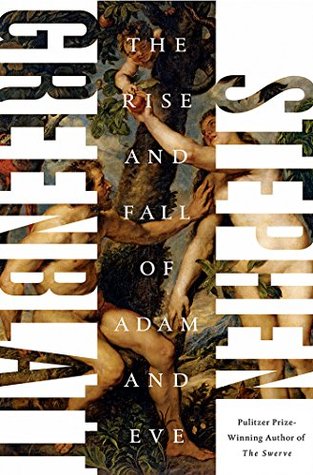
More on this book
Community


Kindle Notes & Highlights

Started reading
July 6, 2018

When I was a child, my parents told me that, during the priestly benediction that brings the Sabbath service to a close, we all had to bow our heads and keep our eyes down until the rabbi’s solemn words came to an end. It was extremely important to do so, they said, because in these moments God passed above our heads, and no one who saw God face-to-face could live.
What kind of God would forbid his creatures to know the difference between good and evil? How would it have been possible for those creatures to obey without such knowledge? And what could the threat of death mean to those who had never experienced death and could not know what it was? Authorities in the church and state reacted harshly to skeptics who insisted on asking these questions, but it proved impossible to quell a disturbance that had its roots in the very success at making the mythic first humans seem so real.
The Bible story suggests that something happened to the species shortly after it was authored by God. Humanity did not have to turn out to be the way it is now; it could all have been different. The image of the man and the woman in the perfect garden suggests a tension between things as they are and things as they might have been. It conveys a longing to be other than what we have become.
Something happened at the beginning of time—some history of decision, action, and reaction—that led to the way we are, and if we want to understand the way we are, it is important to remember and retell this story.
Humans seem to be the only animals on earth that ask themselves how they came to be and why they are the way they are. We could represent this uniqueness as an achievement, a mark of distinction, as perhaps it is. But it would be easy enough to seize upon it instead as a sign that we are lost—disoriented, uncomfortable in our own skin, in need of an explanation. Perhaps the telling of an origin story is a symptom of uneasiness—we attempt to calm ourselves by telling a story.
The Torah helped to turn Hebrews—a tribal people occupying a particular, highly vulnerable territory—into Jews. Already the prophets had begun to envisage a new covenant, not between Yahweh and the nation, but between Yahweh and the individual.
The Torah as a whole, most scholars agree, was first redacted in the fifth century BCE, but what exactly does “redacted” mean? It means that one or more editors took multiple strands that had reached them from the past, compared them, corrected them, cut pieces from them, added pieces to them, adjusted them, reconciled them to the best
Laboring feverishly over newly found tablets as well as tablets that had been languishing on the shelves for years, Smith identified and succeeded in translating the Enuma Elish. After two thousand years of forgetting, both deliberate and accidental, it became clear that the Hebrew origin story had not stood alone, in solitary splendor. The opening of Genesis was evidently a response to what the captives heard over and over again when they sat and wept by the waters of Babylon. Those captives determined not to swell the number of the lullu, the black-headed people who sang hymns to Marduk.
...more
The Hebrews were determined to distinguish themselves—from the very beginning of time—from their former captors. The Genesis storyteller was in effect burying a hated past. At the same time, in the wake of Smith’s deciphering, it was possible to catch distant echoes, like sounds coming to us from under mounds of rubble, of what had been buried. A god, hovering over the restless deep, engenders everything that will come to exist; he divides the waters in two, shaping one into the sky and the other into the sea; he forms a primordial human from clay and assigns him agricultural work. Are we in
...more
Here at last, resurrected from a distant past, was overwhelmingly powerful evidence of the deep currents that linked ancient Mesopotamian mythology and the Hebrew scriptures. Smith had found a flood story considerably older than the date on which Moses was traditionally said to have received the Torah on Mt. Sinai. It is not simply that the clay tablets, which reach back astoundingly to 1800 BCE, gave an account of an immense, destructive deluge; they included many of the key elements that feature in the Noah story: the enraged god’s determination to eradicate all human life; lifesaving advice
...more
In the Genesis storyteller’s account of the Flood, the divine smiter and the divine protector are one and the same. This reduction to one supreme divinity from multiple gods, one cleverly thwarting the destructive design of the others, preserves the omnipotence of the Creator who has made all things and now, at his own will and discretion, can destroy them. But doing away with multiple gods introduces certain problems, starting with the very notion of an all-powerful, all-knowing god who nonetheless repents what he has himself created. Did the wise maker not anticipate what his creatures would
...more
The Torah was probably assembled in the fifth century BCE; the Iliad somewhat earlier, perhaps between 760 and 710 BCE. But Sin-lequi-unninni wrote his text sometime between 1300 and 1000 BCE, and the earliest surviving written tales of Gilgamesh date from around 2100 BCE. Older by more than a thousand years than either Homer or the Bible, Gilgamesh is quite possibly the oldest story ever found.
The most extreme solution was offered by a very early Christian bishop named Marcion, born in the Black Sea city of Sinope around the year 85. Marcion proposed that the church simply abandon the Hebrew Bible altogether as the basis for faith in Christ. The God whose acts and intentions are recorded in the history of the Jews, he argued, is manifestly tainted by evil. A divinity who forbids humans access to knowledge in the Garden of Eden and then punishes them horribly for an act that only the possession of such knowledge could have prevented is not the pure, spiritual, holy, and good God
...more
Philo’s solution, radical and brilliant, can be summed up in a single word: allegory (Greek, “speaking otherwise”). The whole effort to take these stories literally has to be scrapped. Each detail instead has to be treated as a philosophical riddle, a hint toward a concealed and more abstract meaning.
The fact that the act had no point—that it was inexplicable and gratuitous—was precisely the point: if there had been a grand motive, a terrible compulsion, it might have seemed that there really was an independent force of evil in the world, as the Manichees said. But Augustine had renounced Manichaeism. An orthodox Catholic Christian, he now believed that in all the universe there was a single God, all-knowing, all-powerful, perfectly good. Evil, in such a scheme, could only be empty and derivative, a mere parody of the good.
Augustine did not want to live in a universe in which the moral reckoning would be left unpaid, in which human suffering meant nothing but the vulnerability of matter, in which wickedness would not be punished or exceptional piety receive an eternal reward. It was better to believe that accounts were being kept to the last scruple by an all-seeing God, even one who was murderously angry at humanity, rather than to believe that God was indifferent or absent.
Augustine started characteristically at home, that is, with memories of his own childhood sufferings. As a schoolboy, he hated being beaten, which was then, as for centuries afterward, the principal pedagogical technique for encouraging diligent learning. He earnestly prayed to God that he might be spared the whip. But his prayers were to no avail: if he were idle, he was flogged. It seemed grotesquely unfair, since the adults who did the flogging were themselves guilty of idleness and worse, and the Confessions registers, with subdued passion, the outrage that still lingered in his breast.
...more
It is here, when we seem to be approaching familiar and reassuring territory, that we encounter Augustine’s theological purposes. For it turns out that what he observed—wishes, indignation, revenge—marked for him the full presence in the infant of the moral catastrophe of adult life. It is all there already in the nursery: the violence, the will to enslave others, the urgency of capricious desires. The fact that the infant is impotent—that he can merely fling his arms about and cry—does not alter what for Augustine is the hard truth: there is something morally wrong with us from birth.
The core of the problem, Julian argued, was Augustine’s view of sex, and for once Augustine completely agreed. Julian believed that the human experience of sexual intercourse was natural and healthy, an essential part of God’s design reaching back to the moment when He commanded the first humans to be fruitful and multiply. It was here, Augustine contended, that Pelagians made their crucial mistake. For sex as we know it is not natural and not healthy. The problem is not merely with sex outside of marriage, with practices and positions not focused on procreation, and with homosexuality—though
...more
Augustine knew that he would have a difficult time making this case, if not perhaps within the church then at least among the laity. Then, as now, most people regarded their sexual pleasure as legitimate and good. Julian argued that by Augustine’s mad logic, all parents were murderers, since the very act that brought forth their children also doomed them to destruction.
Augustine countered that our way of reproducing was corrupted by Adam and Eve and has remained corrupted ever since. It is impossible, even for the most pious married couple determined to restrain their sexual intercourse within the narrowest approved boundaries, to get anywhere at all “without the ardor of lust” (On Marriage). And this ardor, to which Augustine gives the technical name “concupiscence,” was not simply a natural endowment or a divine blessing; it was a curse, a mark of punishment, a touch of evil. The action of a married man and woman who intend to beget a child is not evil,
...more
peccatum, Original Sin. We are all marked from the beginning with evil. It is not a matter of particular acts of cruelty or violence, specific forms of social pathology, or this or that person who has made a disastrous choice. It is hopelessly shallow and naïve to think, as the Pelagians do, that we start with a blank slate or that most of us are reasonably decent or that we have it in our power to choose good. Look around. There is something deeply, structurally, essentially wrong with us. Our whole species is what Augustine called a massa peccati, a lump of sin. No trace of this idea is
...more
Jesus’s existence did not depend upon the minutest touch of that ardor through which all other human beings are generated. And we could all have been like Jesus; that is, we could have entered the world and survived in the world and reproduced in the world untouched by lust. That we are not untouched by lust is our fault, the consequence of something that we have done.
How weird it is, Augustine thought, that we cannot simply command this crucial part of the body. We become aroused, and the arousal is within us—it is in this sense fully ours—and yet it is not within the executive power of our will. The stiffening of the penis or its refusal to stiffen depends on the vagaries of a libido that seems to be a law unto itself. It was characteristic of Augustine and indeed of his whole age to think about sex in male terms, but he was certain that women must have some equivalent experience to male sexual arousal. That is why in Genesis, in the wake of the first
...more
Augustine’s experience of sexual arousal, so intense and insistent and deeply mysterious, returned him again and again to the same set of questions: Whose body is this, anyway? Where does desire come from? Why am I not in command of my flesh? “Sometimes it refuses to act when the mind wills, while often it acts against its will!” The teenaged boy confronted a weird split between his will and his body.
But there was—or there would have been, had they continued to dwell in Paradise—a crucially important difference. Adam and Eve were meant to reproduce, Augustine insisted, without involuntary arousal. “They would not have had the activity of turbulent lust in their flesh, … but only the movement of peaceful will by which we command the other members of the body.” Untroubled self-command—arousal only when you will yourself to be aroused; no arousal when you do not—was for Augustine the heart of what it meant to be free.
The mockery he encountered from the fellow undergraduates who called him “Lady” makes it clear that Milton’s view was not typical of the young men of his day. Then, as throughout most of history, concern with virginity focused on unmarried girls. Milton believed that this focus was a reversal of what should rightly be the case. He had, he later wrote, thought it all through. If unchastity in a woman is a scandal, then it must be even more dishonorable in a man, who is “both the image and glory of God.”
But what justification did Milton offer for setting himself up as the judge of those so high above his station and venting upon them what he called a “sanctified bitterness”? Who was he—a perpetual student who had written a masque on chastity and taken a Grand Tour to Italy—to weigh in on the fate of the nation? His answer, in a work he published in April 1642, lay in the same deep reading and moral discipline on which he hoped to found his career as a great poet. His authority and inspiration, he asserted, came not solely from his intellectual rigor but from his purity. He had never been
...more
She found herself in a somber house that no one came to visit, its quiet broken only by the weeping of the young schoolboys whom her husband was beating in the adjoining room. So much for joys of the philosophical life.
Confident that he grasped the purpose of the original, paradisal marriage, Milton tapped into his personal anguish. He articulated clearly and forcefully, perhaps for the first time ever, an experience to which anyone who has been in an unhappy marriage can attest. If you are married to the wrong person, your loneliness—“God-forbidden loneliness”—is not diminished but heightened. It should not be possible, for your spouse is there in the room with you, but you feel more alone than when you were solitary. The silences are charged with pain, and words, even ones meant to end the isolation, only
...more
Like Ball, Milton reached his radical position by thinking hard about Adam and Eve in Paradise: No man who knows aught can be so stupid to deny that all men naturally were born free, being the image and resemblance of God Himself, and were by privilege above all the creatures born to command and not to obey. God’s words in Genesis to the first humans—“Have dominion over the fish of the sea, and over the fowl of the air, and over every living thing that moveth upon the earth”—were for Milton a political statement, a declaration of innate, unfettered freedom. Humans lived in this freedom until
...more
This highlight has been truncated due to consecutive passage length restrictions.
The Christian tradition had long engaged in this process of expansion. Developing the ancient midrashic speculations that some of the angels had objected to the creation of the first humans and envied the qualities that God conferred upon them, Ambrose, Augustine, and their contemporaries began to posit behind the serpent’s temptation of Eve a backstory: the rebellion of Satan and his legions. By the Middle Ages these speculations had been elaborated into an account of a full-scale war in heaven, with Satan leading a third of the angels in a reckless, mad, doomed uprising against God and then,
...more
At this point in the conversation God said something else that Adam must have found disquieting. He told Adam that he had only been testing him, to see if he would be willing to settle for any of the beasts brought before him. There is nothing in the Bible about a test. “It is not good that the man should be alone,” God in Genesis says; “I will make him an help meet for him.” The words clearly bothered Milton, as they had bothered many generations of commentators. Could it be that God only now noticed something that He had left out? How could an omnipotent God have made a mistake? Was it
...more
It was possible to argue that the natives had lost all shame and forgotten the gift of clothing. Apes, it was widely thought, had once been like us, but had degenerated into their bestial state. So too, some argued, the New World natives were creatures who had fallen below the level of the human. In 1550 certain Spanish intellectuals presented such an argument at a formal debate in Valladolid. They proposed that, despite certain resemblances, the newly encountered creatures were not actually human and that what sounded like speech were only animal noises.
There is no record of La Peyrère’s response to this merriment, but we do know that he set to work composing his recantation. He had been led astray, he wrote, by his Calvinist upbringing, which had erroneously taught him that he should interpret Scripture according to reason and his own conscience. That path brought him to the pre-Adamite theory, but now he understood: he had to follow neither the dictates of reason nor the promptings of conscience, but only the authority of the pope. He therefore renounced his claims about men before Adam, his account of the Flood as a local event, his denial
...more
There was danger in conjuring up lives so powerfully. For Bayle, as for Milton, the compelling vividness of the first humans called attention to the cracks that had always existed in their narrative. This is certainly not the outcome Milton wanted, and it is probably not what Bayle wanted either. But what did Bayle want? Milton was confident, in spite of everything, that he could justify God’s ways to man, but Bayle had no comparable confidence, and he saw the rage that his writing aroused. As a consequence of the questions he was asking, he had brought persecution down on his family; he had
...more
Old for a chimpanzee in the wild—he was in his fifties—he had dropped to a low rank and had to pant-grunt to almost every other adult male. Years ago he had been the alpha, but his reign, characterized by his frequent beatings of the females, had come to an end. Eslom too on occasion beat the females—such is the manner of chimpanzee males—but, whenever he had caught and killed a monkey, he always shared the meat first with them, and in doing so he had patiently generated loyalty.
When I had come into being, being (itself) came into being, and all beings came into being after I came into being. I planned in my own heart, and there came into being a multitude of forms of beings, the forms of children and the forms of their children. I was the one who copulated with my fist, I masturbated with my hand. Then I spewed with my own mouth. They brought to me my Eye with them. After I had joined together my members, I wept over them. That is how men came into being from the tears which came forth from my Eye.
